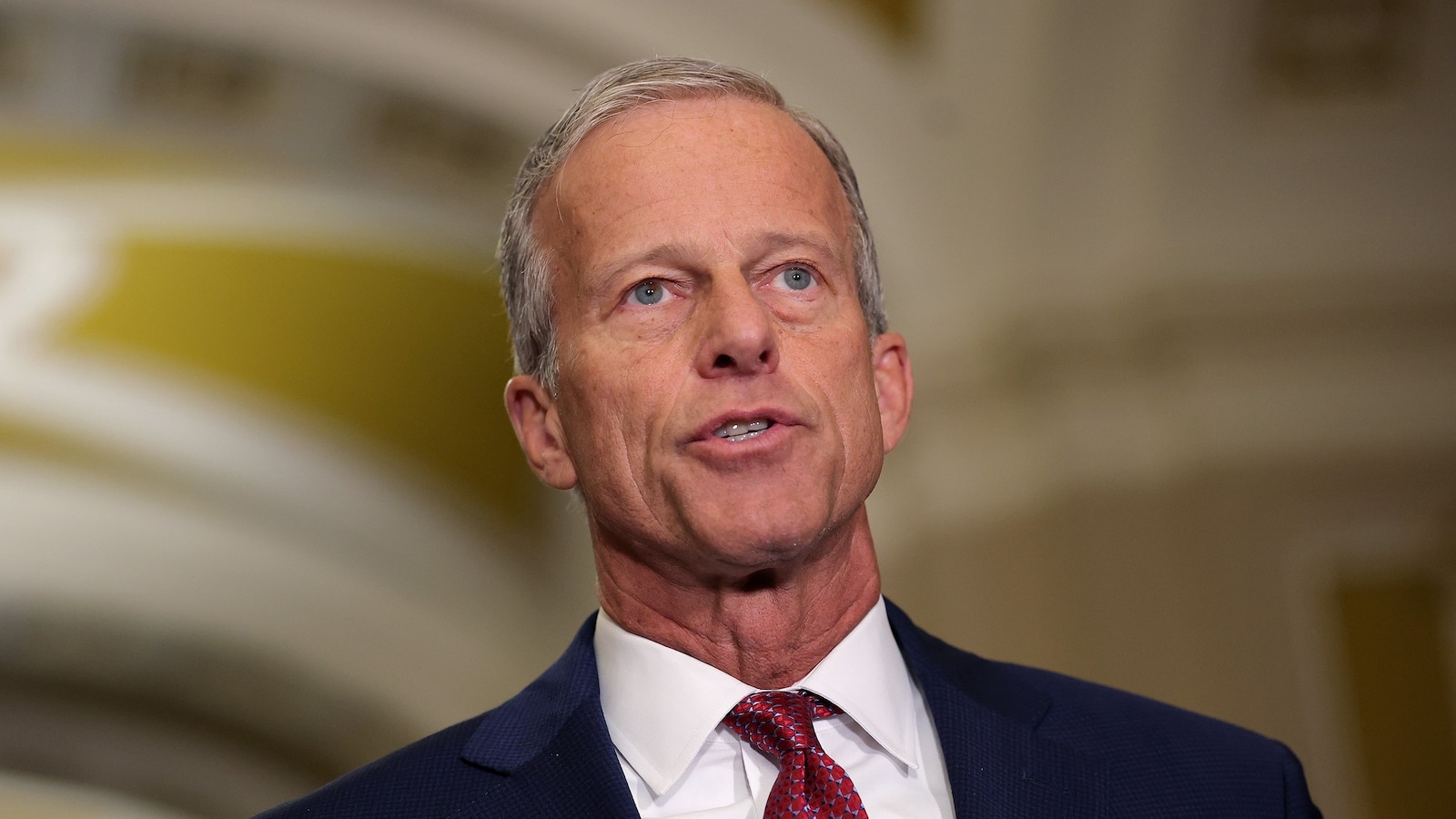
Senate Majority Leader John Thune ruled out changing the 60‑vote legislative filibuster to fast‑track the Republican SAVE America Act, despite President Trump’s threat to withhold his signature on other bills until the measure is passed. The SAVE America Act, narrowly approved by the House, would tighten mail‑in voting, require photo ID at polling places and proof of citizenship, but faces unified Senate Democratic opposition and lacks votes to change Senate rules. Trump's posture could delay other legislation (DHS funding, Iran supplemental aid, and bipartisan housing legislation), although the White House indicated DHS funding would be exempt from the president's threat.
Thune's public refusal to nuke the filibuster materially increases the odds of prolonged Senate gridlock over the next 1–3 months. The realistic path now is a sequence of high-friction, binary floor fights that will crowd out Senate time for bipartisan, near-term deliverables — most importantly housing legislation and any supplemental appropriations that require negotiation. That crowding creates an execution-risk premium (delay risk) rather than an immediate policy shock.
Second-order market effects concentrate in sectors whose cash flows or financing depend on predictable legislative action. Homebuilders, housing REITs and mortgage credit providers face a two-way bet: a bipartisan housing bill clears a multi-quarter demand/credit tailwind; persistent floor-time scarcity or the administration’s brinkmanship delays passage and increases refinance/perm financing timing risk and working capital draw for projects. The defense/contractor complex carries a binary exposure to supplemental conflict funding — timing uncertainty compresses near-term order visibility and drives higher implied vol in supplier equity and bond spreads.
Key catalysts to reprice are procedural (cloture votes, Senate floor schedule, House deliverable timing) within days–weeks and leadership decisions on whether to prioritize DHS/housing over the SAVE fight. Tail risks include a monthslong talking-filibuster that materially crowds out appropriations (weeks of lost legislative throughput) or the president converting threats into veto behavior — either outcome would push markets toward a risk‑off repricing and higher volatility over quarters. The path to resolution is asymmetric: a small tactical concession or a piecemeal deal could remove uncertainty quickly; absent that, expect elevated policy risk through the midterms.
AI-powered research, real-time alerts, and portfolio analytics for institutional investors.
Request DemoOverall Sentiment
neutral
Sentiment Score
0.00
