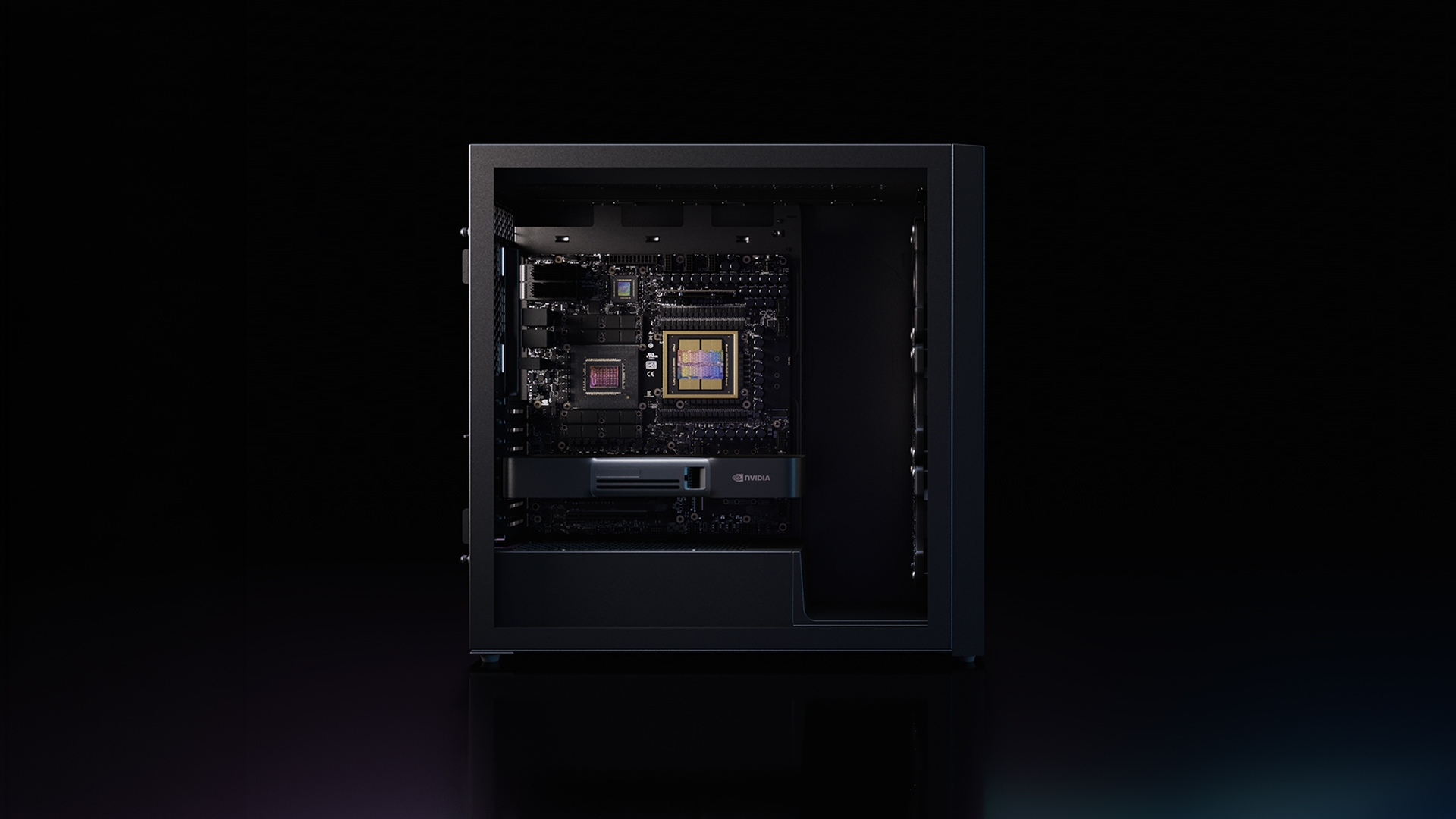
NVIDIA announced DGX Station for Windows, a deskside AI supercomputer powered by the GB300 Grace Blackwell Ultra Desktop Superchip and designed to run frontier AI models of up to 1 trillion parameters locally. The system is slated for Q4 availability through ASUS, Dell, GIGABYTE, HP, MSI and Supermicro, and adds support for secure agent development via NVIDIA OpenShell on Windows. The launch strengthens NVIDIA’s enterprise AI ecosystem and could boost demand for Windows-based AI workstations, though it is more product-driven than immediately market-moving.
This is less a one-off product announcement than a distribution-channel expansion for NVIDIA’s workstation stack into the largest installed enterprise OS base. The second-order effect is that it lowers friction for on-prem AI adoption at the very moment CIOs are trying to keep agent traffic, sensitive data, and governance off public cloud endpoints; that favors NVDA’s attach rate across silicon, networking, and software while making Windows a stronger control point for enterprise AI workflows.
The incremental competitive damage is likely understated for traditional workstation OEMs and “AI PC” narratives. If a deskside GB300-class system can handle frontier model development and multi-agent inference locally, the value proposition for premium x86 workstations shifts from compute horsepower to managed AI orchestration, which compresses the moat of workstation vendors unless they can bundle services, integration, or financing. The bigger medium-term beneficiary may be Microsoft, because this positions Windows as the default enterprise runtime for secure agent deployment, increasing switching costs and making Windows’ governance layer strategically relevant to AI procurement.
Near term, the stock reaction may overemphasize the launch and underappreciate timing risk: Q4 availability means no immediate revenue inflection, and enterprise adoption will be gated by qualification cycles, security reviews, and budget resets. The real catalyst window is 2H25-2026 when pilots convert to fleet deployments; if that happens, it should show up first in NVDA’s networking and enterprise-platform mix, not just GPU sales. The contrarian risk is that local inference enthusiasm cools if cloud vendors keep cutting inference costs faster than enterprise IT can standardize these desktop deployments.
On the downside, this also increases the probability of tighter enterprise policy scrutiny around agent permissions and data leakage, which could slow rollouts despite strong demand. If that happens, the beneficiaries shift from pure hardware to whichever vendor best monetizes compliance, orchestration, and lifecycle management around these systems.
AI-powered research, real-time alerts, and portfolio analytics for institutional investors.
Request DemoOverall Sentiment
strongly positive
Sentiment Score
0.72
Ticker Sentiment
