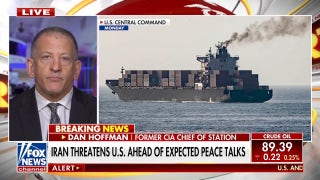
The IRGC is reported to have blocked President Pezeshkian’s appointments and tightened control around Supreme Leader Mojtaba Khamenei, signaling a major shift in Iran’s internal power structure. The report suggests civilian oversight is eroding as a military council and IRGC commander Ahmad Vahidi allegedly direct key decisions, raising the risk of a more confrontational Iran and reduced room for U.S. negotiations. The developments point to heightened regional security risk and potential escalation across the Middle East.
The market implication is not a clean “regime change” trade; it is a probability shift toward a harder, more militarized Iran that is less discountable in diplomacy. The second-order effect is higher tail risk around Gulf shipping, proxy activity, and sanctions enforcement, which matters more for energy, defense, and regional risk premia than for any direct Iran-specific exposure. The key medium-term consequence is that decision latency in Tehran rises: even if civilian channels still exist, counterparties will price negotiations as less credible, which tends to widen geopolitical risk premia over weeks rather than days.
The biggest loser is any asset class reliant on de-escalation, especially short-vol positions exposed to Middle East headlines. A more dominant IRGC also raises the odds of asymmetric responses: cyber, maritime harassment, and proxy strikes are cheaper than overt state conflict and can hit supply chains with limited warning. That argues for treating this as a convexity event, where the base case may look manageable but the left tail is fat and persistent over 3-6 months.
Consensus may be underestimating that this is less about a sudden coup than about the formalization of an existing reality; that means the immediate price reaction can be muted even as the structural trend worsens. The contrarian view is that if the IRGC consolidates control, internal discipline could improve near-term regime survivability and reduce the odds of chaotic internal fragmentation, which slightly lowers extreme collapse risk. But that benefit is outweighed for markets because a more centralized security state is typically better at sustaining pressure campaigns than at making concessions.
AI-powered research, real-time alerts, and portfolio analytics for institutional investors.
Request DemoOverall Sentiment
strongly negative
Sentiment Score
-0.70
