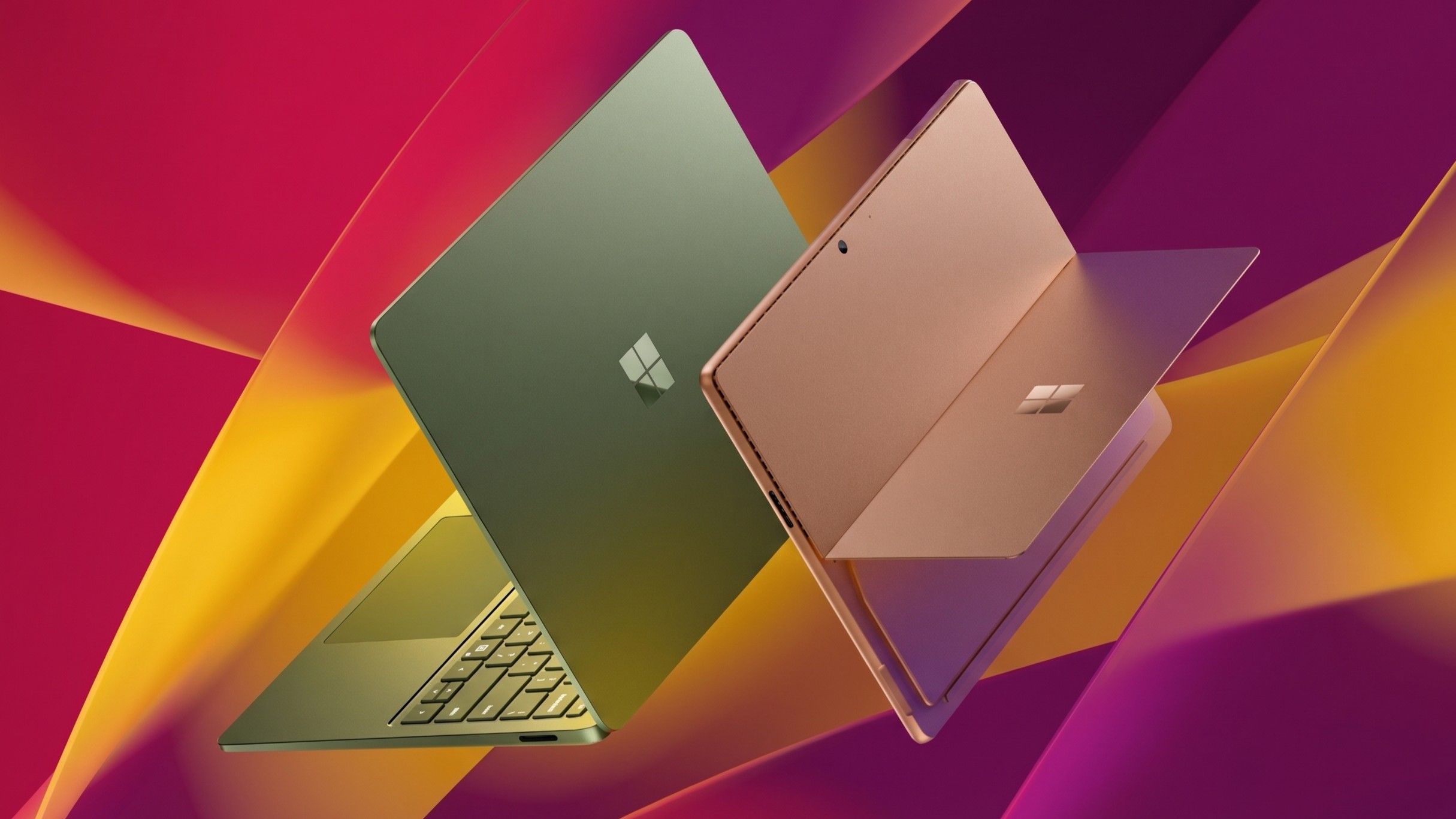
Microsoft launched refreshed Surface Laptop 8 and Surface Pro 12 models with Snapdragon X2 chips, promising 53% faster graphics, up to 15.5 hours of battery life on the Pro, and up to 20 hours on the Laptop. Pricing is sharply higher than the prior generation, with starting prices of $1,599 for the Surface Laptop and $1,499 for the Surface Pro, up $600 and $500 respectively versus the 2024 launches. The update is positive on product quality and performance, but the higher price tags may temper demand.
Microsoft is effectively using Surface as a proof point for the broader Windows-on-Arm ecosystem: better silicon, better battery, and enough feature polish to keep premium ASPs elevated. The key second-order effect is that the consumer device itself is less important than the implied validation of Qualcomm’s performance-per-watt curve, which can shift enterprise procurement conversations away from x86 refreshes over the next 2-3 quarters. That matters because once IT standards committees approve one “good enough” Arm endpoint, the installed-base replacement cycle tends to become sticky rather than experimental.
The near-term winner is QCOM, but not just on unit shipments; the bigger lever is mix and narrative. A visible flagship OEM win with higher memory/storage tiers suggests Qualcomm can participate in premium Windows pricing rather than only value notebooks, which should support multiple expansion if the market believes this is a durable share gain versus Intel. INTC is the structural loser here, not because of one consumer launch, but because every incremental Surface Arm model reduces the probability that the next enterprise laptop refresh is a recycled Intel spec.
For MSFT, the pricing move is a double-edged sword: higher ASPs improve hardware gross profit dollars, but they also risk shrinking the attach base exactly when Microsoft wants more Copilot/365 usage on-device. If demand elasticity is stronger than management expects, the company may end up trading volume for margin in a category that matters more as ecosystem distribution than as a standalone P&L line. The contrarian read is that the market may be underestimating how fast consumer buyers tolerate a premium when battery and thermals are the headline — but overestimating how quickly that converts into broad enterprise adoption.
The main reversal risk is simple: if benchmarks or app compatibility chatter disappoint in the first 30-60 days, this becomes a niche enthusiast refresh rather than a platform inflection. In that case, the premium pricing backfires and Qualcomm’s win is mostly symbolic, while Intel gets breathing room on Windows OEM share. Watch channel checks and enterprise pilot feedback into the July business availability window for the real confirmation signal.
AI-powered research, real-time alerts, and portfolio analytics for institutional investors.
Request DemoOverall Sentiment
mildly positive
Sentiment Score
0.20
Ticker Sentiment
