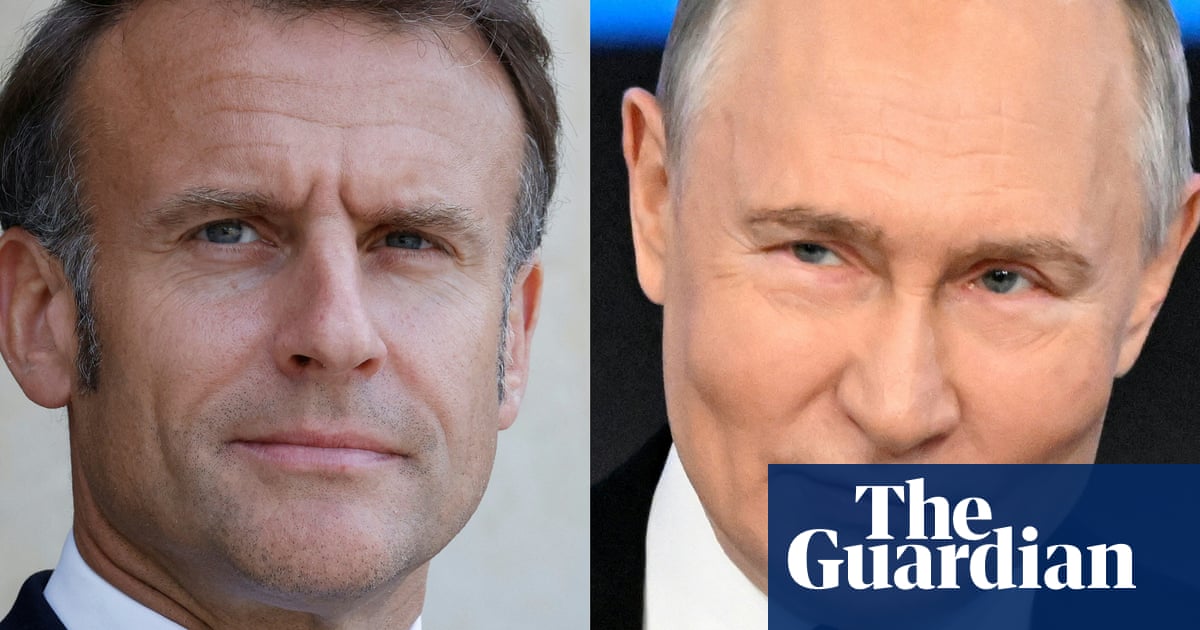
French President Emmanuel Macron engaged Russian President Vladimir Putin in their first direct talks in three years, aiming to de-escalate the Iran nuclear crisis following Tehran's cessation of cooperation with the UN nuclear inspectorate (IAEA). France expressed cautious optimism that Russia could encourage Iran to restore IAEA cooperation, despite Iran citing unaddressed Israeli attacks on its nuclear sites as a reason for its non-compliance. Both leaders underscored the necessity of a diplomatic resolution, signaling a renewed, albeit fragile, high-level engagement to manage escalating geopolitical tensions surrounding Iran's nuclear program.
A significant diplomatic recalibration is underway as French President Emmanuel Macron re-engages with Russian President Vladimir Putin for the first time in three years, primarily to address Iran's escalating nuclear posture. The immediate trigger is Tehran's decision to cease all cooperation with the International Atomic Energy Agency (IAEA), a move Germany termed a "disastrous signal." Despite this, Paris expresses cautious optimism that Moscow can exert influence over Tehran to resume compliance. The discussion signals a potential softening in the Western stance, with French officials indicating a willingness to negotiate on Iran's right to domestic uranium enrichment, a key provision of the 2015 nuclear deal. This diplomatic effort is set against a backdrop of recent, intense military conflict, where Iran launched approximately 530 ballistic missiles at Israel over 12 days. The defensive cost was substantial, with Israel and the US spending an estimated £1.1 billion on interceptions, achieving an 86% success rate, though 36 missiles still struck built-up areas. The stated threat of Iranian missiles capable of reaching Europe underscores the continent's direct security interest in a negotiated settlement, reinforcing the urgency of these high-stakes diplomatic maneuvers.
AI-powered research, real-time alerts, and portfolio analytics for institutional investors.
Request DemoOverall Sentiment
mildly negative
Sentiment Score
-0.25
