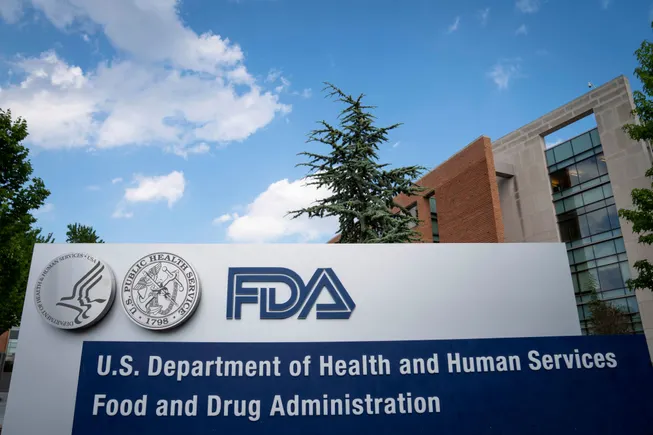
The FDA is moving to reclassify 12 peptides previously blocked from compounding, potentially reopening regulated access after the Biden-era restrictions. The change could shift demand away from the black market and benefit compounding pharmacies and telehealth companies such as Hims & Hers, which welcomed the move. The action reflects a broader MAHA-driven policy shift under HHS Secretary Robert F. Kennedy Jr. and could move individual names in the space, though the broader market impact is limited.
This is less a binary ‘peptides good/bad’ headline than a distributional shift in where profits accrue. If compounding is re-opened, the margin pool migrates from scarce, high-priced branded supply toward fragmented, lower-visibility channels where unit economics are driven by prescription volume, not IP. That tends to favor scaled telehealth/benefit-platform operators and the pharmacies that can industrialize fulfillment, while pressuring any premium-brand thesis that depended on category gatekeeping rather than true clinical differentiation.
The bigger second-order effect is regulatory normalization: once the FDA draws a cleaner line around which peptides are permissible, the market will likely price a step-up in addressable demand from users who were previously deterred by legal ambiguity. But that also creates a short runway for a credibility reset—if post-reclassification adverse-event reporting spikes or abuse is highlighted in hearings, the agency can quickly re-tighten through enforcement guidance, prior authorization pressure, or state-level pharmacy scrutiny. That makes this a months-long catalyst, not a multi-year straight line.
For GSK, this is at best a modest negative on the margin because the policy signal reinforces an FDA that is willing to bend process around political priorities rather than clinical orthodoxy. The real risk isn’t direct revenue loss; it’s that the agency’s standards become noisier, raising the discount rate on pipeline assets where approval probability is sensitive to reviewer discretion. Conversely, the clearest beneficiary is any scaled distributor that can capture demand as it exits gray-market channels, especially if it already has consumer acquisition economics and pharmacy relationships in place.
The contrarian view is that the market may be overestimating the size of the legal market being created. A lot of current peptide demand is likely recreational, performance-oriented, or experimental, which means the addressable pool may remain capped by physician comfort and reimbursement absent real efficacy data. If compounding becomes more visible, regulators and plaintiffs may also reintroduce liability friction faster than demand can scale, limiting the durability of the rerating.
AI-powered research, real-time alerts, and portfolio analytics for institutional investors.
Request DemoOverall Sentiment
mildly positive
Sentiment Score
0.15
Ticker Sentiment
