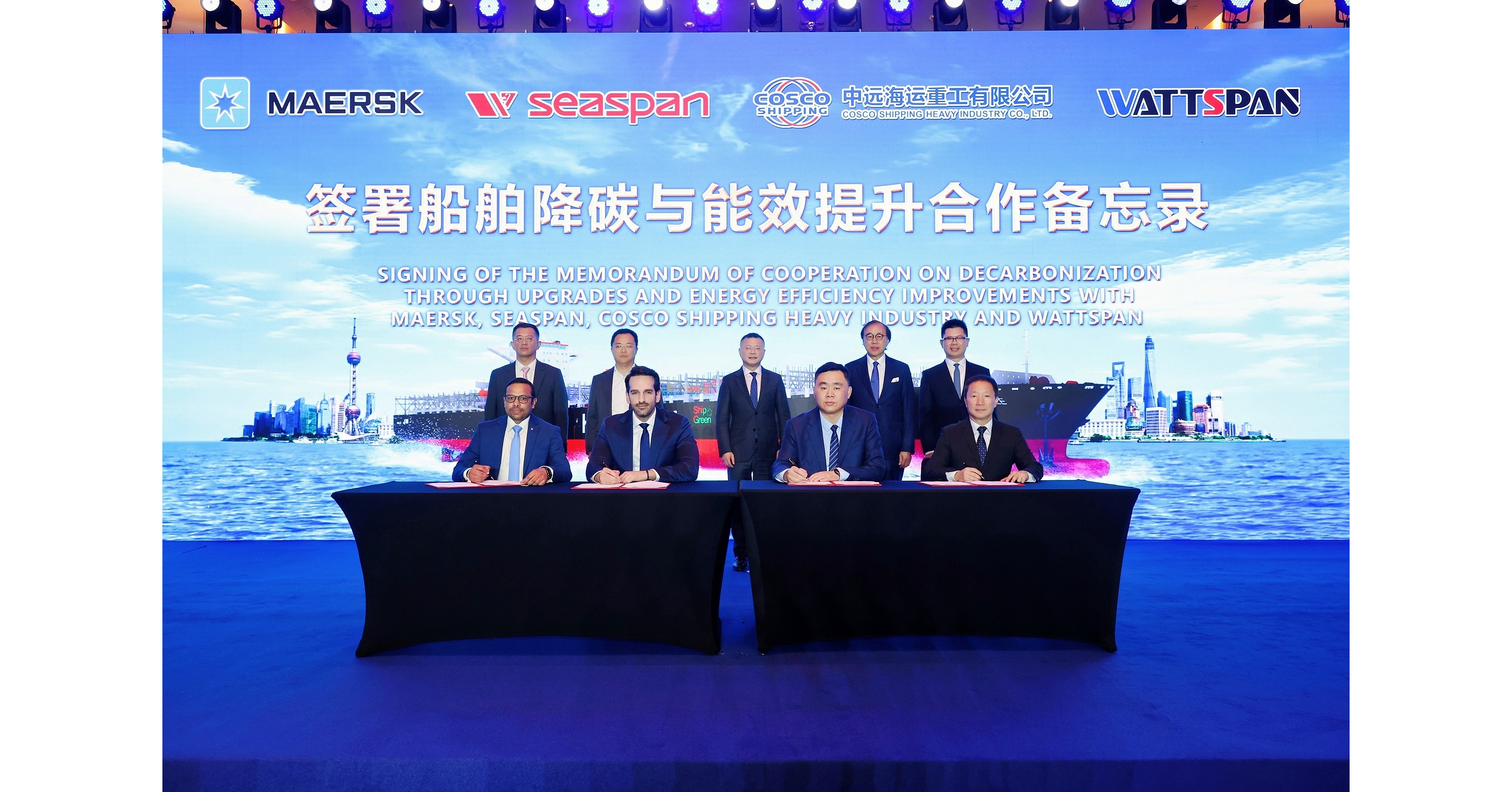
Seaspan and A.P. Moller–Maersk announced a program to improve the efficiency of 18 long-term chartered vessels, including a major retrofit for four 13,000-TEU ships. The retrofit targets lower fuel burn and emissions and is expected to reduce slot costs by ~10–13% while improving cargo capacity and compliance-readiness for future CO₂ rules. ~$75M has already been invested/committed for modernization, with additional decarbonization/efficiency measures in development, plus a non-binding 1-year cooperation framework involving WattSpan and COSCO Shipyard.
This is less a one-off ESG announcement than a proof point that retrofit economics are now good enough to justify capital on mid-life containerships. If the quoted 10-13% slot-cost reduction holds in practice, the bigger implication is not one operator's margin bump but a higher hurdle for replacement tonnage: owners can monetize efficiency gains without adding hulls, which can flatten future newbuild demand and lengthen vessel useful lives by several years.
The near-term winner set is the marine technology stack, not the carrier itself. Power-management, propulsion, and marine-electrification suppliers should see a growing pipeline as charterers demand payback-backed upgrades; that favors names with installed-service capability and global yards, while smaller liners and lessors with older fleets risk getting trapped on the wrong side of the efficiency gap and weaker re-chartering terms. In practice, the competitive moat widens for balance-sheet-stable operators that can fund capex during soft freight windows.
The contrarian read is that the market may overrate the earnings impact and underappreciate the timing risk. A program this size is immaterial to consolidated results unless bunker spreads remain wide and regulators tighten as expected over the next 12-24 months; if fuel prices ease or spot freight weakens, the payback stretches and retrofit enthusiasm fades. The key falsifier is a downshift in charter rates or a delay in EU/IMO compliance costs, which would reduce urgency for follow-on retrofit spending.
AI-powered research, real-time alerts, and portfolio analytics for institutional investors.
Overall Sentiment
modestly positive
Sentiment Score
0.35
