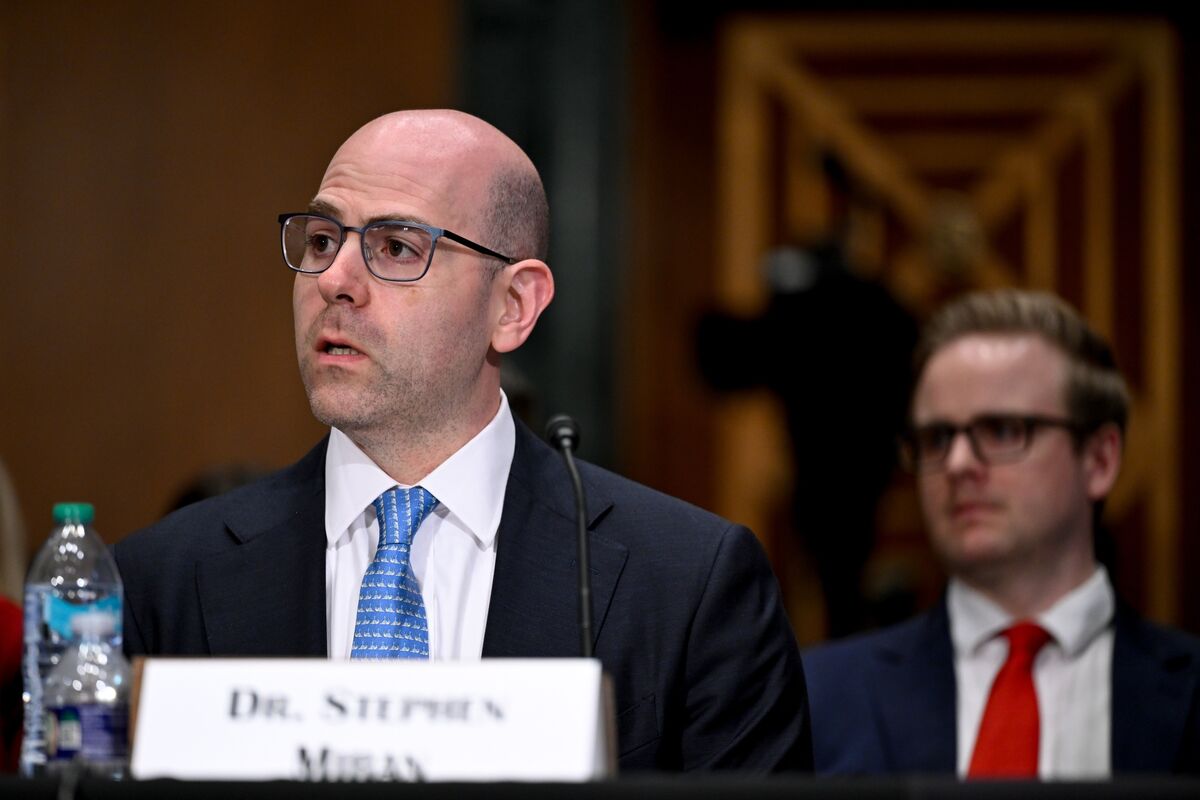
Stephen Miran, President Trump's nominee for the Federal Reserve Board, stated during his contentious confirmation hearing that he plans to take an unpaid leave from his White House Council of Economic Advisers position rather than resign, even while serving at the Fed. This unusual arrangement has drawn sharp criticism from Democratic senators, who argue it fundamentally compromises his stated commitment to central bank independence and raises significant concerns about the Fed's perceived autonomy.
The confirmation hearing for Stephen Miran, President Trump's nominee for the Federal Reserve Board, has introduced significant governance risk and uncertainty regarding the central bank's independence. Miran's stated intention to take an unpaid leave of absence from his position at the White House Council of Economic Advisers, rather than fully resigning, has drawn sharp criticism from Democratic senators. This unique arrangement is perceived as a direct conflict with the Fed's mandate for political autonomy, with opponents, such as Senator Jack Reed, arguing it fundamentally compromises his independence. The controversy casts doubt on the future predictability of U.S. monetary policy, fueling concerns that a board member with formal ties to the White House could prioritize political imperatives over economic data, a scenario that carries a moderately negative sentiment and introduces an element of uncertainty into market expectations.
AI-powered research, real-time alerts, and portfolio analytics for institutional investors.
Request DemoOverall Sentiment
moderately negative
Sentiment Score
-0.50
