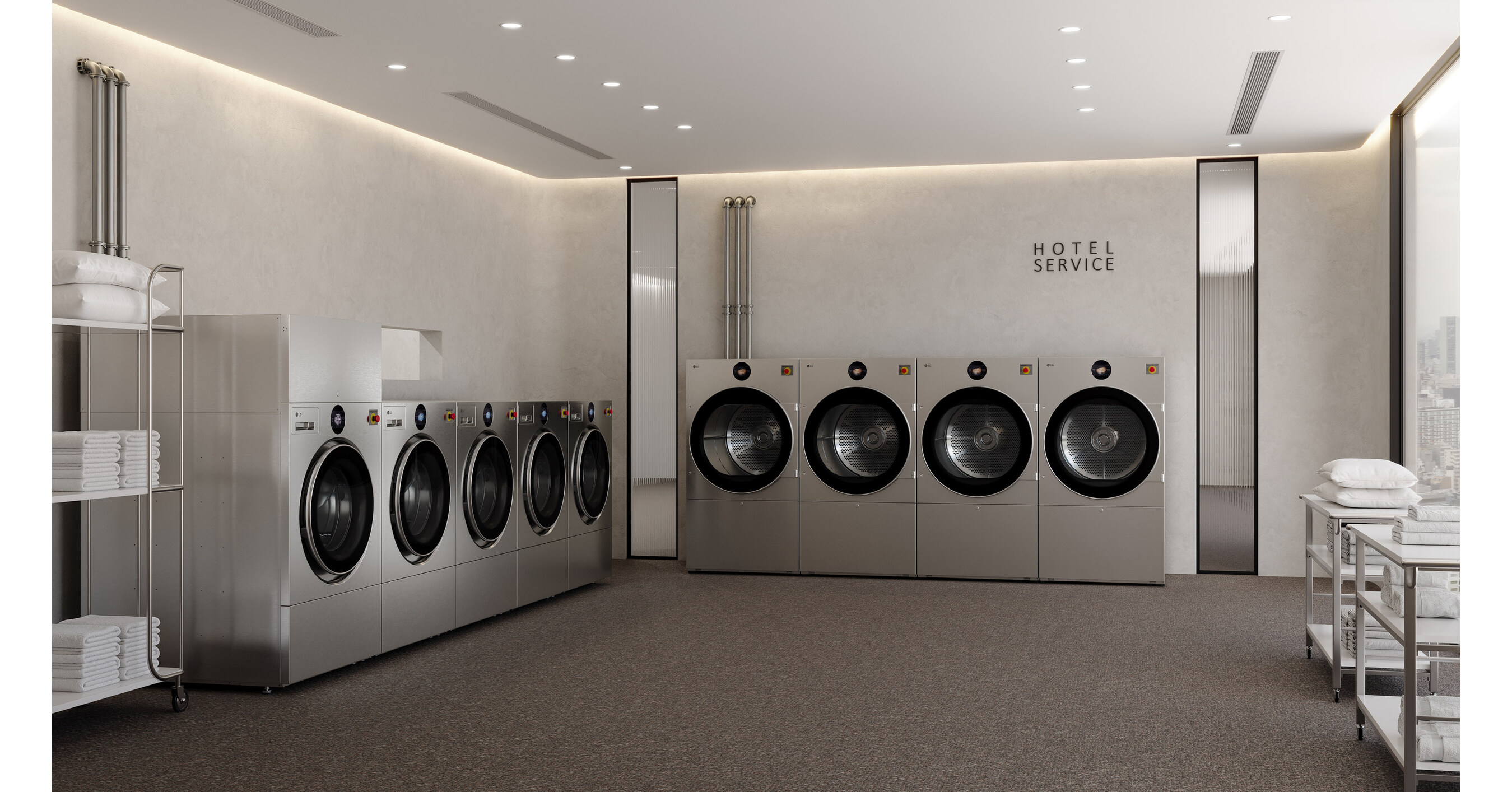
LG Electronics launched its global LG Professional Laundry lineup, featuring large-capacity washers/dryers with AI Weight Detection and a Dual Inverter HeatPump™ aimed at improving commercial efficiency. The IEC 7kg washer/dryer is claimed to complete a full wash and dry in ~1 hour, and ductless operation is positioned to reduce installation/maintenance overhead. The lineup also adds remote monitoring/management via the LaundryCrew app and Open API support (post-purchase integration), with Europe starting this month and further rollouts planned for Asia and North America.
This is more of a mix-shift/attaching-services story than a near-term revenue event. The incremental value for LG is not the machine SKU; it is the ability to bundle remote monitoring, software updates, and maintenance workflow into a sticky B2B installed base, which can widen gross margin if it lowers field-service intensity and lifts replacement cadence. The market should be skeptical of any AI-label uplift until we see evidence of channel sell-through and service attach rates in hospitality, healthcare, and multi-site laundry operators.
Competitive pressure should fall on mid-tier commercial laundry vendors that compete mainly on upfront capex and reliability. If LG can credibly shorten payback via energy savings and reduce downtime, it can take share from incumbents like Alliance/Speed Queen-style routes and appliance peers with weaker software layers; the second-order effect is greater pricing pressure on pure hardware players while distributors and installers with strong service franchises may benefit from more complex integration work. The API layer also matters: if third-party integration becomes real, LG can become embedded in fleet-management workflows, making future replacement decisions stickier.
The contrarian view is that the launch may be overmarketed relative to the addressable profit pool. Commercial laundry is still a ROI-driven procurement category, and buyers will care far more about uptime, financing, detergent/parts economics, and local service density than about AI branding. Near term, the thesis is falsified if early European launches show weak order conversion or if management does not quantify B2B backlog/service revenue within 1-2 quarters; structurally, the story only works if the company can prove that software and remote diagnostics meaningfully change lifetime customer value over 6-18 months.
AI-powered research, real-time alerts, and portfolio analytics for institutional investors.
Request DemoOverall Sentiment
mildly positive
Sentiment Score
0.15
Ticker Sentiment
