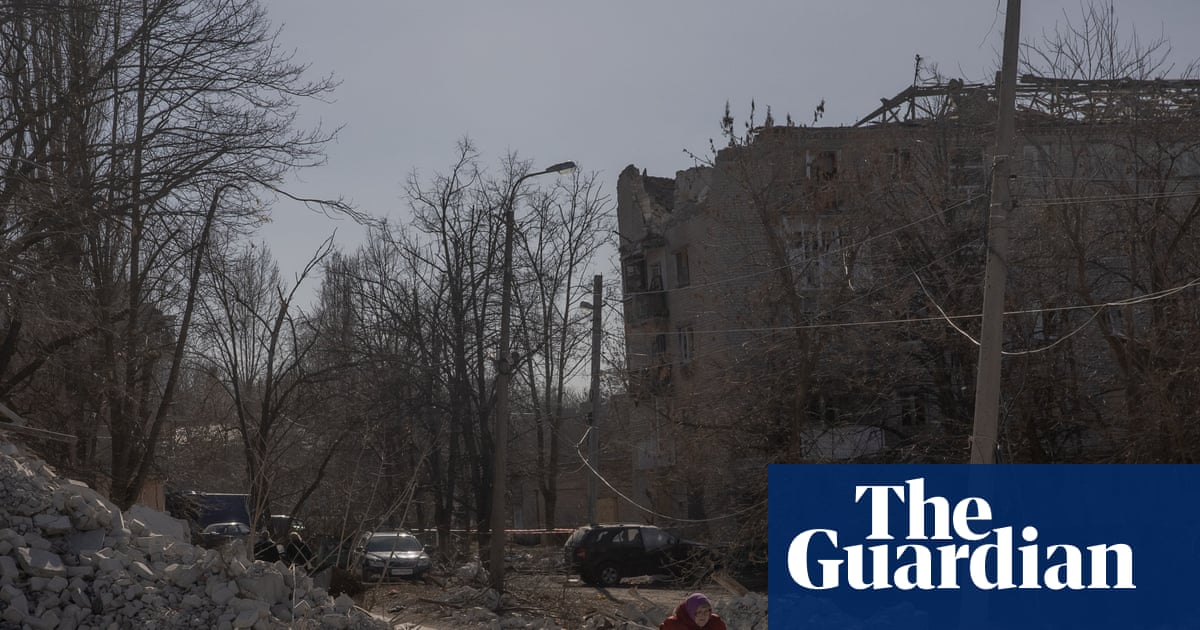
US Treasury will temporarily lift sanctions on Russian oil already aboard tankers for 30 days to ease supply fears from the Iran/Middle East conflict, effectively allowing buyers to purchase existing cargoes without sanction risk. Zelenskyy warned the Middle East war is diverting international attention and urgently needed anti-aircraft missiles away from Ukraine, calling the situation 'not good' for Ukraine. Hostilities continue on the ground: Russian shelling killed 1 and wounded 6 in Dnipropetrovsk, 4 were injured near Zaporizhzhia, and 1 resident died in Belgorod region cross-border strikes. Russia also added US-based academic Nina Khrushcheva to its 'foreign agent' list, highlighting broader geopolitical escalation.
Re-allocation of limited air-defense munitions and interceptors to a new hot zone materially raises attrition risk for the other theater. With production lead times of 12–36 months for advanced interceptors and launchers, expect a 3–9 month window where defensive coverage thins and adversary strike success on high-value infrastructure rises noticeably, amplifying insurance and reconstruction outflows for affected economies.
Energy-market mechanics are creating a bifurcated outcome: near-term price volatility is muted by tactical flows that smooth physical settlement risk, while sovereign cash balances on the producer side rise meaningfully if elevated prices persist. For context, each $10/bbl move corresponds to ~ $3.65bn per 1m b/d of exports annually — so a sustained $10 move materially improves fiscal cushions for large hydrocarbon exporters with macro and geopolitical downstream consequences.
Financially, the most durable winners are industrial primes and upstream producers with low marginal cost barrels and flexible balance sheets; the losers are high fuel-intensity sectors and EM credits sensitive to EUR/USD and commodity swings. Expect a two-tier horizon: volatility-driven trades over days–months and structural re-rating of defense/energy capital expenditures over 6–24 months as budgets and procurement orders catch up.
Key event risks that could reverse the setup include rapid diplomatic de-escalation, coordinated SPR releases large enough to shave $5–10/bbl, or emergency ramp-ups in missile production capacity. These catalysts are binary and time-boxed — monitor inventory flows, production guidance, and large sovereign bond moves as three high-signal indicators.
AI-powered research, real-time alerts, and portfolio analytics for institutional investors.
Request DemoOverall Sentiment
mildly negative
Sentiment Score
-0.35
