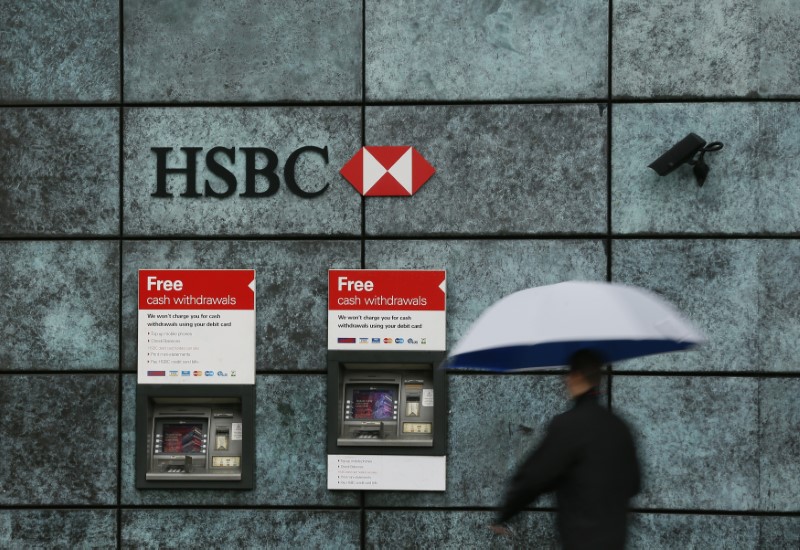
Citi reaffirmed an overweight on European banks, raised Lloyds to Buy and Deutsche Bank to Neutral/High Risk, and noted sector EPS are up +3% YTD with 79% of banks beating 4Q25 consensus PBT. Citi revised 2027 EPS for most names by -2% to +7% after forward rates moved (now implying two ECB hikes this year vs zero previously). The team highlighted AI could lift PBT by ~2-4% over three years and argued private credit exposure is limited (<2% of sector loans; ~3-6% of wholesale bank loans). Top tactical ideas: HSBC, NatWest and SocGen; expect mid-single-digit loan growth in Benelux/Ireland/UK/Spain and continued M&A activity (Santander-Webster, NatWest-Evelyn Partners; UniCredit-Commerzbank flagged but faces major obstacles).
European banks are entering a regime where the marginal benefit from a steeper long-end and a re-pricing of wholesale curves will show up in net interest income over 6–18 months rather than immediately. Institutions with large fixed-rate retail book duration and disciplined deposit franchises will capture the reinvestment pickup faster; those with heavy wholesale roll or trading revenue reliance will see more headline volatility but not the same structural NII lift.
M&A and fee pools are the underrated transmission mechanisms: a modest uptick in deal activity will shift economics toward banks with custody/asset-servicing scale and cross-border networks, creating non-linear earnings upside that is concentrated in a handful of franchises. Conversely, an extended repricing of private credit or a deterioration in non-bank short-term funding could force banks to absorb credit lines or mark-to-market exposures, re-introducing balance-sheet risk in 3–12 months.
Near-term catalysts that could reverse the constructive view are straightforward — a sharp reversal in long-term yields (>50–75bp compression across core 10y), an acute geopolitical shock that freezes markets for weeks, or a visible uptick in provisioning linked to commercial real estate. Absent those, expect sector-level EPS revisions to skew positive over the next 2–4 quarters, with dispersion between retail-dominant and capital-markets-heavy names.
The pragmatic trade framework is to harvest convexity: buy optionality into high-quality domestic lenders and pair/hedge exposure to banks where trading/IB revenue dominates. Small, well-defined option positions can capture the asymmetric payoff from rate-driven NII recovery while limiting downside from episodic risk-premia spikes.
AI-powered research, real-time alerts, and portfolio analytics for institutional investors.
Request DemoOverall Sentiment
moderately positive
Sentiment Score
0.35
Ticker Sentiment
