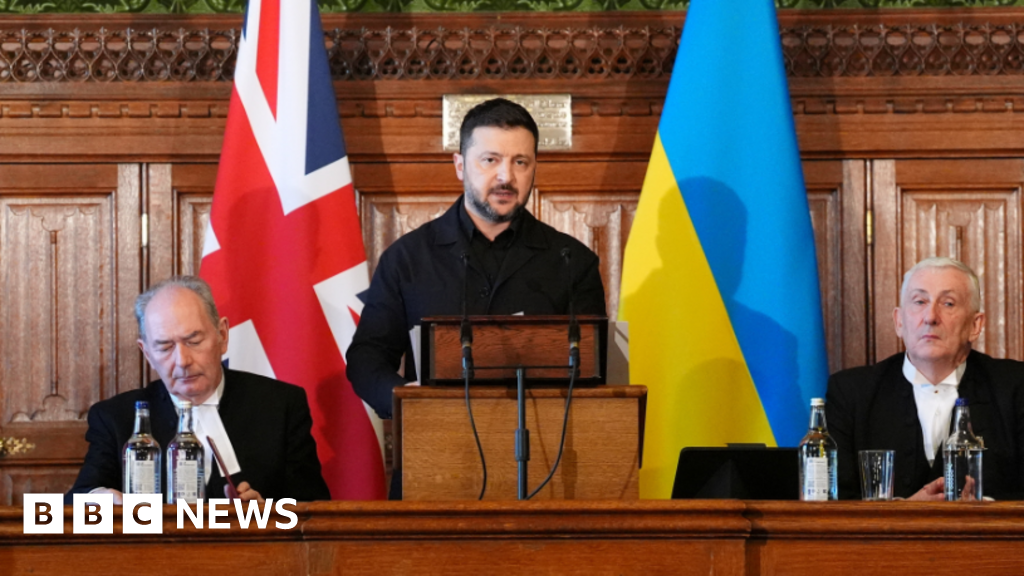
Zelensky warned that Iran is supplying Shahed 'kamikaze' drones to Russia and urged maintenance of oil sanctions, noting 201 Ukrainian military experts are deployed to the Middle East with 44 more ready to deploy. The UK agreed a defence partnership with Ukraine to counter cheap attack drones and will provide £500,000 to fund an AI centre of excellence in Kyiv. The article flags that rising oil prices and a temporary US easing of some Russian oil sanctions are fuelling Russia’s war machine, creating a risk-off geopolitical backdrop that could pressure energy markets.
The apparent convergence of low-cost guided munitions and accessible battlefield ICT is changing the arithmetic of tactical air campaigns: when munition unit-costs fall below the cost of legacy interceptors, defenders must shift from attritional shot-by-shot responses to layered, software-defined economies of scale. That favors modular sensor-to-shooter supply chains, repeatable mass production of C-UAS consumables, and cloud/edge AI that reduces per-intercept human overhead, creating durable margin capture for firms that can productize that stack.
Energy-price volatility from regional flare-ups functions as a de facto fiscal backstop for petro-exporting actors, lengthening their operational runway and increasing the probability of prolonged proxy activity. A sustained $5–$15 move in Brent materially alters near-term export receipts for large producers, which in turn raises the bar for Western policy choices (sanctions, SPR releases) and creates a non-linear upside for commodity-sensitive sovereign revenues.
On the industrial side, defense procurement will bifurcate: incumbents that can integrate open-architecture electronics and AI will win scalable contracts, while legacy platforms tied to bespoke sensors risk being outcompeted. Expect a 6–12 month window where rapid prototyping and export-control arbitrage determine winner-take-most suppliers; conversely, insurance and logistics providers exposed to persistent low-cost strike risk will face compressed margins and higher premiums.
Key catalysts to watch are short-term price shocks (days–weeks), formal procurement awards and export-control changes (3–12 months), and a technological inflection where low-cost countermeasures materially reduce strike effectiveness (12–36 months). Tail risks include regional escalation or a diplomatic settlement that abruptly compresses volatility; both would rapidly rotate winners and losers across commodities and defense sectors.
AI-powered research, real-time alerts, and portfolio analytics for institutional investors.
Request DemoOverall Sentiment
mildly negative
Sentiment Score
-0.25
