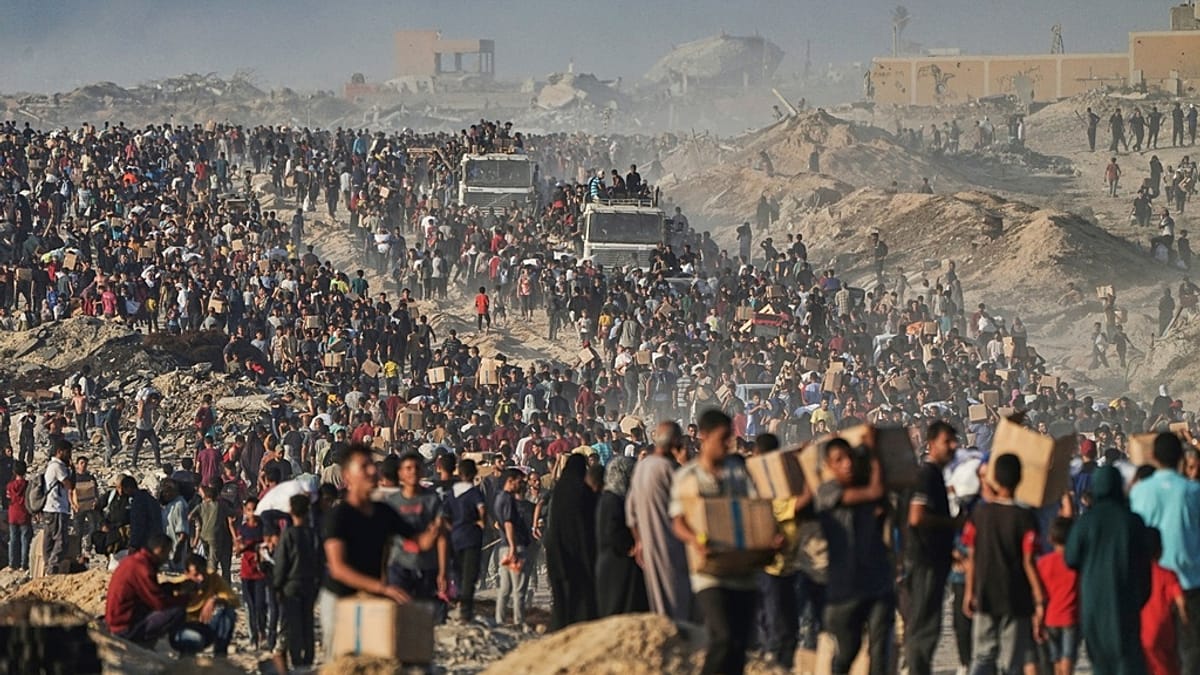
The US has pledged $2.0 billion (€1.7bn) for UN humanitarian aid under a preliminary deal to channel funds through OCHA, a sharp reduction from past US contributions that have reached as high as $17bn annually (with up to $10bn in voluntary contributions). The package is tied to a push for a centralised 'humanitarian reset' that would give OCHA greater control over allocations, require consolidation of UN humanitarian functions, and initially target 17 countries while excluding Afghanistan and the Palestinian territories; the cuts and conditionality threaten major UN affiliates (WFP, IOM, UNHCR) and raise geopolitical and humanitarian risk as needs from conflict and climate-driven disasters grow.
Market structure: The unilateral US reallocation ($2bn vs prior peaks near $17bn) concentrates giving through OCHA, advantaging centralized logistics/tech providers and governments that win pooled contracts while squeezing bilateral NGO budgets and big buyers like WFP. Expect a reallocation of working capital away from distributed food procurement toward fewer, larger contracts; pricing power shifts to large logistics (UPS/FDX) and platform vendors that can meet OCHA’s compliance and scale needs over the next 3–12 months.
Risk assessment: Tail risks include sudden refugee surges or famine-driven commodity spikes (wheat/corn up >15% in 30–90 days) and political backlash in donor states that could reverse cuts; EM sovereign spreads for vulnerable countries could widen >100bps in 1–3 months. Hidden dependencies: reduced UN buying could temporarily depress staple demand but amplify volatility if climate shocks hit—this makes commodities and EM credit the highest-risk corridors over quarters to years.
Trade implications: Tactical plays favor long large-cap logistics (UPS, FDX) and long USD vs EM debt (UUP long / EMB short) as a 1–3% portfolio tilt over 1–6 months; options: buy 3-month EMB put spread to hedge EM exposure and buy March wheat call calendar if extreme weather indices spike. Rotate away from EM sovereign credit and small bilateral-aid contractors; reallocate 1–4% into cash/short-dated Treasuries (BIL/SHV) until funding clarity emerges.
Contrarian angle: Consensus overstates permanent demand destruction — history (post-2014 aid dips) shows donor restoration within 12–24 months and NGOs adapt, restoring procurement. If OCHA centralization succeeds, a handful of suppliers could capture outsized profits; consider asymmetric long options on winners rather than broad commodity shorts unless WFP procurement falls >15% QoQ (trigger).
AI-powered research, real-time alerts, and portfolio analytics for institutional investors.
Request DemoOverall Sentiment
moderately negative
Sentiment Score
-0.35
