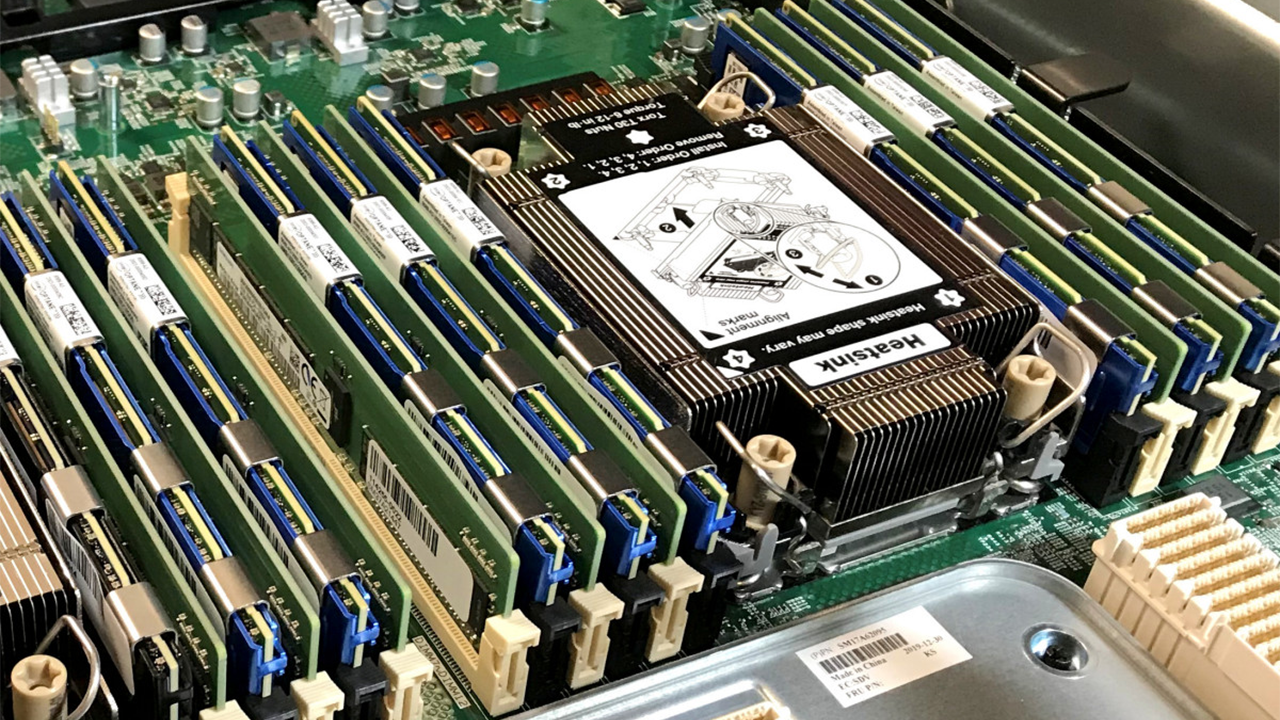
Exponential AI-driven demand is set to divert as much as 70% of global memory (DRAM/RAM) production to data centers in 2026, with manufacturers already allocating capacity well into 2028, creating acute shortages for legacy memory used in automotive, TVs and consumer electronics. Analysts warn of material price pass-through—estimates include RAM becoming roughly 10% of electronics' cost and up to 30% of a smartphone's bill—and IDC has trimmed its 2026 forecasts (smartphones -5%, PCs -9%), signaling meaningful downside risk to consumer tech and supply-chain–sensitive sectors. Investors should weigh upside for memory-equipment and datacenter suppliers against near‑term margin pressure and demand risk for OEMs in autos and consumer electronics.
Market structure: Data-center customers (hyperscalers) are consuming an estimated 70% of memory by 2026, reallocating pricing power to DRAM/NAND suppliers (Micron MU, Samsung, SK Hynix) and memory-equipment vendors. Losers are legacy consumer-electronics and auto OEMs facing input-cost squeezes (IDC: smartphone -5%, PC -9% in 2026) and cloud providers (AMZN, MSFT, GOOGL) who will see higher opex and potential margin pressure unless they pass costs to customers.
Risk assessment: Short-term (0–6 months) expect elevated spot DRAM/NAND prices and order volatility; medium-term (6–24 months) capex commitments sold out into 2028 increase risk of overshoot; long-term (2028+) capacity expansion could flip pricing into a downturn. Tail risks: export controls or government prioritization for automotive could reallocate supply, while an AI demand chill would create a rapid inventory glut; monitor DRAM spot indices and hyperscaler capex guides monthly.
Trade implications: Favor direct exposure to DRAM pricing via MU (long) and SMH/semiconductor-equipment names; hedge consumer-facing and cloud-exposure—consider short AMZN (small size) or underweight AAPL/consumer-electronics suppliers. Use options to define risk: 3–6 month MU call spreads (buy protection up to +30–40% upside) and 6-month AMZN put protection for 1–2% notional; implement within 2–3 weeks while volatility is elevated.
Contrarian angles: Consensus underestimates long lead-times for new DRAM fabs (2–4 years), supporting multi-quarter pricing power for suppliers — but history (2017–2019 DRAM/NAND cycles) warns of rapid reversal when capacity catches up. Watch for structural responses (HBM on-package, software memory optimizations, hyperscaler vertical integration) that could permanently reduce per-instance DRAM intensity and cap upside beyond 2028.
AI-powered research, real-time alerts, and portfolio analytics for institutional investors.
Request DemoOverall Sentiment
moderately negative
Sentiment Score
-0.60
Ticker Sentiment
