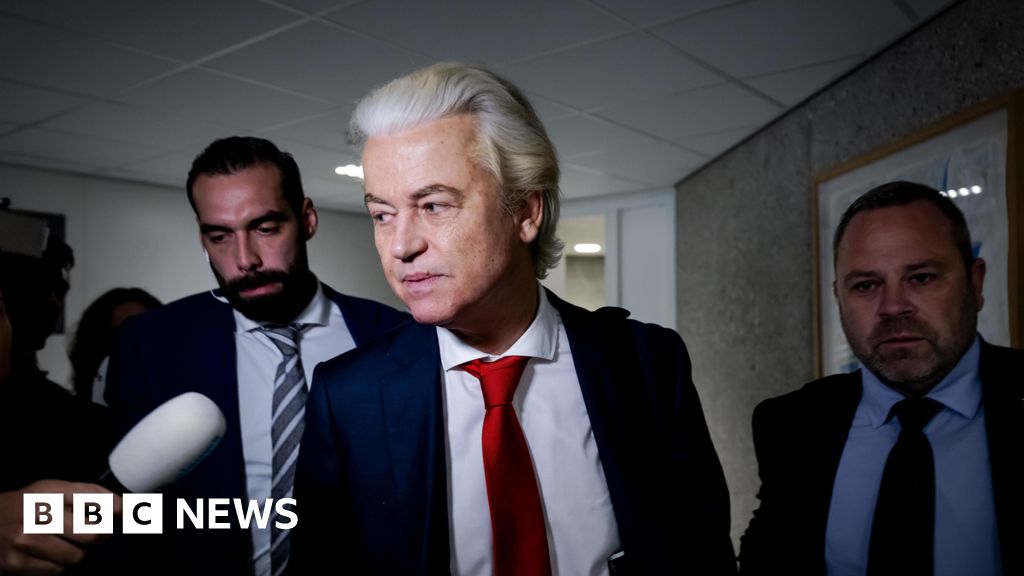
The Dutch government has collapsed after Geert Wilders withdrew his far-right PVV party from the coalition over disagreements regarding asylum policies, likely triggering snap elections. Wilders' demands for stricter asylum measures, including a freeze on applications, were rejected, leading to his exit and accusations from former coalition partners of engineering the crisis. The move puts asylum at the center of the upcoming election campaign, but the outcome remains uncertain given the PVV's prior role in immigration policy; Prime Minister Schoof is expected to offer the cabinet's resignation.
The Dutch governing coalition, formed in July 2024, has collapsed after less than a year due to the withdrawal of Geert Wilders' far-right PVV party. The immediate catalyst was a dispute over asylum policies, with Wilders demanding stricter measures such as a freeze on applications and limits on family reunification, which were reportedly dismissed due to legal concerns and their similarity to existing coalition agreement items. This move, which former coalition partners from the VVD, BBB, and New Social Contract decried as irresponsible and an act of political engineering, is poised to trigger snap elections, likely in the autumn, thrusting asylum issues to the forefront of the political campaign. The PVV had been the largest party and responsible for asylum and immigration within the coalition, making the outcome of this electoral gamble uncertain.
The collapse introduces a significant period of political uncertainty for the Netherlands, a key Eurozone member, reflected in the associated moderately negative sentiment report and uncertain market tone (sentiment score -0.5, market impact 0.5). Prime Minister Dick Schoof is expected to offer the cabinet's resignation to King Willem-Alexander, transitioning to a caretaker government. This interim period occurs at a sensitive time, with a Nato summit scheduled in The Hague at the end of the month, highlighting the need for continued governance amidst the domestic political turmoil. While direct economic impacts are not detailed in the provided information, such instability inherently elevates political risk, potentially affecting investor confidence in Dutch assets and carrying implications for broader European market sentiment.
AI-powered research, real-time alerts, and portfolio analytics for institutional investors.
Request DemoOverall Sentiment
moderately negative
Sentiment Score
-0.50
