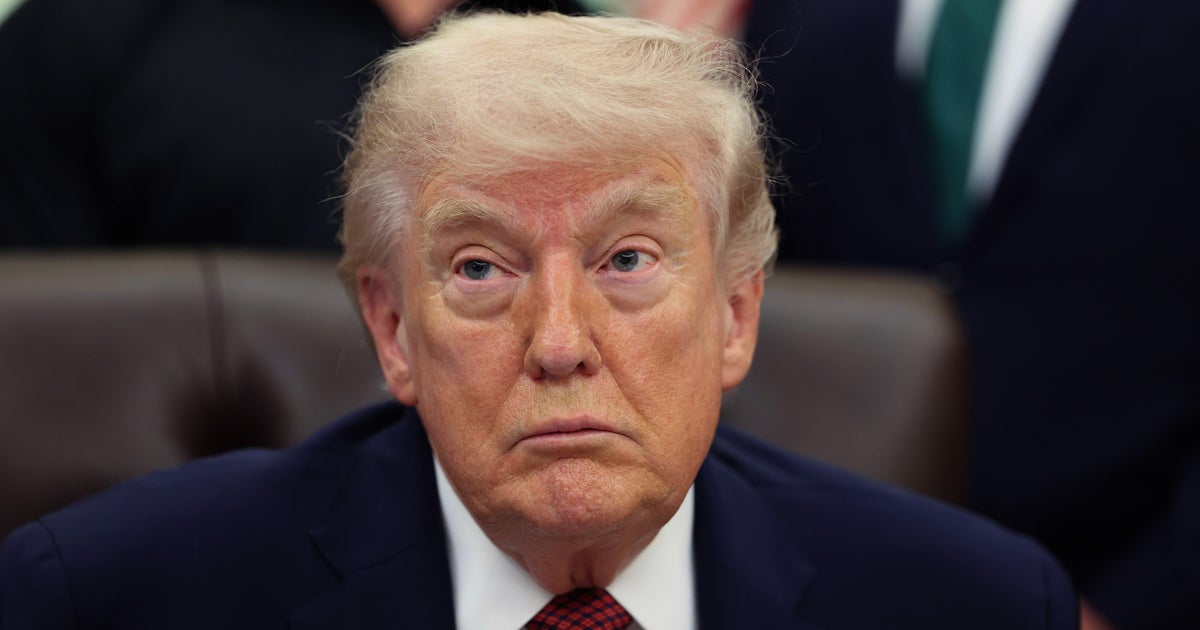
The Senate failed 46 to 51 to advance a resolution that would have limited President Trump's war powers in Iran, marking Democrats' fifth attempt to constrain military action since the conflict began eight weeks ago. The article highlights the approaching 60-day War Powers Resolution deadline, which could extend to 90 days if certified by the president, leaving the path for further U.S. military involvement uncertain. Markets are unlikely to react to the procedural vote alone, but the escalating Iran conflict and ceasefire deadline create meaningful geopolitical risk.
The market implication is less about the immediate vote outcome and more about the clock: the closer the situation gets to a hard legal deadline, the more the issue shifts from foreign policy to market plumbing. That raises the odds of a short, binary burst of risk-off positioning in defense, oil, airlines, and broad cyclicals if investors believe escalation risk is being pushed into a narrow window. The second-order effect is that headline sensitivity should rise even if the underlying conflict de-escalates, because any extension will be read as temporary rather than durable.
The bigger beneficiary is not necessarily traditional defense primes, but the entire “insurance bid” complex: energy, gold, Treasury duration, and defense ETFs with net exposure to geopolitical stress. A sustained Iran overhang can also widen the dispersion within aerospace/defense because missile-defense, ISR, and munitions supply chains tend to gain budget urgency faster than platform-heavy names. Conversely, refiners and airlines face the most asymmetric near-term downside if traders start pricing in shipping disruption or a renewed strike cycle, even before physical flows change.
The contrarian read is that the market may be underpricing policy off-ramps. Once the conflict becomes bound by a formal time limit, the incentive for both sides to manufacture a face-saving extension rises materially, which caps the probability of a prolonged kinetic shock. That argues for fading any knee-jerk spike in crude volatility unless the diplomatic channel truly breaks down; the better setup may be in options rather than outright directional cash positions, since the event path is more likely to be a sequence of deadline-driven gaps than a straight-line repricing.
AI-powered research, real-time alerts, and portfolio analytics for institutional investors.
Request DemoOverall Sentiment
neutral
Sentiment Score
-0.05
