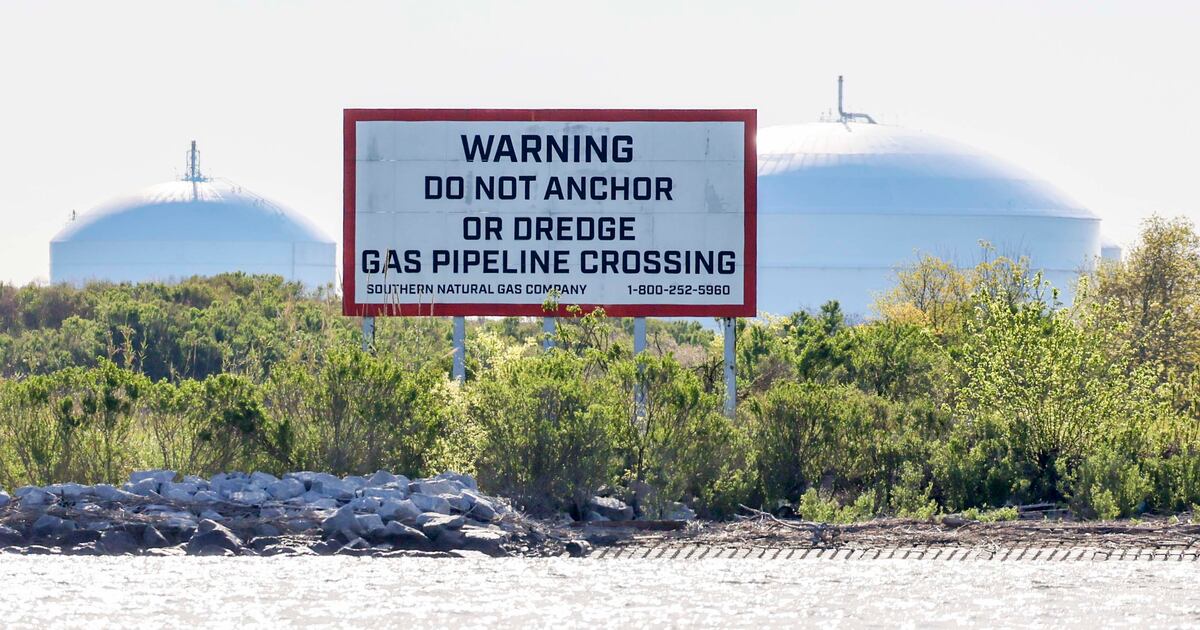
Key event: Iran war–triggered LNG export disruptions are straining global natural gas supply and spotlighting the decades‑old Savannah, Georgia LNG terminal (about 50 years old) and its large above‑ground storage tanks. The piece highlights aging infrastructure, constrained export capacity and delayed/limited expansions that reduce the U.S. ability to offset lost supply, risking tighter global gas flows and upward pressure on prices. Implication for portfolios: elevated volatility for energy-exposed assets, potential near-term upside for LNG exporters and price-sensitive suppliers, and downside risk for gas-dependent industrials and importers.
The market has re-priced a sustained premium on delivered LNG where geopolitical disruption increases voyage times and forces reroutes; that flow premium disproportionately benefits fee-based infrastructure and vessel owners while compressing economics for integrated, price-exposed E&P and trading desks. Expect the Henry Hub-to-TTF/JKM implied arbitrage to widen in episodic bursts — easily $2–4/MMBtu over weeks — which lifts per-shipment EBITDA for U.S. exporters but only if shipping and terminal bottlenecks don’t become multi-month chokepoints. Midstream players with fixed-fee or capacity-turnpike exposure capture much of that episodic windfall without taking commodity price downside, while large oil majors with merchant LNG exposure (materials, contracting, and short-cycle trading) take more P&L volatility.
Tail risks are asymmetric and tempo-dependent: days–weeks catalysts include insurance/war-premium moves on LNG carriers and rapid charter-rate spikes that can swing delivered cost by >$1/MMBtu per week; months-level reversals come from diplomatic de-escalation or strategic stock releases that could erase the premium in 30–90 days. Over 6–24 months, sanctioned-country workarounds and the scheduled ramp of Qatar/Australia/Q2–Q4 liquefaction capacity are the structural dampeners that could remove the “sustained scarcity” narrative. Monitor vessel insurance spreads, charter rates, and terminal utilization data as high-frequency indicators that presage price persistence.
Consensus is underweight the asymmetric value of fee-based midstream in this shock: the market often reflexively buys commodity producers and neglects pipeline/terminal owners who see volume and tariff reacceleration without direct commodity exposure. That makes KMI-style exposures a lower-volatility way to harvest the dislocation while using short-duration, option-based hedges on integrated majors to express downside in merchant LNG exposure.
AI-powered research, real-time alerts, and portfolio analytics for institutional investors.
Request DemoOverall Sentiment
moderately negative
Sentiment Score
-0.45
Ticker Sentiment
