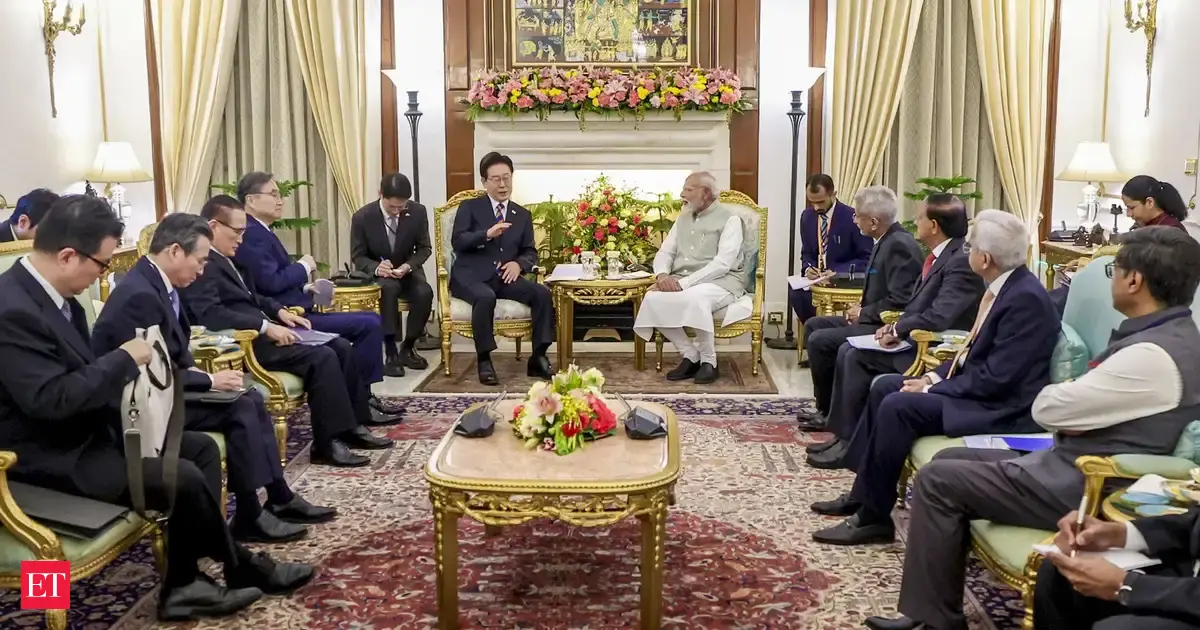
Korean conglomerates including Samsung, LG, Hyundai and SK Hynix signaled fresh investment plans in India, with Hyundai and TVS Motor signing a joint development deal for electric urban mobility solutions. SK Hynix is evaluating a memory chip assembly and testing facility, LG may expand into chemicals and display modules, and Samsung is considering higher exports from India. India and South Korea also agreed to deepen cooperation in semiconductors, AI, steel and critical minerals, while targeting bilateral trade of $50 billion by 2030 from about $27 billion כיום.
This reads less like a one-off diplomatic event and more like a coordinated attempt to re-anchor high-value manufacturing in India as a hedge against China-plus-one, tariff friction, and supply-chain concentration risk. The second-order winner is the Indian industrial ecosystem around electronics, battery components, precision tooling, and logistics; the immediate monetization will likely accrue to local contract manufacturers and land/utility owners before it shows up in the multinationals’ margins.
The most underappreciated angle is that incremental export ambition from India can compress regional supply chains in a way that benefits incumbents with existing scale and hurts pure-play exporters that lack local assembly depth. If semiconductor back-end and EV assembly capacity expands, the bottleneck shifts to power reliability, import substitution for chemicals/materials, and skilled labor — areas where execution risk is high and timelines are 12-36 months, not quarters. That means the market may be overpricing near-term revenue while underpricing capex, ramp inefficiency, and working-capital drag.
For Korea-linked names, the near-term catalyst is narrative rather than earnings: capital allocation announcements, joint ventures, and government support can rerate sentiment, but actual contribution to EPS is likely modest until 2026. The bigger contrarian trade is that this could be bearish for third-country exporters competing for the same India localization mandates, especially those reliant on exported finished goods into India. Any disappointment in domestic policy execution, land acquisition, or incentive disbursement could quickly reverse the bullish narrative.
The clearest market signal is to look through the headline and focus on beneficiaries of capex and localization, not the brand-name OEMs making announcements. The trade setup favors a barbell: long infrastructure/utilities/logistics names tied to industrial buildout, and selectively short higher-multiple global hardware names where India optionality is already priced in. Watch for policy follow-through over the next 1-2 quarters; absent that, this becomes a sentiment peak rather than a fundamental re-rating.
AI-powered research, real-time alerts, and portfolio analytics for institutional investors.
Request DemoOverall Sentiment
mildly positive
Sentiment Score
0.35
Ticker Sentiment
