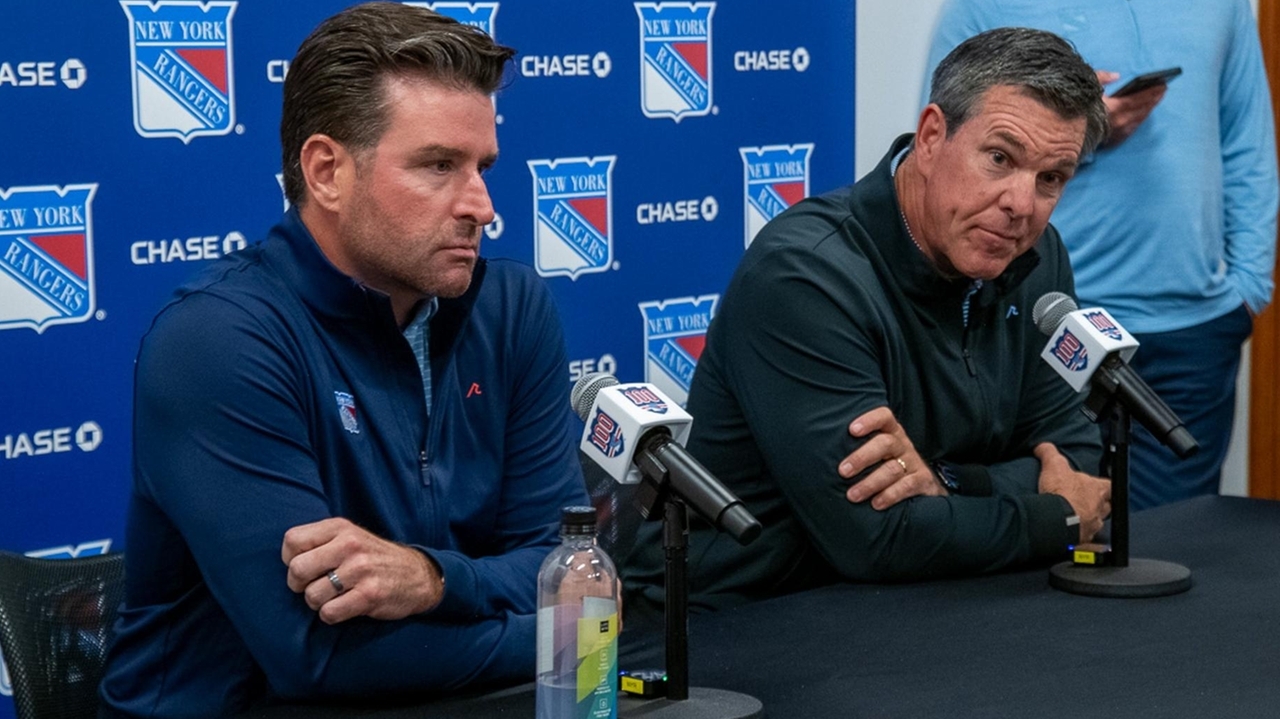
The Rangers fell from the No. 3 slot to No. 5 in the NHL draft lottery, while Toronto won the No. 1 pick and San Jose landed No. 2; Vancouver slipped to No. 3 and Chicago to No. 4. The Islanders stayed at No. 13. The article is primarily a factual update on draft-order outcomes and prospect rankings, with limited direct financial-market relevance.
The immediate market read is not the lottery result itself, but the preservation of optionality for the league’s most financially sensitive franchises. Moving from a top-3 to a top-5 outcome materially lowers the probability of landing a franchise-changing player, which matters because elite draft hits have become the cleanest path to cheap, controllable value in a cap-constrained sport. The incremental value between picks 1-2 and 5 is non-linear: the first two selections likely carry materially higher long-run surplus value than the middle of the top five, so the teams that moved up are buying a much larger expected asset than the teams that merely stayed in the top tier.
The second-order effect is on team-building timelines and near-term spending behavior. Clubs that miss on the very top tier are more likely to bridge the gap with veteran upgrades, which can inflate demand for mid-market free agents and trade-available defensemen over the next 6-12 months. Conversely, organizations with the premium picks now have stronger leverage to reset competitive windows, potentially suppressing urgency-driven spending elsewhere in the league and dampening the bidding power of marginal veterans.
The contrarian angle is that the market often overweights lottery disappointment as if it were a binary failure, when the real value is in prospect clustering and development variance. If the draft class truly has a sharp top-two and a broad defenseman tier after that, then picking fifth versus third may be less damaging than headline reaction suggests, because the marginal names in the 3-5 band could be close in outcome distribution. The bigger risk is not draft position per se, but organizational misallocation: teams that react by forcing a win-now roster patch can destroy more value than the lottery loss itself.
For sentiment, this is a classic short-lived narrative shock rather than a multi-quarter fundamental change. Any pricing around team-related merchandise, local media exposure, or arena attendance should mean-revert quickly unless the front office makes a visible, aggressive veteran trade in response. The key catalyst window is the 4-8 weeks after the draft, when roster construction and cap decisions will reveal whether the missed lottery outcome translates into behavior change.
AI-powered research, real-time alerts, and portfolio analytics for institutional investors.
Request DemoOverall Sentiment
neutral
Sentiment Score
-0.10
