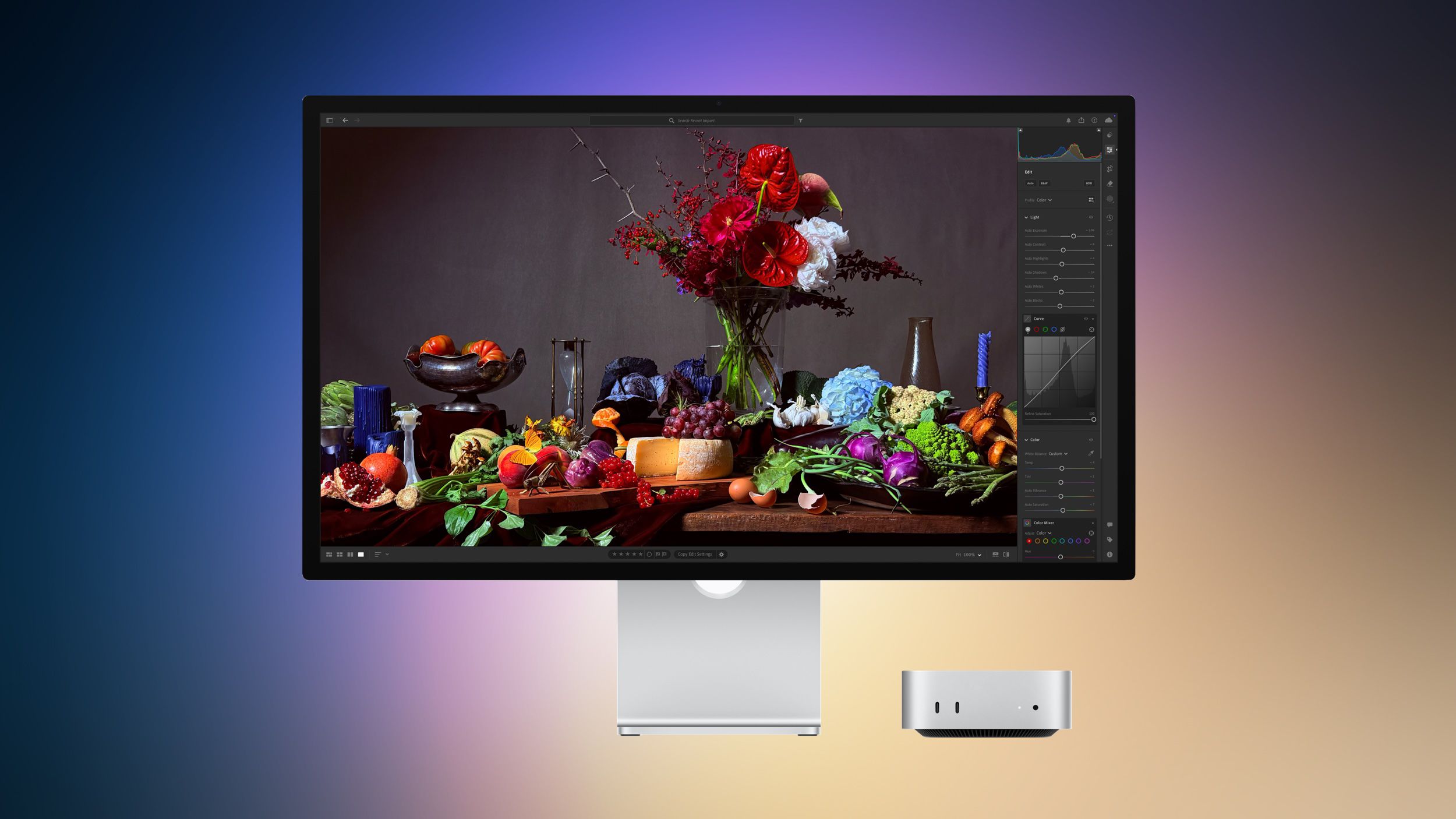
Apple launches the Studio Display (from $1,599) and Studio Display XDR (from $3,299) with the XDR positioned as a $5,000 Pro Display XDR replacement; reviewers highlight the XDR's 120Hz panel and up to 2,000 nits peak brightness. Reviews praise improved mini‑LED backlight, brighter contrast, loud built‑in speakers and a 12MP camera, but note niche/pro targeting given the $3.3k+ price, visible mini‑LED blooming versus OLED, limited Adobe RGB coverage (~86%), and some build‑style complaints; few direct 27” 5K mini‑LED 120Hz competitors exist. Impact to Apple’s broader revenue is likely limited in the near term given premium positioning and niche professional demand.
Apple’s move to re-price and re-segment the 27" display market via a higher-ASP mini‑LED 5K/120Hz SKU is less about incremental unit share and more about ecosystem entrenchment — it raises the switching cost for creative professionals who want perfect MacBook Pro pairing and Thunderbolt 5 convenience. Expect modest volume (single‑digit percent of Apple display TAM) but outsized wallet‑share impact: each higher‑margin display sold yields CPU/SoC/tb/OS attach benefits across services and accessories over 12–24 months.
Second‑order winners are component vendors sitting on mini‑LED dies, dimming ICs and Thunderbolt silicon; losers are mid‑tier monitor OEMs competing on price/performance who cannot match Apple’s system integration and may see ASP compression in the $800–$1,500 bracket. Over 6–18 months this could accelerate consolidation of the premium 27" space and push commodity makers to double down on gaming OLEDs or cheaper mini‑LED variants.
Tail risks are clear and time‑phased: in days-to-weeks, sentiment moves will track initial review cycles and pre‑order pickup; in months, supply bottlenecks for mini‑LED or component cost inflation could squeeze margins; in 1–3 years, OLED technology evolution (better contrast, less blooming) could structurally shorten the mini‑LED runway for pros. Regulatory/pricing scrutiny is a low‑probability but high‑impact reversal if Apple’s vertical leverage is interpreted as exclusionary by enterprise/pro channels.
The consensus focuses on product polish; it underestimates the strategic lock‑in benefit of matching display refresh rates and Thunderbolt versions to Mac hardware. Even if standalone unit demand remains niche, incremental lifetime value per pro user (hardware + service + accessories) is large enough to justify targeted inventory and marketing, making Apple a modest net beneficiary to both hardware margins and higher‑margin software/service attach over 12–24 months.
AI-powered research, real-time alerts, and portfolio analytics for institutional investors.
Request DemoOverall Sentiment
moderately positive
Sentiment Score
0.25
Ticker Sentiment
