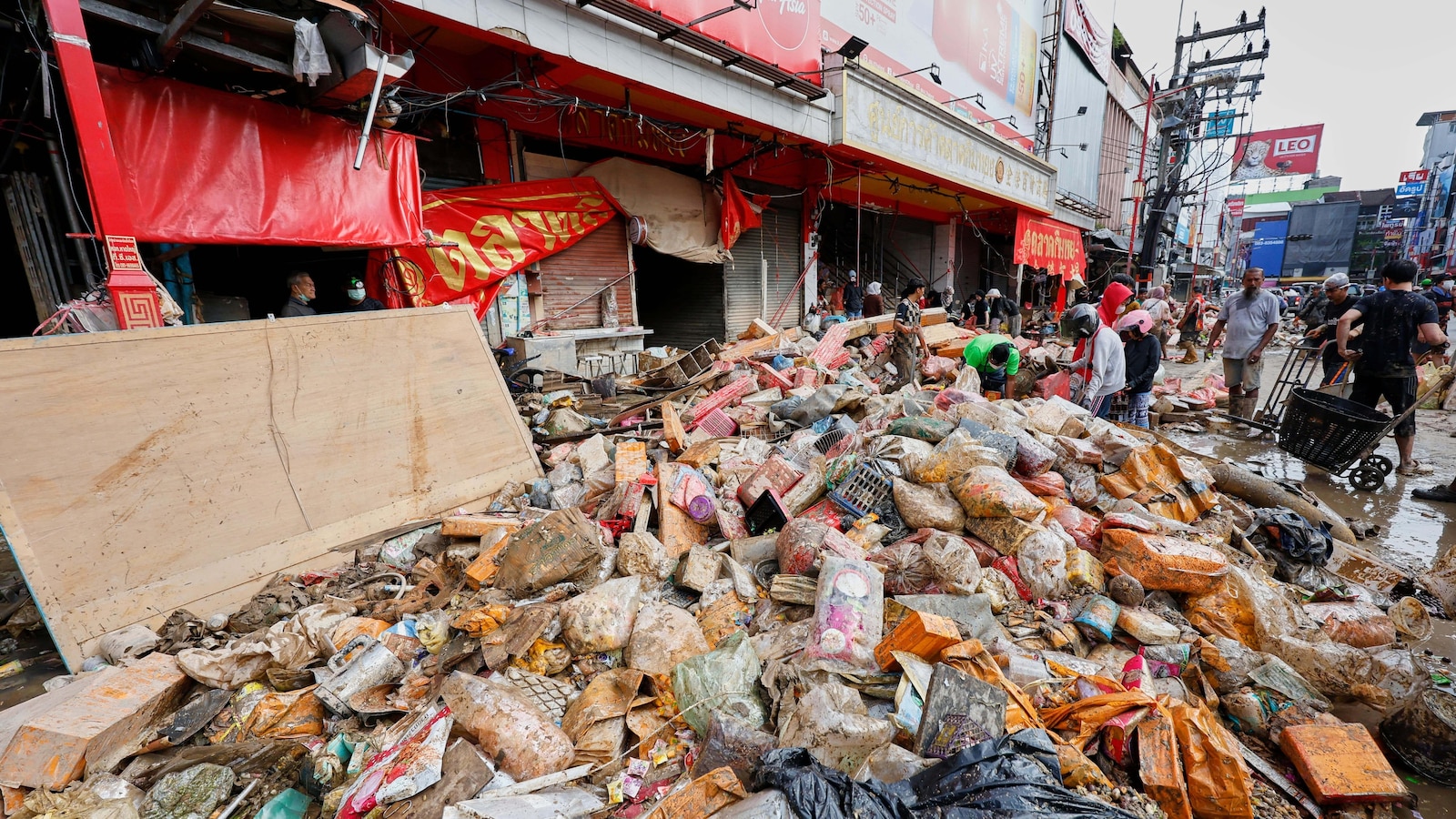
Severe flooding in 12 southern Thai provinces has killed at least 162 people and affected more than 1.4 million households (3.8 million people), with Songkhla province — and Hat Yai city in particular — accounting for 126 fatalities. The prime minister acknowledged government shortcomings, announced compensation distribution beginning next week and short-term relief measures including debt suspension and interest-free loans for businesses and home repairs; King Maha Vajiralongkorn pledged a 100 million baht donation to the flood-damaged Hat Yai Hospital. Water levels are receding and rescue teams continue recovery, but the scale of damage to homes, hospitals and local infrastructure poses near-term fiscal and economic strain in the affected regions.
Market structure: Immediate winners are local construction/materials suppliers and heavy-equipment rental firms that can capture post‑flood reconstruction (demand surge concentrated over 3–12 months). Direct losers are regional tourism, retail in affected provinces and Thai banks with concentrated exposure to southern retail/SME loans because of payment moratoria and interest‑free relief; expect near‑term revenue hit of 3–7% for exposed lenders over 1–2 quarters. Commodities: palm oil and natural rubber supply from the south will be interrupted, supporting nearby-month futures by a low‑double‑digit percent move if floods persist.
Risk assessment: Tail risks include sustained political backlash prompting larger fiscal transfers (deficit shock raising bond issuance/yields) or a sovereign rating watch if relief costs exceed budget buffers; these could depress THB 3–10% in stressed scenarios. Time horizons: days — tourist flows and local retail drop; weeks–months — loan moratoria impact bank earnings and claim spikes for homeowners; quarters–years — reconstruction drives cement/steel demand and potential insurance repricing. Hidden dependency: government prioritization of relief vs reconstruction will determine private-sector order flow; watch budget vote timing as catalyst.
Trade implications: Favor selective longs in high-quality materials (captures reconstruction) and commodity longs (near‑term palm oil, rubber), shorts or put protection on Thai banks and consumer discretionary exposed to the south. Use pair trades: long SCC.BK (materials) / short KBANK.BK (top retail bank) to capture relative recovery. For hedging, buy 1–3 month put spreads on EWT or bank stocks and size FX forwards to guard against THB weakness.
Contrarian angles: Markets may over-penalize the Thailand equity complex as a whole; reconstruction typically produces a multi-quarter boost to cement/steel (historical 2011 Thailand floods saw 20–30% local materials demand surge in 6–12 months). The consensus short on EWT risks being overdone vs concentrated shorts on bank balance-sheet risk. Unintended consequence: aggressive reconstruction funding could lift domestic inflation and rates, hurting leveraged property names while helping cash‑rich materials players.
AI-powered research, real-time alerts, and portfolio analytics for institutional investors.
Request DemoOverall Sentiment
moderately negative
Sentiment Score
-0.40
