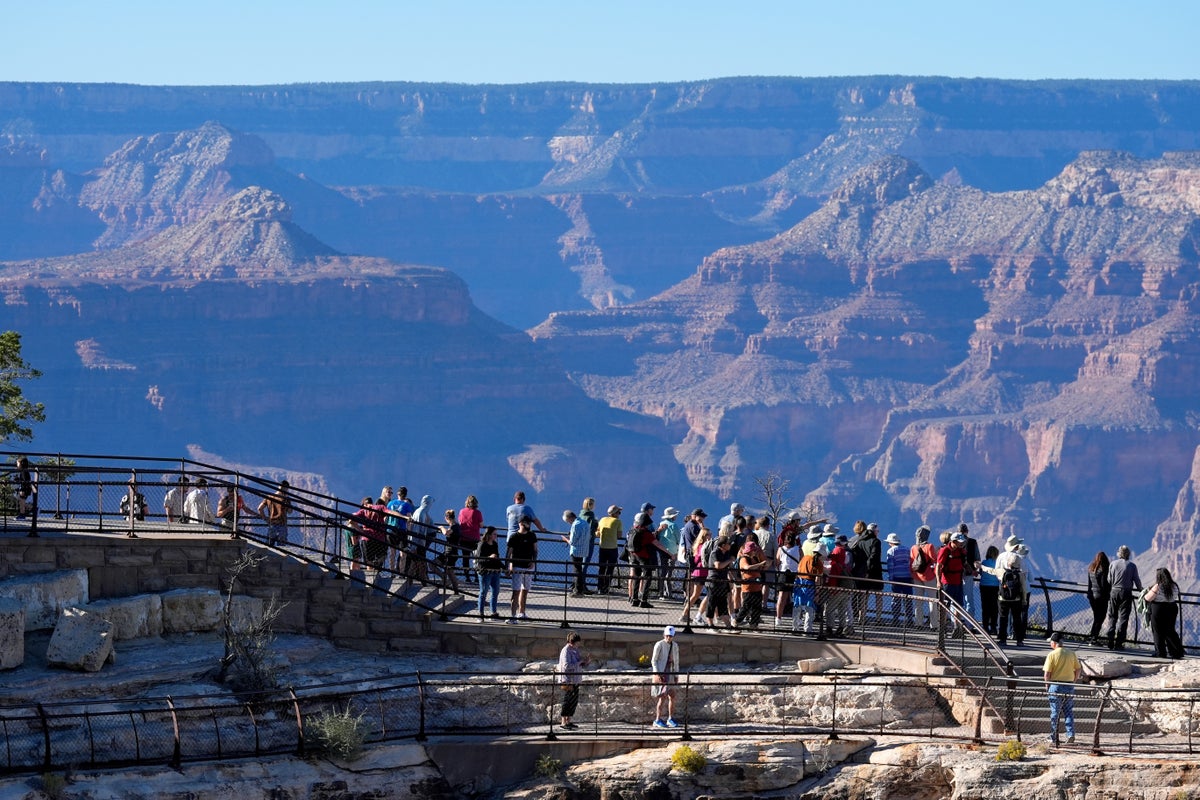
The Department of the Interior announced new national-park entry pricing effective January 1, 2026, setting an annual America the Beautiful pass at $80 for U.S. residents and $250 for nonresidents, plus a $100 per-person surcharge for non-residents entering 11 of the most-visited parks. The move is positioned to raise revenue for maintenance and deter overuse following service shortfalls during the prior shutdown; implications for markets are likely small and sector-specific—potentially modestly reducing international visitation to affected parks while increasing fee-derived funding for park operations.
Market structure: The policy is a concentrated demand shock for international tourists to 11 gateway parks (Yosemite, Grand Canyon, Yellowstone, Zion, etc.). Direct winners are park concession/service operators (food, lodging, retail) who can capture higher per-visitor spend; public exposure includes ARAMARK (ARMK). Direct losers are businesses and platforms disproportionately reliant on international long‑haul leisure (online travel agencies BKNG/EXPE, premium hotels MAR/HLT and long‑haul airlines UAL/AAL) — expect a measurable reallocation of spend rather than a broad tourism collapse (estimate 5–20% drop in international park visits for those 11 parks in 12 months, concentrated in shoulder seasons).
Risk assessment: Tail risks include litigation or federal/state pushback that would reverse policy (low prob but high impact), or coordinated foreign‑retaliation reducing inbound tourism beyond parks. Time horizons: immediate (days) = PR backlash and short‑term ticketing churn; short (weeks–months) = bookings for 2026 season reprice and OTA guidance revisions; long (quarters–years) = altered travel patterns and concession revenue streams. Hidden dependencies: many hotel/airline revenue pools are diversified — a 10–20% drop in park arrivals translates to only ~0.5–2% EPS hit for large hotel/airline names unless amplified by seasonality.
Trade implications: Tactical winners: small-cap concession/park services and on‑site retailers (ARMK long, size 1–3% of portfolio) and domestic outdoor retailers/gear suppliers that capture substitution demand. Tactical losers: BKNG/EXPE and long‑haul leisure exposures in MAR/HLT and UAL/AAL — consider short/put exposure sized to 1–3% with 3–9 month expiries ahead of 2026 booking windows. Options: buy 3–6 month puts on BKNG (10–15% OTM) and consider covered-call or call spreads on ARMK to fund cost; pair trade = long ARMK vs short BKNG to isolate park vs global leisure risk.
Contrarian angles: Consensus assumes headline politics drives collapse; the market is likely understating price‑inelastic visitors (tourists who already booked multi‑destination trips) and concession upsell potential — per‑visitor revenue could rise >20% offsetting volume declines. Conversely, branding on passes (Trump imagery) could deter renewals among affluent outdoor consumers and reduce annual pass renewals by 3–8%, a wild card that would hurt concession flows. Historical parallel: policy shocks that raise user fees (e.g., airline fuel surcharges) often initially depress volume but increase provider margins within 6–12 months; watch visitation data for signs of demand re‑elasticity before scaling positions.
AI-powered research, real-time alerts, and portfolio analytics for institutional investors.
Request DemoOverall Sentiment
neutral
Sentiment Score
-0.15
