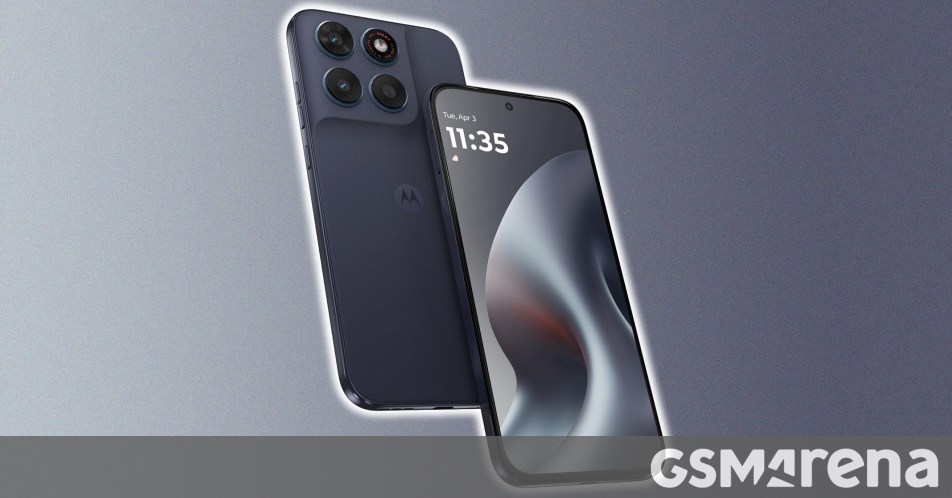
Motorola’s upcoming Moto G87 is shown in official-looking renders and appears set to launch in Pantone Overture Gray and Pantone Blue Atoll. The phone is expected to feature a Dimensity 6000-series chip, a 6.67-inch OLED display, and a new 200MP main camera with OIS, while last week’s leak pegged European pricing at around €400. The report is largely product-preview coverage with limited immediate market impact.
This looks less like a consumer-upgrade story and more like a margin defense problem. Moving a midrange handset to a headline 200MP camera while downgrading/flatlining the application platform signals a strategy of spec-sheet inflation to justify price points as hardware differentiation compresses; that usually helps gross margin only if consumers are heavily camera-led and not performance-led. The risk is channel pushback: at roughly the implied price tier, buyers can find last-gen or competitor models with stronger compute, better video, and broader feature sets, which raises discounting risk within 1-2 quarters of launch.
The second-order effect is more interesting in the Android ecosystem. If this tier increasingly ships without meaningful video or processing headroom, OEMs may widen the gap between “camera marketing” and real-world utility, pushing enthusiasts and power users toward Samsung/Pixel or even discounted prior-gen models. That creates a bifurcated market: better sell-through for premium brands at the top, but weaker attach and shorter replacement cycles in the $300-$450 bracket where value-sensitive consumers can easily arbitrage specs.
For suppliers, the likely winner is the imaging stack rather than the handset OEM: higher-resolution sensors, OIS modules, and camera software/IP providers should see mix improvement even if unit growth is flat. The loser is the chipset vendor if this class of device is asked to carry a premium ASP narrative without commensurate performance, because it invites direct comparisons to cheaper phones and increases the probability that channel inventory gets managed aggressively after launch.
Contrarian view: the market may be overreacting to the chip headline and underestimating how much buyers in this segment optimize for camera branding and industrial design, not benchmark scores. If that’s right, the phone can still sell through despite obvious value concerns, but the tradeable setup is more about short-cycle inventory risk than a long-duration demand collapse.
AI-powered research, real-time alerts, and portfolio analytics for institutional investors.
Request DemoOverall Sentiment
neutral
Sentiment Score
0.05
