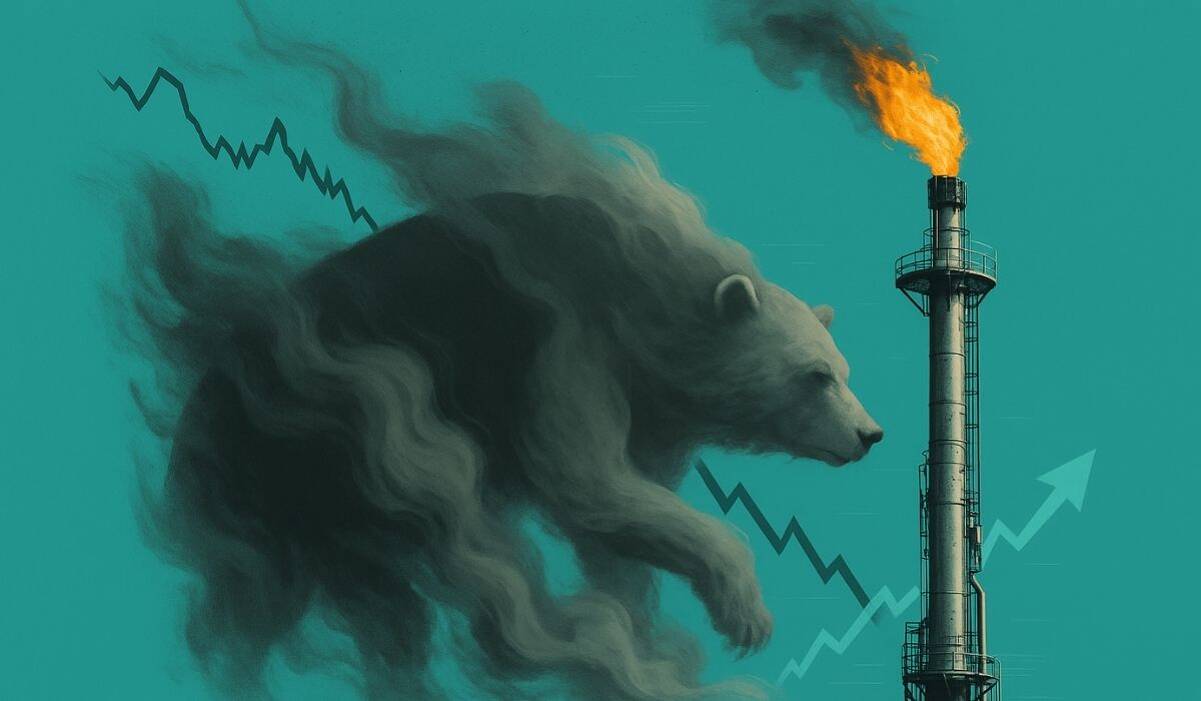
Oil and gas sentiment remains volatile as Iran says the Strait of Hormuz will not be fully opened until U.S. demands are met, following attacks tied to the Houthis on regional infrastructure and multiple vessel strikes. Reported impacts include China’s crude imports falling to 7.78m bpd in June–July (down 4.21m bpd vs the pre-conflict average) and Asia imports excluding China totaling 22.82m bpd (about 4m bpd below prior averages), implying ~5m bpd of constrained Middle East exports. Natural gas is firmer at ~$2.75 (breaking $2.73, with resistance at $2.81 and $2.88), while WTI ~$78.08 is rebounding but remains below key longer-dated resistance (near the ~79.9–80 area), keeping the crude outlook mixed.
The investable edge is not in owning outright crude here; it is in volatility and cross-asset spillovers. A persistent Gulf shipping disruption would first tighten prompt barrels and freight, but the bigger second-order winners are non-Gulf exporters, LNG-linked names, and tanker rates, while Asian refiners, airlines, and petrochemical margins get squeezed before upstream producers fully re-rate. If the market accepts even a partial normalization of routing, the front end can unwind quickly because the physical bottleneck has already forced demand destruction in China and broader Asia, meaning some of the risk premium is being capitalized into near-term imports rather than just spot prices.
Natural gas is a cleaner tactical setup than crude because the event risk is asymmetric into the upcoming EIA/STEO print. Healthy storage caps the downside, but Hormuz-linked LNG insecurity creates a real short-covering trigger if the market starts to price export disruptions or a tighter winter balance. That said, this is still a trading move, not a structural bull thesis: a failure to hold the breakout area would likely trap momentum buyers and send gas back into its prior range quickly.
The contrarian view is that the market may be overestimating the duration of the supply shock and underestimating how fast barrels reroute through inventories and alternative shipping. If Brent cannot clear the nearby resistance band on a closing basis, the right expression is to fade strength rather than chase it. The falsifier for the bearish-to-neutral oil view is a sustained break higher that forces systematic commodity and energy equity inflows; absent that, the cleaner signal is event-driven range trading rather than trend following.
AI-powered research, real-time alerts, and portfolio analytics for institutional investors.
Request DemoOverall Sentiment
mildly negative
Sentiment Score
-0.18
Ticker Sentiment
