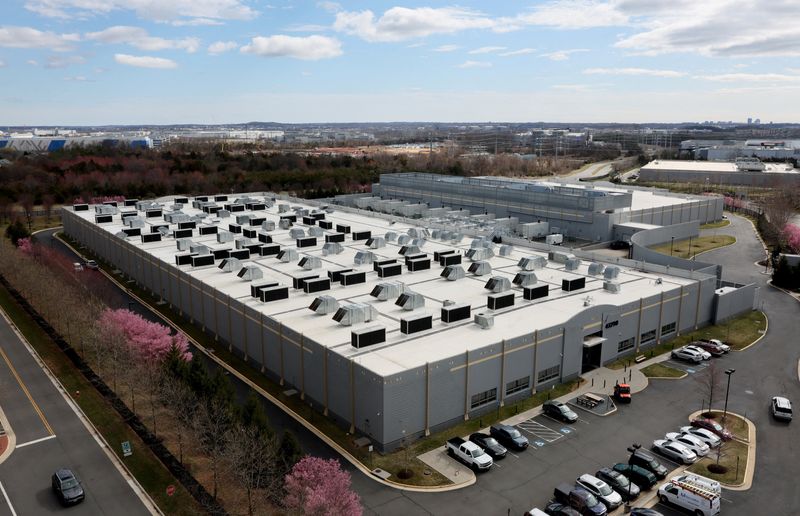
Prologis reported Q1 diluted EPS of $1.05, well above the $0.81 consensus, and revenue of $2.14 billion versus $2.12 billion expected. Core FFO per diluted share rose to $1.50 from $1.42, while management highlighted record 64 million square feet of lease signings and $1.3 billion of data center build-to-suit starts. The company raised FY2026 EPS guidance to $3.80-$4.05, above the $2.93 consensus, signaling stronger operating momentum.
PLD’s print is less about a single-quarter beat and more about a broader read-through on logistics real estate pricing power: if lease signings are accelerating while guidance is being raised materially, the market is likely still underappreciating how long industrial occupancy can stay tight even after rates normalize. That matters for the whole supply-chain stack because warehouse demand is a lagging indicator of inventory re-acceleration; if tenants are locking space now, the next beneficiaries are likely third-party logistics operators, packaging, and selected last-mile transport names rather than just landlords.
The second-order effect is on capital allocation, not just rent growth. Strategic capital partnerships reduce dilution risk and extend PLD’s ability to fund development without leaning on expensive unsecured debt, which is a meaningful edge if credit markets stay sticky. Competitors with shorter-dated debt and less access to JV capital may be forced to slow starts, which over the next 2-4 quarters could tighten new supply more than current headline vacancy suggests.
The contrarian risk is that the market may already be extrapolating peak operating leverage from one strong quarter while ignoring cyclical sensitivity to inventory destocking and e-commerce normalization. If macro data weaken or tariffs/geo headlines impair trade flows, industrial leasing can decelerate faster than rent rolls reprice; the first pressure point would show up in forward leasing spreads and development yields, not same-quarter FFO. That makes the setup attractive on a 6-12 month horizon, but less compelling if chasing it after a gap-up.
The most interesting angle is that this is not purely a defensive real estate story; it is also a scarce-infrastructure story tied to data centers and power availability. If PLD successfully converts more land and power-constrained sites into digital infrastructure, the multiple could migrate toward infrastructure-like comps rather than traditional REIT comps, but only if execution stays ahead of permitting and capex inflation. That creates upside optionality, but it is a slower-burn catalyst than the near-term leasing momentum.
AI-powered research, real-time alerts, and portfolio analytics for institutional investors.
Request DemoOverall Sentiment
strongly positive
Sentiment Score
0.72
Ticker Sentiment
