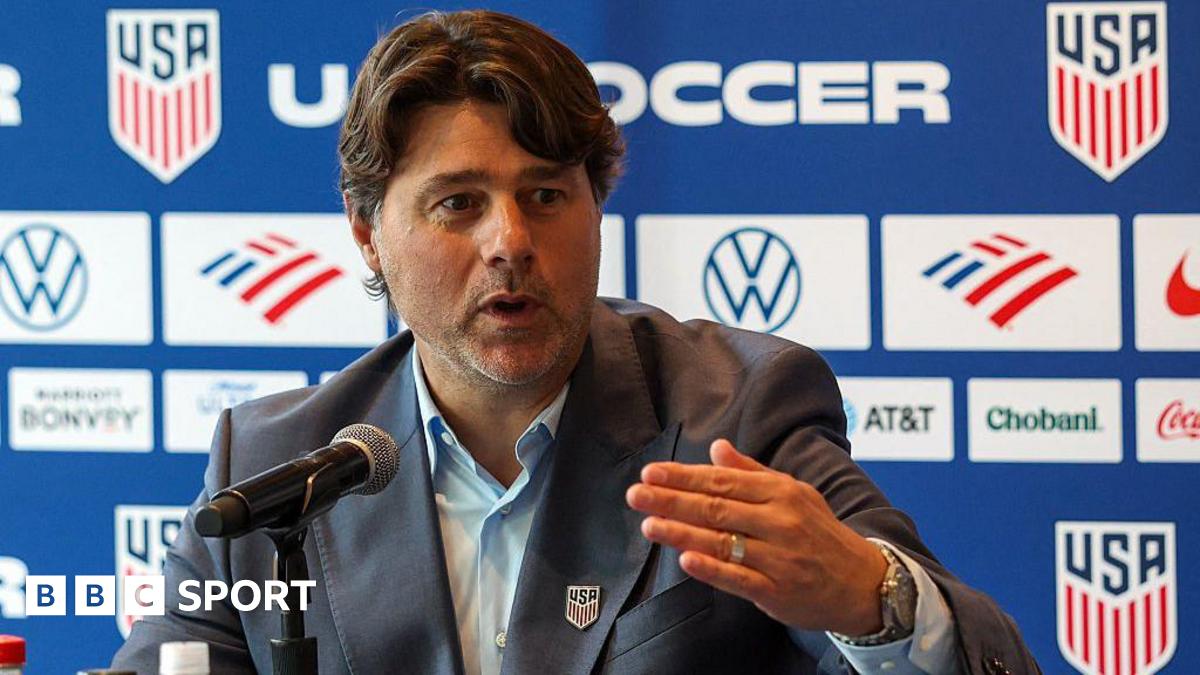
Mauricio Pochettino defended his decision to email excluded players and send video messages to the 26-man World Cup squad instead of making phone calls. The article centers on criticism of his communication style rather than any sporting, financial, or operational change. The World Cup co-hosts open Group D play against Paraguay on 13 June, followed by Australia and Turkey.
This is not a sports-PR headline; it is a governance and leadership signal. The larger economic risk is internal cohesion: when a manager publicizes a process that feels asymmetric, it can create a small but real probability of morale drag, social-media backlash, and avoidable distraction in the 2-6 week window before a high-variance tournament. In a team sport, those soft costs matter most when execution margin is thin and one or two percentage points of concentration can swing outcomes.
The second-order effect is reputational rather than operational. Pochettino is effectively choosing process efficiency over relationship management, which can be defensible if the group performs, but becomes costly if results turn quickly because the story will be reinterpreted as detachment. For media businesses, this kind of controversy is a short-lived engagement booster: it extends headline life and discussion volume, which supports near-term attention economics even if it does little to improve the underlying product.
The contrarian read is that the market may overprice the downside from the communication issue because elite teams often absorb this kind of friction once competition starts. The real catalyst is not the criticism itself but the opening match: a poor first result would convert a benign HR dispute into a broader narrative about leadership credibility, while a win would likely erase most of the noise within days. That asymmetry suggests this is a volatility event, not a structural break.
For travel/leisure and adjacent media sponsors, the lesson is that tournament-start uncertainty can create temporary sentiment dips in fan-adjacent demand, but those are usually tradeable only if coupled with on-field underperformance. Absent that, the most rational position is to treat the controversy as a short-duration attention spike with limited fundamental spillover.
AI-powered research, real-time alerts, and portfolio analytics for institutional investors.
Request DemoOverall Sentiment
neutral
Sentiment Score
-0.05
