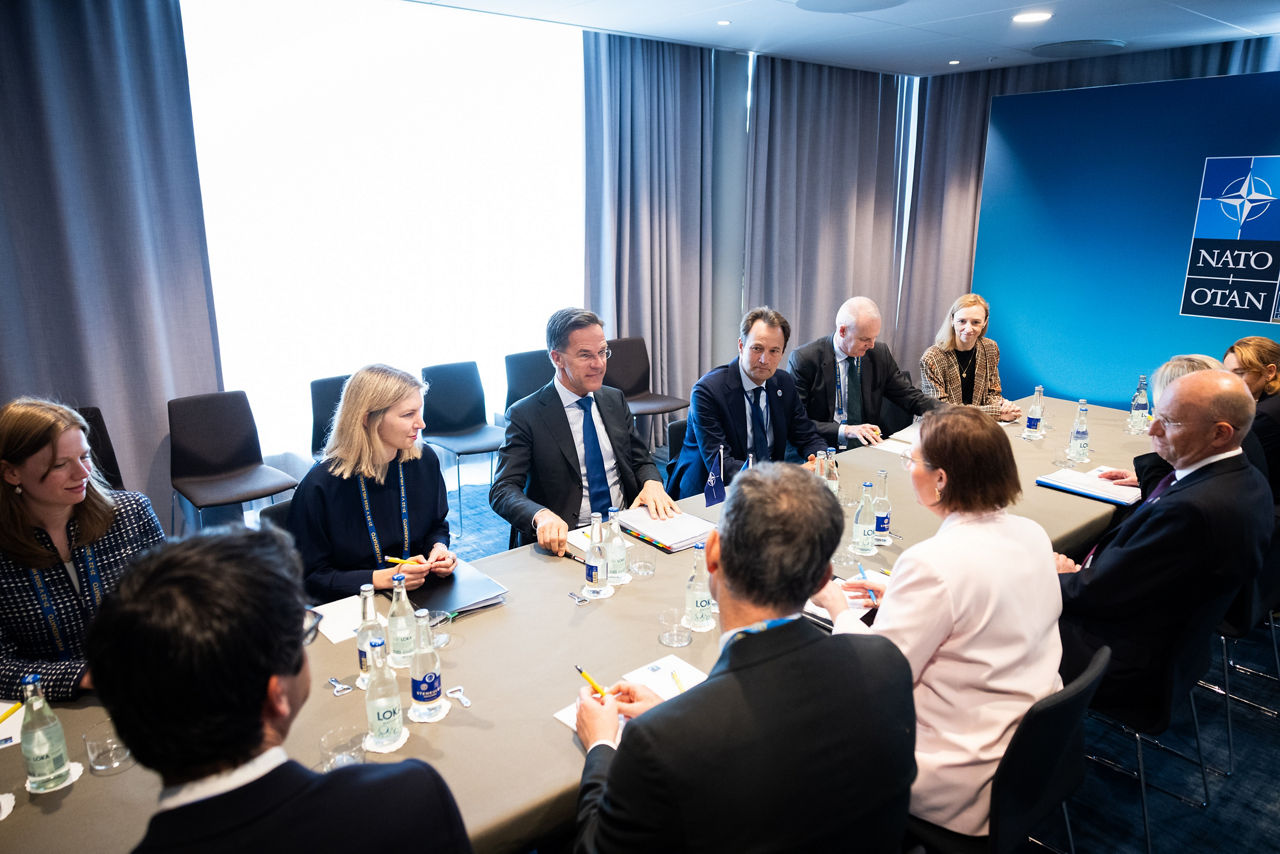
The article contains no substantive financial news content; it appears to be boilerplate and a page header referencing the Meeting of NATO Ministers of Foreign Affairs on 21 May 2026 in Helsingborg, Sweden. No market-moving event, policy announcement, or financial data is provided. As written, the item is effectively non-actionable for markets.
The strategic signal here is less about the announcement itself and more about the continued normalization of NATO’s institutional cadence under persistent security stress. That tends to favor the defense procurement stack with the longest lead times and the least cyclical revenue recognition: munitions, air defense, electronic warfare, secure comms, and NATO-adjacent logistics rather than big-ticket platform primes alone. The second-order effect is that allies with low inventory depth will be pushed toward multi-year replenishment commitments, which supports backlog visibility for suppliers with production bottlenecks and entrenched qualification status. The more interesting market implication is for European industrial policy. If ministers are gathering in Sweden, the overhang is not just incremental spending but faster harmonization of procurement standards and cross-border supply resilience, which benefits firms embedded in EU/NATO framework contracts and hurts fragmented national champions that rely on one-off domestic awards. Expect pressure on sub-tier suppliers in energetics, semiconductors, and specialty metals as buyers prioritize surge capacity and dual-sourcing; that can create margin dispersion even inside the defense complex. Catalyst timing is medium term, not immediate: headlines may drive a few days of sentiment, but the tradeable earnings impact typically shows up over 2-6 quarters as orders convert into backlog and then revenue. The main reversal risk is political fatigue if the security environment de-escalates or fiscal tightening forces budget deferrals; in that case, the market will quickly re-rate away from “structural rearmament” and back toward cyclical order timing. A contrarian risk is that consensus is overweighting platform primes; the underappreciated winners may be the boring capacity bottlenecks that the system cannot quickly reconstitute. There is also a regulatory angle: tighter governance around defense cooperation can accelerate approvals for joint procurement and export licensing, but it can equally delay deals if alliance members demand more local content or transparency. That creates a spread between firms with U.S. export flexibility and those dependent on intra-European political consensus. Investors should treat this as a stock-selection event rather than a clean sector beta trade.
AI-powered research, real-time alerts, and portfolio analytics for institutional investors.
Request DemoOverall Sentiment
neutral
Sentiment Score
0.00
