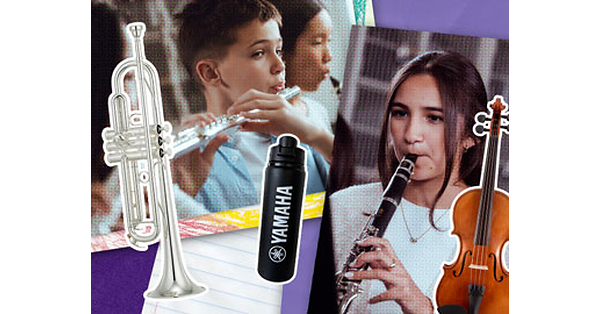
Yamaha is launching its Back-to-School Music Sweepstakes for families of band/orchestra participants, offering a School Music Starter Kit that includes $500 toward a one-year rental of a Yamaha wind or string instrument plus one year of complimentary access to Tomplay. The promotion also includes digital sheet music access (100,000+ titles) and Yamaha swag, with entry open through September 30, 2026. This is a retail/marketing initiative with limited expected financial impact.
This reads as brand maintenance, not a material demand inflection. For YAMCY, the only real financial mechanism is a modest funnel benefit: a school-music promotion can help preserve rental share and keep students inside the Yamaha ecosystem, which matters more for lifetime value than for this quarter’s P&L. But the economics are likely de minimis versus consolidated revenue, so any immediate stock reaction should fade unless the company later shows measurable lift in U.S. winds/strings sell-through or higher rental conversion.
The second-order angle is competitive, not incremental revenue. A bundled digital-learning offer can raise switching costs against local music retailers and independent rental programs that compete on convenience, especially during the 60-90 day back-to-school window. Still, promotional giveaways often just subsidize existing demand rather than create new players, so the risk is that this merely front-loads marketing spend without expanding the addressable base.
Over 1-3 months, the only catalyst is channel commentary: rental utilization, accessory attach rates, and school-program adoption. Over 6-18 months, the thesis would only matter if Yamaha can prove that a lower-cost digital ecosystem improves retention and instrument ownership conversion. Contrarian view: the market may overestimate any “consumer engagement” signal here; absent hard data, this is likely noise rather than a fundamental re-rate.
AI-powered research, real-time alerts, and portfolio analytics for institutional investors.
Overall Sentiment
neutral
Sentiment Score
0.10
Ticker Sentiment
