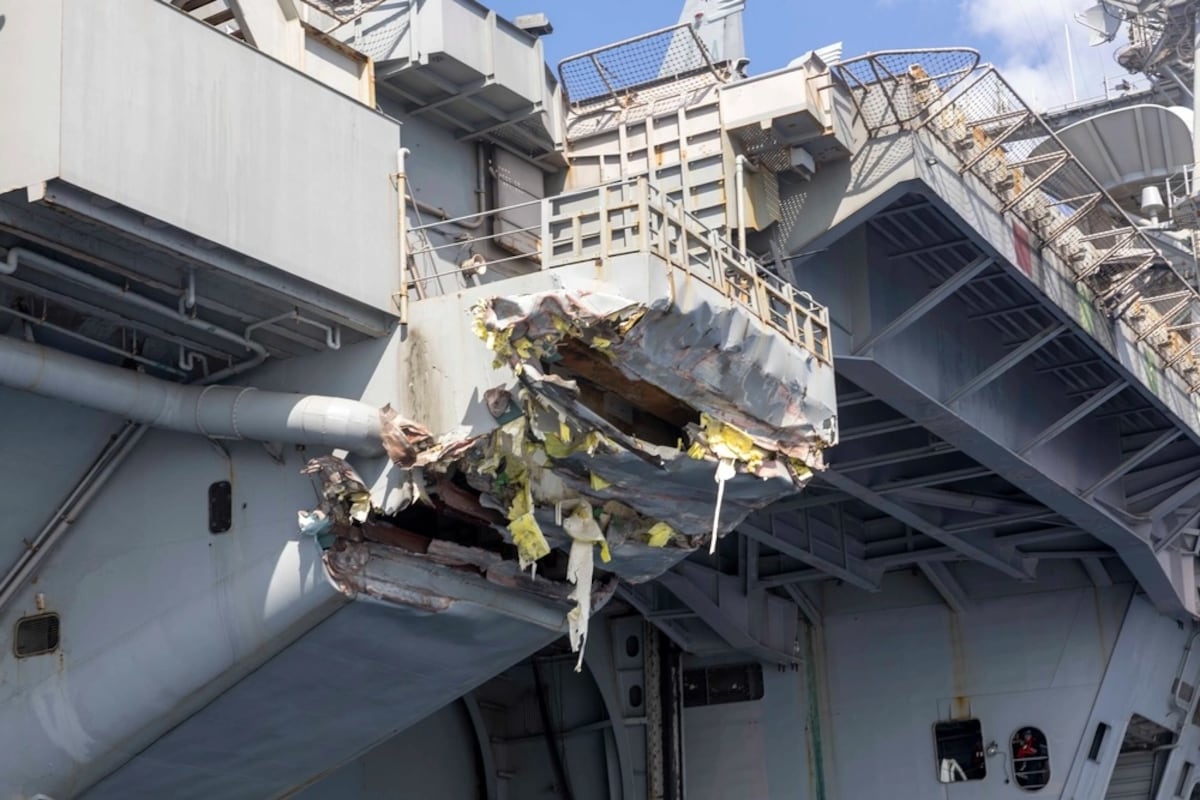
Between December 2024 and May 2025 the USS Harry S. Truman Carrier Strike Group experienced four serious incidents including a Feb. 12 collision with the merchant vessel Besiktas‑M near Port Said (no injuries) and the loss of three F/A‑18 Super Hornets (each roughly $60 million) via friendly fire, a hangar‑bay fall during evasive maneuvers, and a failed arresting‑wire landing that forced ejections. Navy investigations found the collision was avoidable and cited failures in bridge team navigation, misidentification and lack of integrated training, maintenance defects (including a malfunctioning #4 starboard sheave damper and brake failure), poor communication, low manning and high operational tempo; the incidents prompted the relief of the carrier’s commanding officer and commitments to remedial investment to restore readiness.
Market structure: Operational failures on USS Truman create a near-term demand shock for sustainment, spare parts and hangar/arrester-gear work — three F/A-18 losses (~$60M each) imply ~$180M of replacement asset value plus repairs and trapped-capability costs. Winners: A&D sustainment and specialized contractors (HII, LHX, RTX, LMT, GD) and simulation/training vendors; losers: carrier operational-readiness dependent contractors, commercial shippers exposed to Red Sea risk, and niche marine insurers. Pricing power shifts toward specialist MROs with multi-month lead times for parts and dock space.
Risk assessment: Immediate (days) = headline-driven equity volatility and elevated IV in defense names; short-term (weeks–months) = emergency contract awards and parts procurement; long-term (quarters–years) = potential reallocation in NDAA toward readiness and training. Tail risks include Congressional investigations that could delay contracts or reassign budgets (negative) versus a bipartisan surge in sustainment funding (positive). Hidden dependencies: single-vendor arresting-gear/damper suppliers and under-manned carrier air wings creating persistent sustainment demand.
Trade implications: Tactical: overweight A&D sustainment — HII (HII) and L3Harris (LHX) for ship/aircraft repair and training, RTX for avionics/parts. Implement 6–12 month call spreads (buy HII 12-month 1.2x ATM call / sell 30% OTM) and 3–6 month buy-write on LHX. Reduce container/shipping exposure (ZIM, AMKBY/AMKBF) by 10–20% to hedge rerouting/insurance-cost risk. Entry window: 2–6 weeks; exit or reweight after NDAA enactment or >15% move.
Contrarian angle: Consensus focuses on reputational damage; market may underprice multi-year sustainment upside — a 3–5% reallocation in DoD budgets toward readiness would translate to $500M–$2B incremental annual TAM for MRO contractors. Risk: accelerated automation/unmanned investments could reduce long-term legacy-aircraft aftermarket beyond 2–4 years. If HII/LHX drop >10% on headlines, treat as buy-the-dip for 6–12 month horizon.
AI-powered research, real-time alerts, and portfolio analytics for institutional investors.
Request DemoOverall Sentiment
strongly negative
Sentiment Score
-0.60
