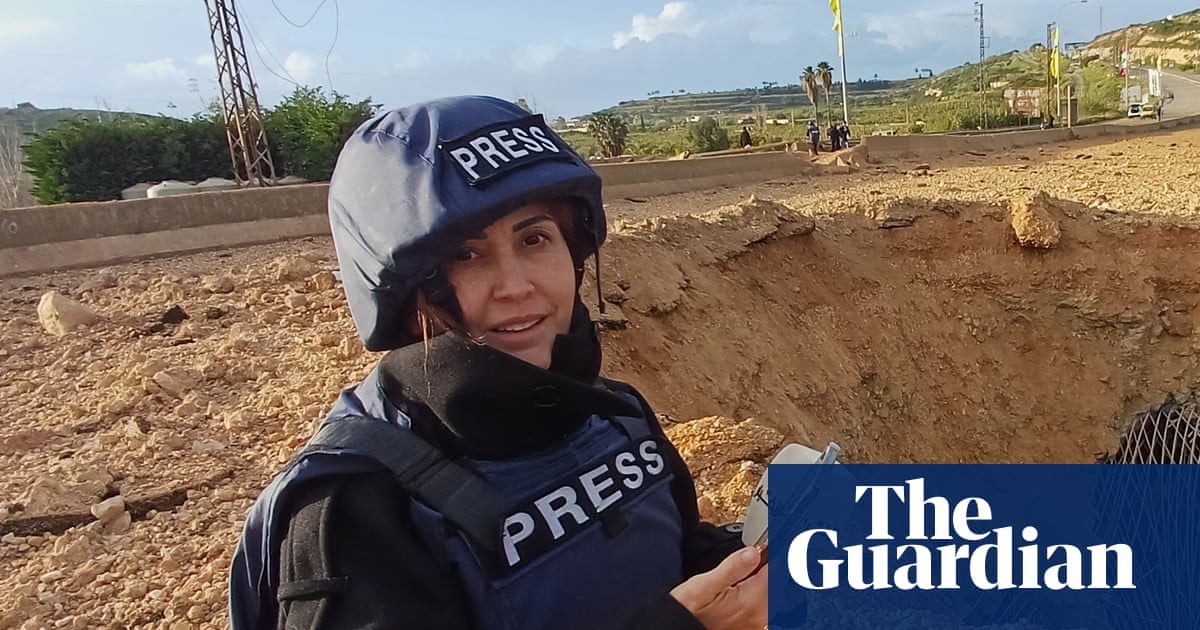
Israeli strikes in southern Lebanon killed five people on Wednesday, including journalist Amal Khalil, after rescuers were reportedly blocked by further fire from reaching the rubble. Lebanon’s prime minister called the targeting of journalists and obstruction of rescue efforts "war crimes," while Israel said it struck vehicles that posed an immediate threat and denied preventing rescue teams from entering the area. The incident adds to heightened geopolitical risk amid the ongoing Israel-Hezbollah conflict and ceasefire tensions, with talks between the two sides set to continue under US auspices.
This is less about the immediate casualty count and more about the widening gap between battlefield tactics and diplomatic containment. When a ceasefire zone still produces high-profile civilian and press casualties, the probability of a negotiated de-escalation compresses quickly, because every incident raises the political cost of restraint for Beirut while hardening Israel’s operational perimeter logic. The next-order effect is that “temporary” border occupation behavior becomes stickier: once troops and buffer lines are in place, reversing them usually requires either a credible monitoring force or a materially higher external penalty, neither of which is evident yet.
For markets, the key transmission is not broad risk assets but selected regional proxies: defense beneficiaries, pressure on Lebanon-linked sovereign risk, and renewed optionality in energy if the front expands. The near-term catalyst is the next round of US-mediated talks; a one-month extension would buy time but also implicitly signal that neither side can enforce a durable pause, which is bearish for any ceasefire-sensitive asset. If talks fail, the market will likely reprice toward a months-long attritional conflict rather than a days-long flare-up, with asymmetric downside for Lebanon’s already distressed financial system and infrastructure rebuild prospects.
The contrarian point is that headlines like this often produce an overreaction in headline risk but underreaction in settlement mechanics. Israel’s stated objective is a border buffer, not necessarily a broad escalation, so absent a strike on a strategic node or mass casualty event, the conflict can remain regionally contained even as local volatility stays extreme. That makes the best expression a relative-value trade, not a directional macro bet: the market is likely to overprice geopolitical beta and underprice the persistence of a low-grade, chronic border regime.
Watch for two reversal conditions over the next 2-6 weeks: a verifiable ceasefire-monitoring arrangement with enforcement teeth, or a US-brokered package tying border demarcation to humanitarian access. Short of that, every additional casualty near journalists or rescue crews raises the odds of international legal pressure and reputational costs, but those typically matter on a 3-6 month horizon, not overnight.
AI-powered research, real-time alerts, and portfolio analytics for institutional investors.
Request DemoOverall Sentiment
strongly negative
Sentiment Score
-0.85
