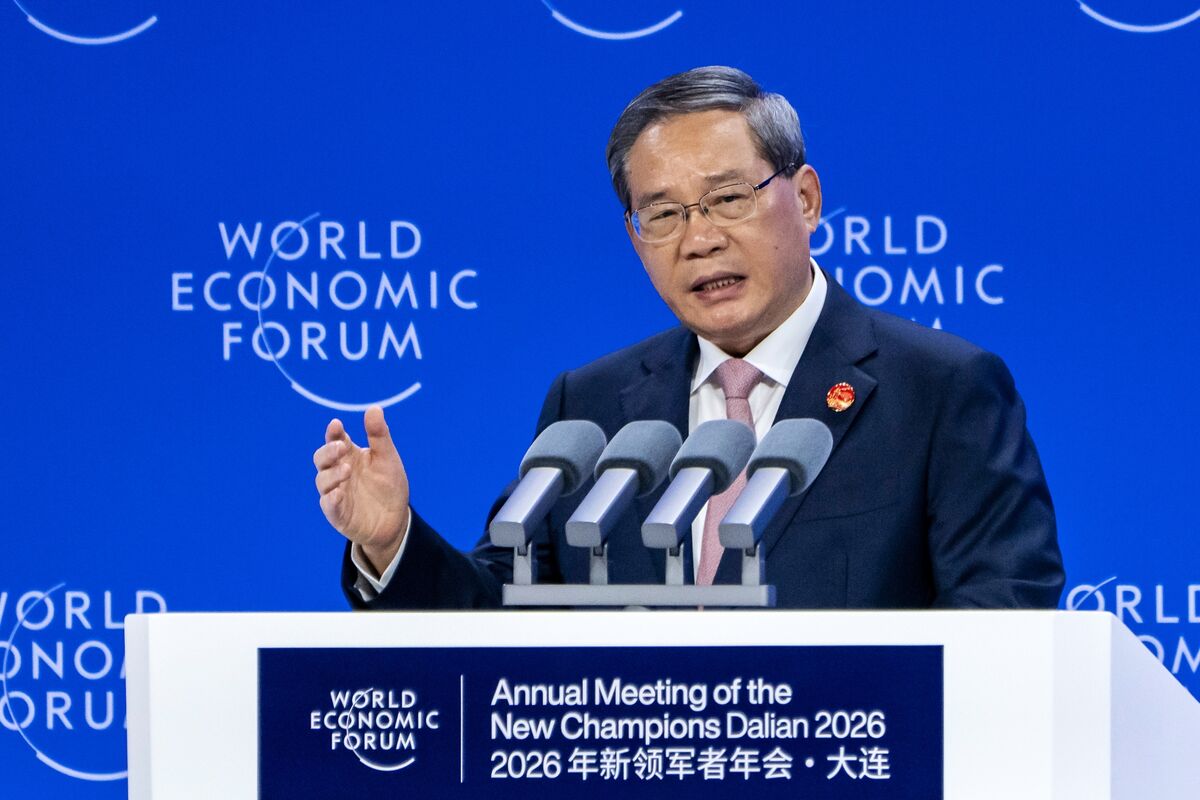
Premier Li Qiang downplayed global concerns over China’s surging exports, framing them as a source of 'China Opportunity 2.0' at the World Economic Forum in Dalian. The remarks signal Beijing’s continued defense of its trade stance amid rising international ire, but the article contains no new policy action or quantitative change. Market impact is likely limited, though the tone reinforces ongoing trade tensions involving China.
The market should treat this as a signaling event, not a macro turning point. Beijing is effectively testing whether the rest of the world will tolerate a faster reallocation of manufacturing rents toward China; the first-order winner is Chinese capital-intensive exporters, but the second-order loser is the broad set of mid-cycle industrials in Europe and emerging Asia that sit in the same supply chains and lack China’s scale, financing, and policy support. The more important implication is margin compression outside China: if Chinese firms keep exporting deflation, foreign producers will have to choose between ceding volume or cutting price, and that tension usually shows up first in autos, machinery, solar, batteries, and chemicals.
The contrarian point is that “China opportunity” rhetoric may actually reflect domestic pressure, not confidence. If internal demand is weak, export intensity rises as a release valve, which is bearish for global pricing power but also increases the probability of a policy backlash in 3-12 months. That backlash can take the form of anti-dumping duties, local-content rules, procurement restrictions, or accelerated industrial subsidies in the US/EU/India—none of which is imminent enough to trade on daily, but all of which can re-rate winners and losers quickly once announced.
The cleanest setup is to own the beneficiaries of imported deflation while fading the most exposed producers with weak differentiation. The risk is that China’s exports remain disorderly for longer than consensus expects, which would extend the squeeze on non-China manufacturers and keep inflation lower for longer in importing economies. In that scenario, rate-sensitive growth and industrial input users outperform, while capital goods and commodity-linked names face a slower earnings recovery than the market is pricing.
This is a months-long rather than days-long theme: the equity reaction should be gradual unless a formal tariff package or subsidy response is announced. The key catalyst to watch is whether trade policy rhetoric from Washington, Brussels, or New Delhi shifts from concern to implementation; that would convert a soft-landing macro story into a supply-chain reconfiguration trade within a quarter.
AI-powered research, real-time alerts, and portfolio analytics for institutional investors.
Request DemoOverall Sentiment
neutral
Sentiment Score
0.05
