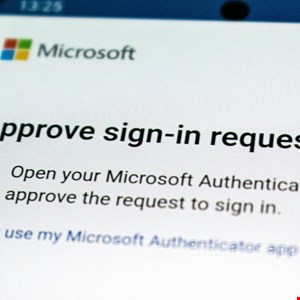
The FBI warned that the Kali365 phishing-as-a-service platform, first detected in April 2026 and distributed mainly via Telegram, enables attackers to capture Microsoft 365 OAuth tokens and bypass MFA without stealing credentials. The service uses AI-generated phishing lures and device-code abuse to gain persistent access to Outlook, Teams, and OneDrive accounts. The FBI advised organizations to restrict device code flow, block authentication transfer policies, and protect emergency access accounts.
This is less a one-off phishing story than an incremental monetization upgrade for attackers: productized social engineering, AI-generated lures, and device-code abuse reduce the skill barrier and should increase attack volume, not just severity. The key second-order effect for Microsoft is not direct license churn but rising trust friction around the M365 identity layer, which can force enterprise customers to spend more on adjacent controls, support, and user-training while raising the probability of tighter default security settings that impair workflow.
The biggest near-term risk is operational, not fundamental: compromise paths that bypass passwords and MFA can spread laterally through email, Teams, and file-sharing workflows before detection, creating outsized incident-response demand over the next 1-3 quarters. That tends to benefit endpoint/identity security vendors with policy enforcement and token protection, while hurting any software stack perceived as the weakest link in identity governance. For MSFT, the risk is a modest multiple overhang from headline frequency rather than an earnings hit, unless a material enterprise breach is traced to a Microsoft-native control gap.
The contrarian angle is that the market may be overestimating revenue damage and underestimating security-budget capture. If enterprises react by tightening conditional access and expanding identity protection, Microsoft can actually pull more security attach into E5 and adjacent modules, partially offsetting the narrative drag. The more durable bear case would require evidence that customers start substituting away from M365 collaboration or that regulators force default restrictions on device-code flows across enterprise tenants, which is a months-to-years issue rather than an immediate catalyst.
AI-powered research, real-time alerts, and portfolio analytics for institutional investors.
Request DemoOverall Sentiment
strongly negative
Sentiment Score
-0.70
Ticker Sentiment
