
NASA Identifies More Than 40 Space Technologies for Collaboration
Source: NASA (.gov)
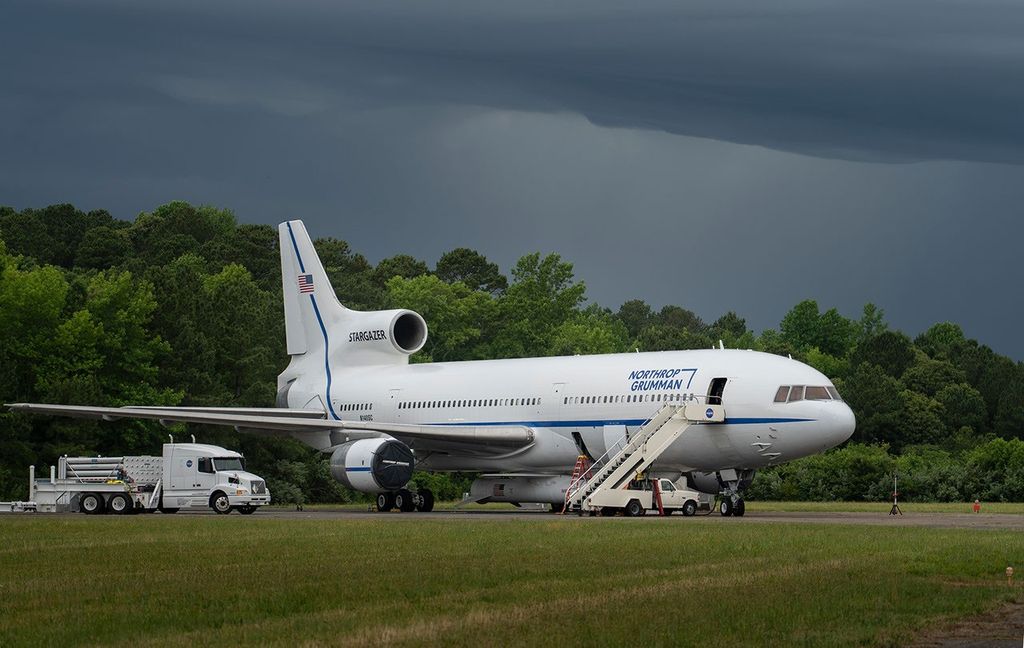
NASA selected 41 proposals from 37 companies under its 2025 ACO, with projects aimed at Moon, Mars, and in-space technology development. The program will leverage about $30 million of NASA resources to unlock an estimated $32 million of industry contributions over 12-24 months, supporting power generation, in-space logistics, and dust mitigation technologies. The news is broadly positive for aerospace innovation and commercial space partnerships, but the direct market impact is likely limited.
Analysis
This is more important for LMT’s strategic optionality than for near-term earnings. NASA’s non-dilutive collaboration model effectively lowers the cost of de-risking dual-use technologies, which should improve the hit rate on future defense, civil space, and adjacent energy applications without requiring LMT to fund the entire learning curve. The second-order benefit is reputational: primes that repeatedly show up in these programs become preferred systems integrators when NASA moves from prototype validation to procurement, especially in power, thermal management, and surface infrastructure.
The market is likely underestimating how much this reinforces a broader space-stack ecosystem rather than a single contract event. If wireless power transfer, lunar power, and dust-mitigation mature, the value accrues to suppliers of thermal, materials, autonomy, and power subsystems long before it shows up in launch demand. That creates a longer-duration pull for high-margin enabling technologies, while commoditized launch and one-off hardware vendors see less benefit because the moat shifts toward qualification, survivability, and integration expertise.
Catalyst timing is measured in quarters to years, not days. The main risk is that these are still pre-commercial technology maturations with no guaranteed transition to funded programs; historically, many space demos never scale beyond lab validation. For LMT specifically, the upside case is a higher probability of follow-on U.S. government work and incremental content in lunar infrastructure architectures, but the downside is that expectations get ahead of actual revenue conversion if investors treat this as an immediate backlog event.
The contrarian read is that the real winner may be the small, specialized enablers, not the prime. A successful NASA validation can be a platform-changing reference customer for private fundraising, partnerships, and export sales, which can rerate select venture-backed names far more than a mature conglomerate. For LMT, this is supportive but not thesis-changing; for the broader defense-space basket, it argues for owning the picks-and-shovels layer rather than chasing headline association with Artemis/Mars themes.
AllMind Terminal
AI-powered research, real-time alerts, and portfolio analytics for institutional investors.
Request TrialMarket Sentiment
Overall Sentiment
mildly positive
Sentiment Score
0.25
Ticker Sentiment
Key Decisions for Investors
- Maintain a modest long LMT bias into the next 3-6 months, but size it as a strategic optionality trade rather than an earnings catalyst; upside is multiple expansion on space relevance, while downside is limited because this is non-dilutive and not capex-heavy.
- Pair trade: long LMT / short a launch- or hardware-only space supplier basket over 3-6 months; the former has the best probability of converting NASA collaboration into repeatable program content, while the latter faces higher execution risk and weaker moats.
- Build a watchlist of private-market enablers in lunar power, thermal, and dust mitigation for follow-on venture exposure; treat successful NASA validation as a 6-18 month fundraising catalyst with asymmetric upside versus public market primes.
- Avoid chasing the headline as a near-term revenue story; if LMT rallies >5-7% on the news without follow-through in funded awards, fade part of the move and wait for evidence of procurement conversion.
- Use any broad-space selloff over the next 1-2 quarters to accumulate names with subsystem exposure rather than pure launch exposure; the durable demand signal here is qualification of enabling tech, not rocket cadence.
More News
- Lockheed Martin: Q3 Sparked Euphoria, But Factory Physics Matters More Than Paper Billions
- Dow Heads for 3rd Weekly Win Despite Tech Turmoil
- US-Iran war, then and now: How the landscape has changed since February
- Apple’s $2,000 iPhone Duo Debuts With Limited Supply
- OpenAI Trims Target Value & Volvo Cars Cuts 2,500 Jobs
- Trump Pushes DOJ Lawsuit Over Alaska Senate Race
From AllMind Research
- Anthropic IPO Preview: Valuation, Timing, and What to Watch
- Shein After the IPO: Venue, Valuation, and What Must Be Proved
- What AI Research Tools Should a Small Hedge Fund Buy First?
- What Is an AI Research Agent?
- Bitcoin's 52% Crash Proves It's a Tech Stock: Here's What That Means for Portfolio Construction