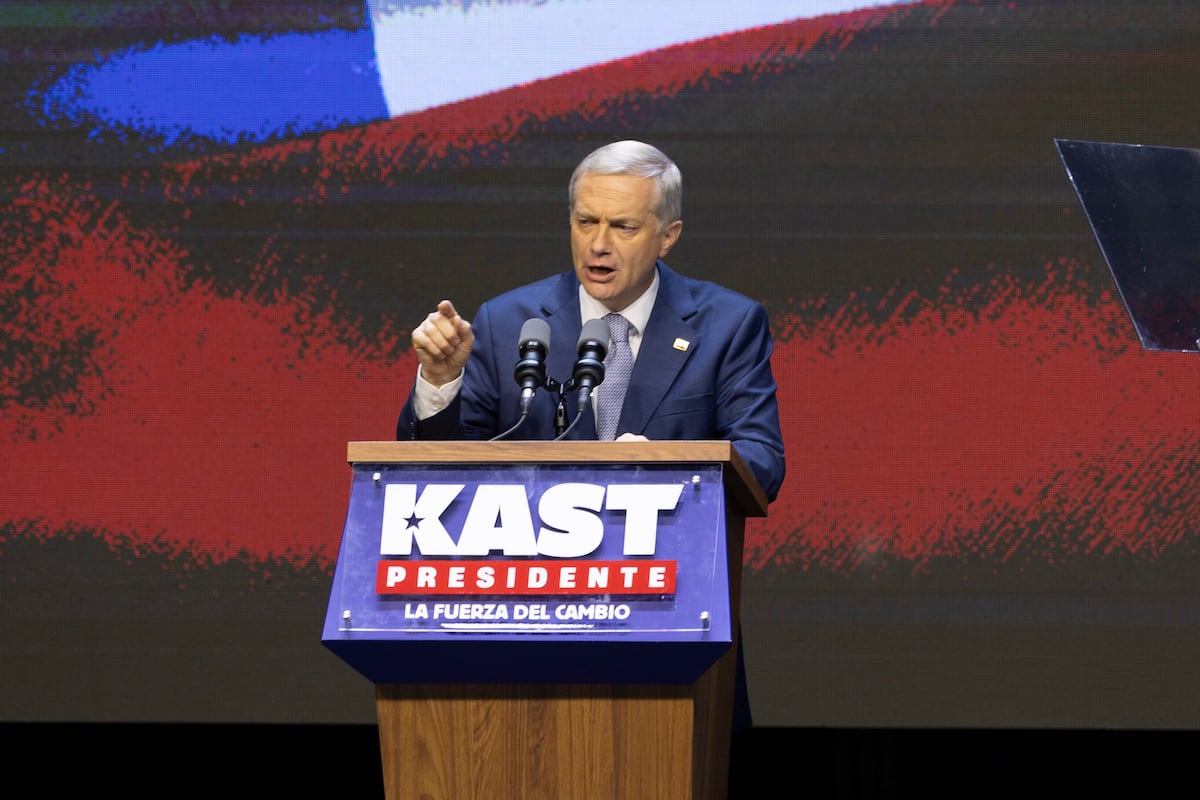
José Antonio Kast’s surprise victory in Chile’s presidential runoff has unsettled Latin America’s left and produced sharply divergent responses: Brazil’s Lula offered a restrained congratulation emphasizing a democratic, orderly vote; Mexico’s Claudia Sheinbaum called for reflection among progressive movements; while Colombia’s Gustavo Petro launched incendiary attacks likening Kast to Pinochet, prompting a formal protest from Chile’s foreign minister, and Venezuela’s Nicolás Maduro also weighed in with extreme rhetoric. The outcome highlights a broader regional tilt to the right (following recent shifts in Argentina, Bolivia, Paraguay and Ecuador), risks heightened ideological polarization and diplomatic friction, but may not derail pragmatic engagement by leaders like Lula—who has pursued constructive ties with Washington amid recent U.S. moves such as removing Judge Alexandre de Moraes from a sanctions list and easing some tariffs.
José Antonio Kast’s surprise victory in Chile’s presidential runoff has unsettled the regional left and produced sharply divergent official responses: Brazil’s Lula promptly congratulated Kast calling the election “democratic, transparent and orderly,” Mexico’s Claudia Sheinbaum urged progressive movements to reflect, while Colombia’s Gustavo Petro launched incendiary attacks likening Kast to Pinochet and Hitler and Venezuela’s Nicolás Maduro issued a separate warning. Chile’s foreign minister lodged a formal note of protest with the Colombian ambassador in response to Petro’s comments, illustrating immediate diplomatic friction between regional leaders.
The article situates the result within a broader rightward shift that recently included Argentina, Bolivia, Paraguay and Ecuador, increasing geopolitical risk and ideological polarization across Latin America. At the same time, pragmatic diplomacy appears to persist: the piece cites Lula’s strategy of dialogue and recent U.S. moves—removal of Judge Alexandre de Moraes from a Magnitsky list and easing of tariffs on beef, coffee and other Brazilian imports—as evidence that commercial ties can remain insulated from ideological shifts.
Market-tone signals attached to the report are mildly negative (sentiment −0.3) with a low market-impact score (0.18), implying limited immediate market disruption but elevated political risk that could cause episodic volatility in Chilean assets and bilateral relations. Investors should therefore price increased political/regulatory uncertainty in Chile while watching early policy signals and diplomatic developments for catalysts that would materially alter risk premia.
AI-powered research, real-time alerts, and portfolio analytics for institutional investors.
Request DemoOverall Sentiment
mildly negative
Sentiment Score
-0.30
