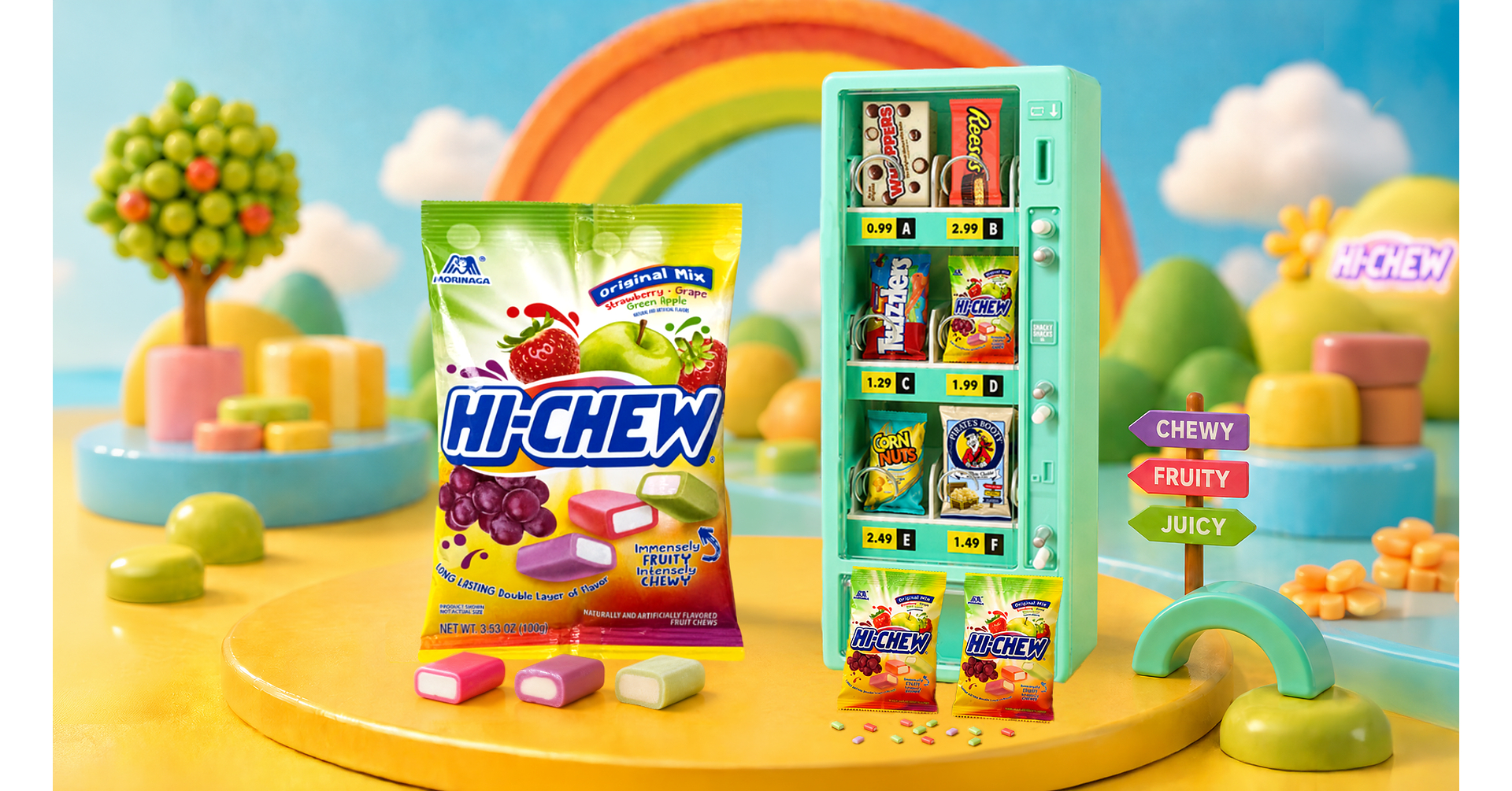
HI-CHEW® launched its first-ever licensing collaboration with MGA’s Miniverse™, debuting the limited-edition “Real Brands Vending Machine” retailing for $19.99. The machine includes three exclusive HI-CHEW® “Original Mix” mini collectibles (including a peg-bag replica with tiny “chewlets”) plus a mini credit card for dispensing display snacks. Overall, this is a consumer-facing brand expansion into mini collectibles, aimed at Gen Z fandom and nostalgia, with limited near-term financial materiality implied.
This is less a revenue event than a signal that branded snack names are becoming interchangeable IP assets in the toy/collectibles ecosystem. The economic benefit accrues mostly to the distributor and retailer: low-ticket, high-velocity, giftable SKUs can lift basket size and search traffic without meaningful balance-sheet risk, but only if sell-through stays tight. For WMT and TGT, the second-order win is merchandising leverage in impulse aisles; for AMZN, the win is algorithmic discovery and add-on conversion, which matters more in viral, fandom-driven products than in traditional candy.
The bigger implication is competitive: brands that can piggyback into collectibles may steal endcap space and social buzz from adjacent toy lines, especially smaller players without established IP or influencer velocity. That said, the channel economics are still minor versus core consumables or general merchandise, so any enthusiasm should be capped unless there is evidence of repeat orders, expanded SKU count, or holiday shelf expansion. If the item stalls, retailers will quickly rationalize inventory, and the read-through disappears within one quarter.
Contrarian view: the market may be overrating this as evidence of durable Gen Z resonance. Licensing collaborations can be a cheap way to manufacture relevance, but they often substitute for true household penetration. The real tell is whether this drives measurable attachment rates or just one-off novelty sales. If collector demand fades, this is neutral-to-negative for toy retailers that over-index on trend merchandise and for brands that confuse social engagement with pricing power.
AI-powered research, real-time alerts, and portfolio analytics for institutional investors.
Request DemoOverall Sentiment
mildly positive
Sentiment Score
0.25
Ticker Sentiment
