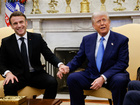
The article highlights growing tensions between President Trump and President Macron ahead of next week's G7 summit in France, driven by disputes over tariffs, Ukraine, Iran, and NATO. The summit could feature awkward exchanges among the U.S. and other G7 leaders, but the piece is primarily political and diplomatic rather than a direct market catalyst. Macron has also adjusted the summit schedule to accommodate Trump's 80th birthday and likely early departure habits.
The market implication is not the optics of an awkward summit; it is the growing probability that Europe’s policy response shifts from tactical de-escalation to structural de-risking. If the U.S. continues to treat allies as transactional counterparties on tariffs, Ukraine, and security guarantees, the marginal winners are European defense, munitions, cyber, and dual-use industrial capacity, while the losers are the large U.S.-exposed exporters that rely on frictionless transatlantic trade. The second-order effect is supply-chain rewiring: procurement localization in Europe should accelerate, and that tends to be sticky even if rhetoric later softens.
The near-term catalyst is the summit itself, but the more important horizon is 3-12 months: every public dispute raises the odds of retaliatory trade measures, procurement restrictions, and an increased European fiscal push toward strategic autonomy. That is constructive for defense primes and select industrials, but less so for autos, aerospace, chemicals, and machinery names with high EU/U.S. cross-border revenue exposure. The market is likely underpricing the persistence of this regime shift because headlines are episodic, while capex and procurement decisions are multi-year.
On risk, the main bull case for transatlantic equities is that officials will use the summit to stage-manage unity and postpone concrete escalation. If a ceasefire framework or even a temporary trade détente emerges, the immediate premium in defense and Europe-autonomy names could compress quickly. But even then, the longer-run policy path remains changed: once ally trust is impaired, Europe typically adds redundancy rather than remove it, which makes the trade more about duration than event risk.
The contrarian view is that the consensus may be overestimating the market impact of interpersonal tension and underestimating institutional inertia. NATO, EU procurement, and industrial policy cannot be re-written overnight, so the largest moves likely come from budget and tender pipelines rather than summit theatrics. That argues for focusing on businesses with visible 12-24 month order books, not on names trading purely on headline beta.
AI-powered research, real-time alerts, and portfolio analytics for institutional investors.
Request DemoOverall Sentiment
neutral
Sentiment Score
-0.10
