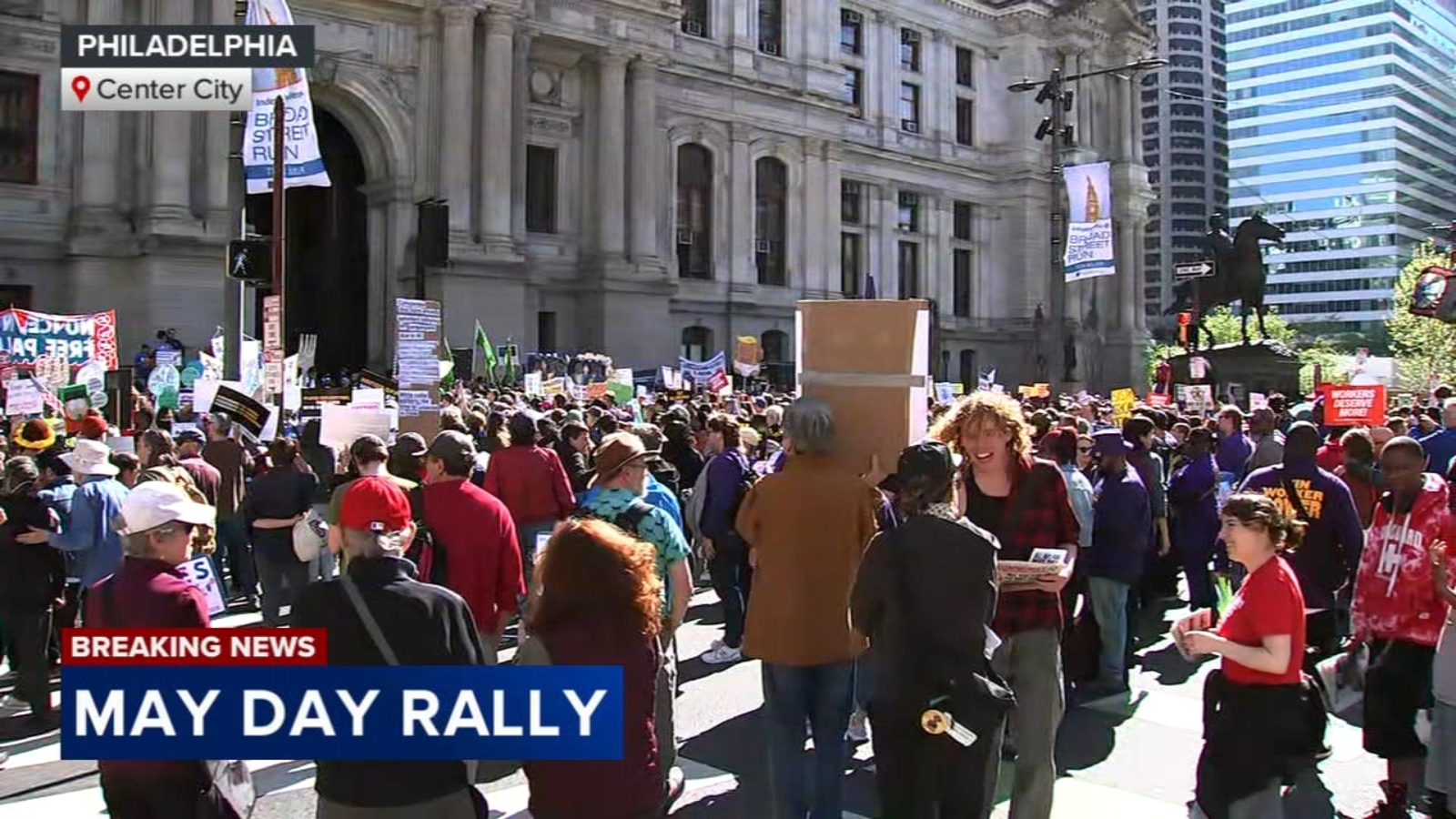
Thousands of workers and advocates marched in Philadelphia for a May Day rally calling for higher wages, stronger labor protections, and immigration reform. The event reflects broader concerns about economic inequality and worker protections, but it does not contain company-specific or market-moving financial developments. Market impact is minimal.
This is not a direct P&L event, but it is a useful read-through on urban labor bargaining power and the political cost of keeping service inflation sticky. The immediate market impact is modest, yet the second-order effect is that large employers with heavy metro exposure may face a higher baseline wage floor into upcoming contract cycles, especially in education, hospitality, transit-adjacent services, and construction labor pools. That matters because labor is still the marginal cost driver for several low-margin businesses where 100-150 bps of wage pressure can erase a full year of pricing gains.
The more actionable angle is not the protest itself but the policy drift it signals: stronger enforcement risk around wage theft, scheduling, subcontractor classification, and immigration compliance. That combination tends to favor larger, better-capitalized incumbents with compliance infrastructure and weakens smaller regional operators that compete on labor arbitrage. In other words, a rising regulatory floor can consolidate share toward national chains while squeezing local franchisees, staffing firms, and labor-light service providers that rely on flexible labor supply.
From a timing perspective, the market usually underprices these events for days, but the real catalyst window is months, not hours: city-level minimum wage debates, union contract reopeners, and election-cycle rhetoric can translate into actual cost pressure later in the year. The tail risk is a visible strike or coordinated work action during a travel-heavy season, which would create localized disruption and sentiment pressure even if fundamentals are unchanged. The contrarian point is that broad labor activism is often interpreted as pure cost inflation; in practice, it can also accelerate productivity investment and automation adoption, which is bullish for vendors selling labor-substitution software, kiosks, scheduling, and workflow tools.
AI-powered research, real-time alerts, and portfolio analytics for institutional investors.
Request DemoOverall Sentiment
neutral
Sentiment Score
-0.05
