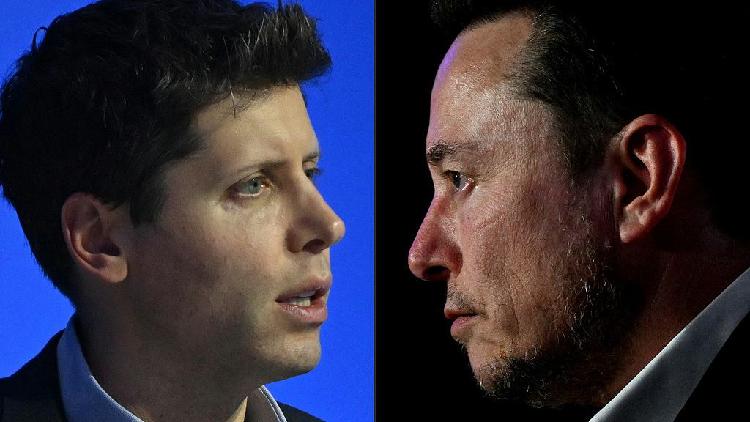
Elon Musk's lawsuit against OpenAI goes to trial Tuesday over allegations that the company abandoned its nonprofit mission after raising capital to build its AI business. Musk is seeking as much as $134 billion in damages and wants OpenAI forced back to a pure nonprofit structure, while OpenAI says the suit is a harassment campaign driven by control and competition. The case could affect OpenAI's governance and broader debate over how AI companies should balance public benefit with commercial scale.
The market is likely underpricing how much this trial converts an abstract governance dispute into a capital-allocation overhang for the entire AI stack. Even without a liability finding, discovery and remedy risk can force OpenAI to defend its hybrid structure more aggressively, which raises the cost of future fundraising and may slow partnership velocity with hyperscalers that are already sensitive to reputational and antitrust optics. That matters for TSLA only indirectly: Musk’s bandwidth, messaging, and litigation spend are a real opportunity cost versus xAI execution, and the stock is exposed more to narrative dilution than to any near-term balance-sheet impact.
The second-order winner is not necessarily xAI, but the large-model incumbents with cleaner governance and deeper distribution moats. Any perception that OpenAI’s structure is in flux strengthens Microsoft’s bargaining position and makes enterprise customers value contractual certainty over raw model performance; that is a subtle negative for smaller AI challengers whose funding depends on showing a credible path to scale. If the judge signals even a partial remedy path in late May, expect a short-lived risk-off in private AI names and a modest de-rating of pre-IPO governance stories.
The contrarian view is that the headline legal drama may be less economically important than it looks because the remedy set is probably narrower than the rhetoric suggests. A full unwind of OpenAI’s structure is a low-probability outcome; the more realistic risk is delay, disclosure, and governance concessions, which can be absorbed if demand for compute remains intact. That creates an asymmetric setup where the litigation is bearish for sentiment over 1-8 weeks, but not necessarily for the long-term revenue trajectory of the AI ecosystem unless it impairs financing access or triggers partner defections.
AI-powered research, real-time alerts, and portfolio analytics for institutional investors.
Request DemoOverall Sentiment
mildly negative
Sentiment Score
-0.15
Ticker Sentiment
