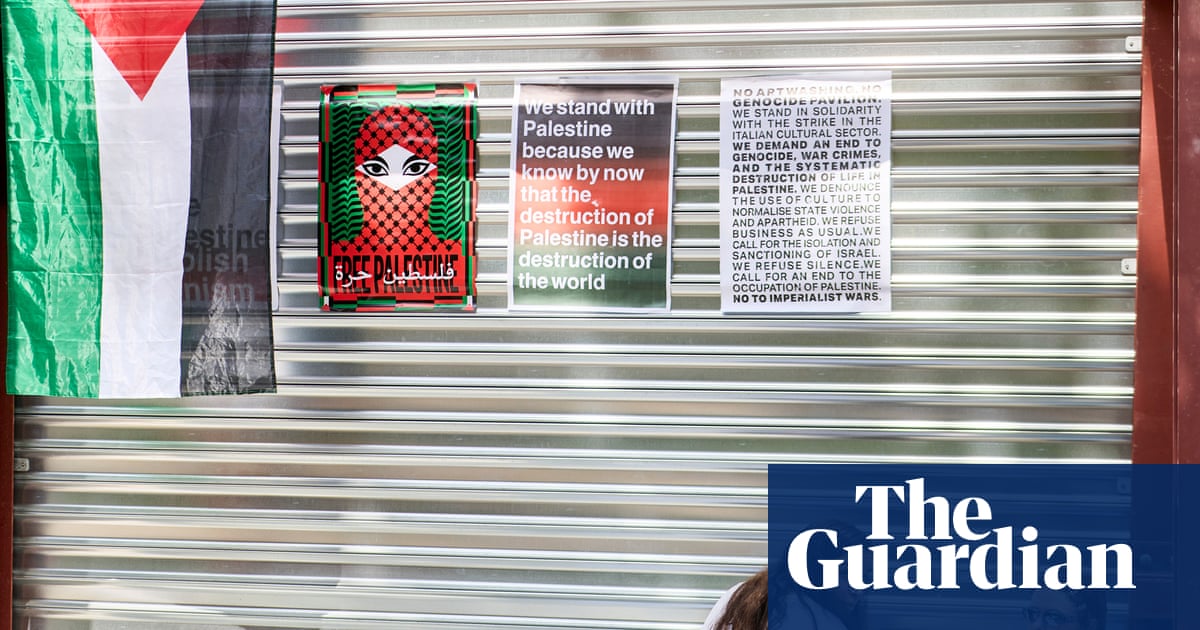
Several pavilions at the Venice Biennale closed on the final preview day amid a strike over Israel's inclusion, with about a dozen pavilions affected and some reopening later in the day. The disruption reflects broader protest activity tied to the war in Gaza and earlier objections from the jury over participation by countries whose leaders face international arrest warrants. The event remains scheduled to open to the general public after the preview period.
This is not a direct earnings event, but it is a live demonstration of how cultural institutions can be turned into reputational battlegrounds, and that matters for any company or fund with visible ties to defense, sovereign clients, or politically exposed counterparties. The immediate market effect is likely negligible, but the second-order effect is rising screening costs: boards, sponsors, and underwriters will face more pressure to avoid headline risk, which can slow partnerships and increase the discount demanded for politically sensitive assets.
The more interesting implication is the asymmetry between symbolic disruption and operational disruption. Protests at globally televised events tend to have a short half-life commercially, but they can force management concessions faster than formal campaigns because the cost of a bad image is concentrated in a few hours of media exposure. That makes this a governance signal: organizations with weak stakeholder mapping or decentralized decision rights are more vulnerable to rapid reputational shocks than those with pre-cleared crisis protocols.
For public markets, the tradeable angle is not the art sector itself but the adjacent ecosystem: event security, public-relations consultancies, and communications-heavy consumer brands with activist exposure. The risk is that this theme broadens from isolated symbolism into sponsor withdrawals or municipal funding debates over the next 1-3 quarters; if that happens, the losers are firms relying on prestige venues for brand lift rather than direct sales. The contrarian view is that the headline noise may be overstated versus economic impact: most institutions will absorb the controversy, and after a few news cycles, attention usually reverts to attendance and revenue, not ideology.
AI-powered research, real-time alerts, and portfolio analytics for institutional investors.
Request DemoOverall Sentiment
neutral
Sentiment Score
-0.05
