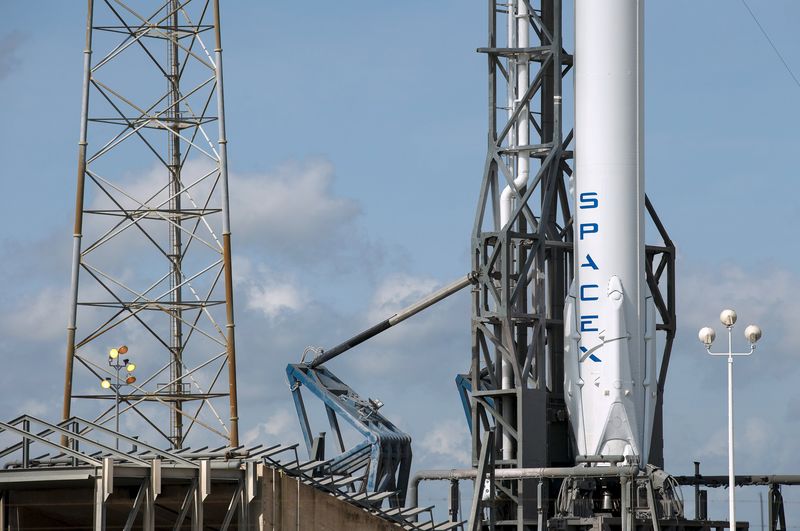
SpaceX shareholders approved a 5-for-1 stock split, with the reported fair market value per share adjusted to about $105.32 from $526.59. The company is also in an active operational stretch, having launched Cargo Dragon on NASA's CRS-34 mission and preparing for the first Flight 12 test of its Starship V3 on or after May 19. The news is constructive for sentiment around the IPO-bound company, but the immediate market impact should be limited.
This is less a pure corporate housekeeping event than a signaling device for the pre-IPO tape: a split at a very high implied share price broadens the eventual buyer base and helps normalize a valuation that otherwise risks looking illiquid and inaccessible. The second-order benefit is to employees and pre-IPO holders who need cleaner marks and more granular liquidity at exit, while the main competitive message is that SpaceX is positioning itself as a public-market scale asset well before listing. That should keep pressure on adjacent private aerospace and defense names that rely on scarcity-premium multiples.
The more interesting near-term catalyst is operational credibility, not the split itself. A successful next-gen launch would reinforce that the company’s growth narrative is still being validated by execution, which matters more than any cap table mechanics for underwriting the eventual IPO multiple. Conversely, any launch setback would likely compress enthusiasm quickly because investors will anchor to the idea that the company is asking for a public-market premium while still carrying technical and schedule risk.
For public comps, the implications are mixed: high-beta space-exposure names should get a sympathy bid on renewed enthusiasm for the category, but they are also the most vulnerable to a “best-in-class wins all the premium” dynamic. The likely losers are lower-quality aerospace and launch-adjacent companies that trade on optionality rather than demonstrated cadence; a successful SpaceX ramp can expose how much of their valuation is stranded hope. The supply-chain read-through is more subtle: any sustained increase in launch cadence should incrementally benefit propulsion, avionics, and specialty manufacturing vendors, but the bargaining power will stay with the platform owner.
The contrarian view is that the split may be a late-stage confidence marker rather than a fresh catalyst. If the market interprets it as preparation for liquidity rather than acceleration in growth, the near-term upside in public comps could fade after the initial excitement. The key timing window is days around the launch and months into IPO prep; the trade should be framed around event-driven volatility, not a durable re-rating absent repeated execution.
AI-powered research, real-time alerts, and portfolio analytics for institutional investors.
Request DemoOverall Sentiment
mildly positive
Sentiment Score
0.22
Ticker Sentiment
