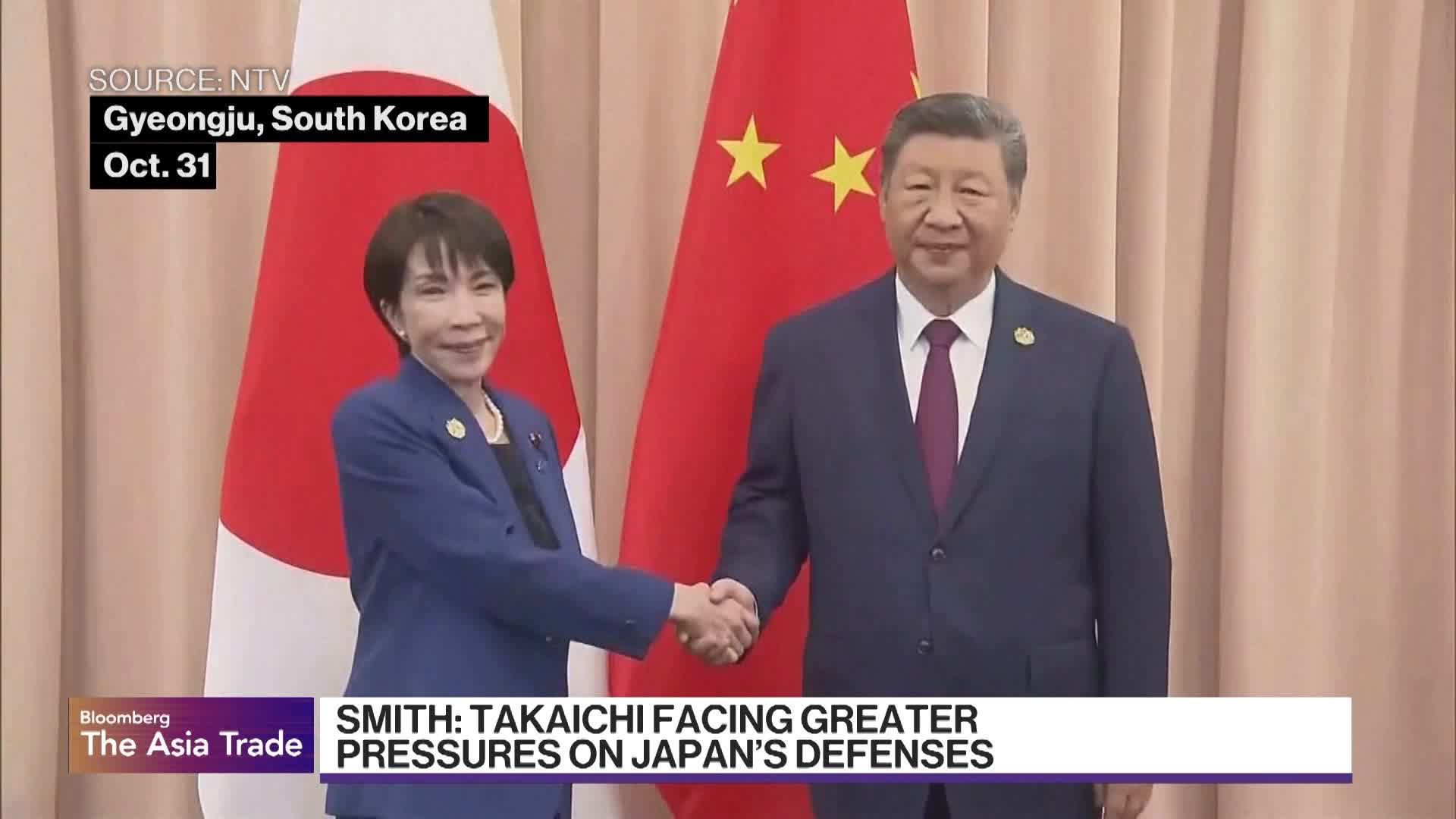
Japan's defense minister said plans to deploy missiles to a military post on an island near Taiwan are on track after visiting the base, reflecting Tokyo's stepped-up deterrence amid rising tensions with Beijing. The move increases regional geopolitical risk and could tilt investor positioning toward defense stocks and risk-off flows in Asian markets, though immediate broad market disruption is likely limited absent further escalation.
Market structure: Defense primes (US: LMT, NOC, RTX; JP: 7011.T, 7012.T) gain pricing power as near‑term procurement and retrofit demand rises, implying order backlog growth of ~5–15% over 12–24 months and higher margins on specialty systems. Export controls and certification frictions favor large incumbents and ETFs (ITA, PPA) over smaller suppliers; commodity demand (nickel, rare earths) may tick up modestly if munitions production expands. Cross‑asset: expect immediate safe‑haven flows into JGBs/UST (yields down 10–30bp), JPY strength vs. Asian FX (JPY +1–3% on spikes), higher gold and oil volatility, and a rise in regional equity risk premia raising implied vols for EWT/FXI by 20–40% in stressed days.
Risk assessment: Tail scenarios include kinetic escalation disrupting Taiwan Strait shipping (20–30% of global container transits affected) and broad sanctions that cut semiconductor inputs — high impact but <10% probability in next 6 months. Short term (days–weeks) is volatility spikes; medium (3–12 months) is reallocation into defense/capex; long term (1–3 years) is permanent supply‑chain bifurcation and sustained Japanese defense spending. Hidden dependencies: US policy decisions, Japan budget approvals, and semiconductor inventory cycles can quickly amplify or mute market moves. Key catalysts: joint exercises, US deployments, and Tokyo’s budget vote within 60–90 days.
Trade implications: Implement diversified defense exposure (ETF + select primes) while hedging Asian semiconductor/Taiwan risk. Use options to buy downside protection on Taiwan/China equity exposure and to construct limited‑risk upside on defense names. Rotate 2–6% portfolio weight from high‑beta Asia (TSM, KWEB, FXI) into defense and duration when 1‑week realized vol > VIX +5pts. Entry: size initial positions within 1–3 weeks; exit or re‑evaluate on 10–15% price move or after major diplomatic de‑escalation.
Contrarian angles: Consensus overweights defense but underestimates rapid mean‑reversion after diplomatic cooling — 1996 Taiwan Strait flare shows equities rebounded within ~3 months. Defense valuations can be rich; seek names where backlog growth > current forward P/E growth expectations. Unintended consequences include JPY overshoot hurting Japanese exporters (short term) and faster localization that benefits non‑China regional hubs; these create pair‑trade opportunities and timing asymmetries if market prices in permanent decoupling too quickly.
AI-powered research, real-time alerts, and portfolio analytics for institutional investors.
Request DemoOverall Sentiment
moderately negative
Sentiment Score
-0.40
