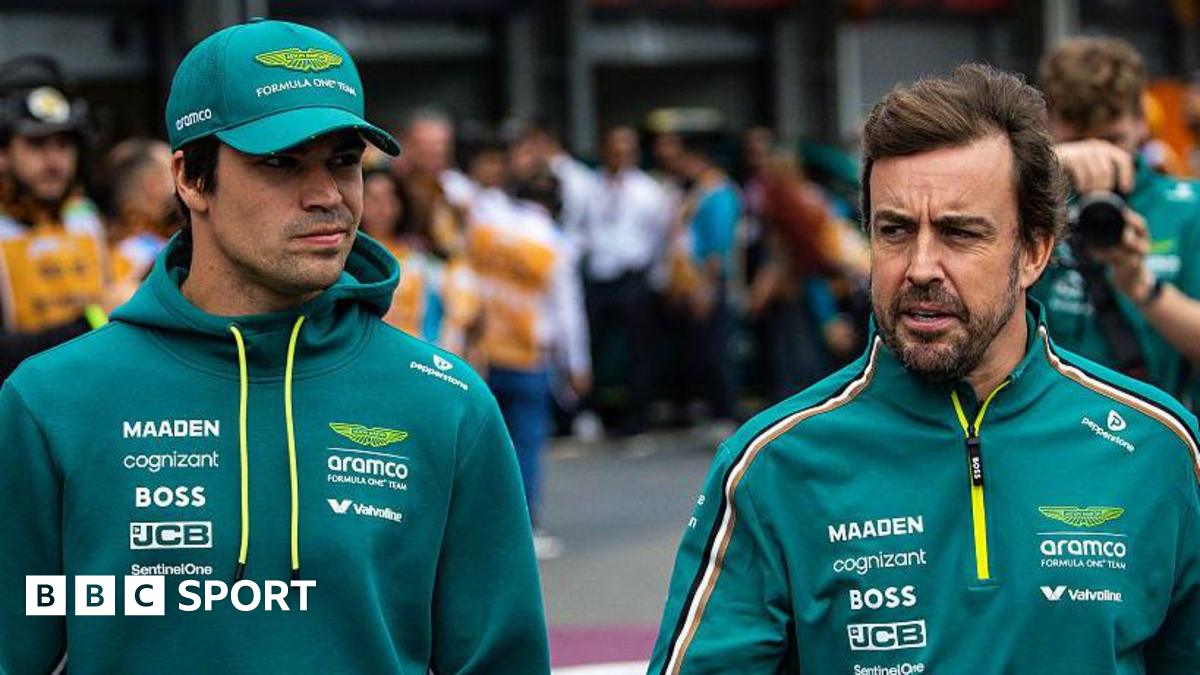
Aston Martin's new Honda power unit is generating severe vibrations that the team says risk permanent nerve damage to drivers within 15–25 consecutive laps (Lance Stroll ~15 laps, Fernando Alonso ~25 laps), forcing heavy lap limits and contributing to the lowest pre-season mileage. Honda has installed a fix that shields the hybrid battery but does not stop chassis/steering-transmitted vibration; the power unit is also reported to be materially down on electrical power (circa 50 kW alleged) and has not been run at maximum revs. Combined with aerodynamic development delays (team ~4 months behind, Newey estimates chassis ~0.75–1.0s off the leaders), the issues present near-term competitive and reputational downside for Aston Martin and Honda, increasing uncertainty for investors until reliability and power deficits are resolved.
Market structure: Immediate winners are rival OEMs and powertrain partners with proven hybrid competence (Audi/VW via VWAGY, Ford via F) and their supply chains for high‑power batteries; clear loser is Aston Martin (AML.L) and Honda's F1 credibility. A reported ~50 kW electrical deficit + driver‑limiting vibration (15–25 lap threshold) materially reduces on‑track competitiveness and will shift share of podiums/sponsorship value over the next 1–3 races, compressing short‑term pricing power of affected teams.
Risk assessment: Tail risks include an FIA safety probe or mandatory technical directive within days–weeks that could ground cars or force costly retrofits (cash hit and fines), and a reputational contagion to Honda EV/hybrid sourcing over quarters. Immediate risk window is this race weekend (days); technical remediation and power gains are the catalyst window (4–12 weeks); full recovery or structural churn will play out over 2–4 quarters as power unit maps and battery heat/vibration fixes are validated.
Trade implications: Tactical trades should favor short, event‑driven positions on Aston Martin (AML.L) and small, hedged views against Honda (HMC/7267.T), while rotating into VWAGY and F for asymmetric upside from perceived F1 tech/branding gains. Use options to express concentrated short‑term directional views (1–3 month puts on AML.L) and buy longer dated, modestly OTM hedged bear spreads on HMC to cap downside risk.
Contrarian angles: The market may over‑penalize Honda despite its diversified auto business—systemic consumer EV sales impact is low unless the issue persists >2 quarters—but Aston Martin’s valuation is more F1‑sensitive and likely underestimates sponsor/revenue hit. Historical parallel: McLaren‑Honda 2015–17 shows reputational damage can linger but be reversible with focused engineering spend; monitor two catalysts (FIA directives within 30 days; measured lap counts per car >80% of race distance) as re‑entry triggers.
AI-powered research, real-time alerts, and portfolio analytics for institutional investors.
Request TrialOverall Sentiment
strongly negative
Sentiment Score
-0.65
