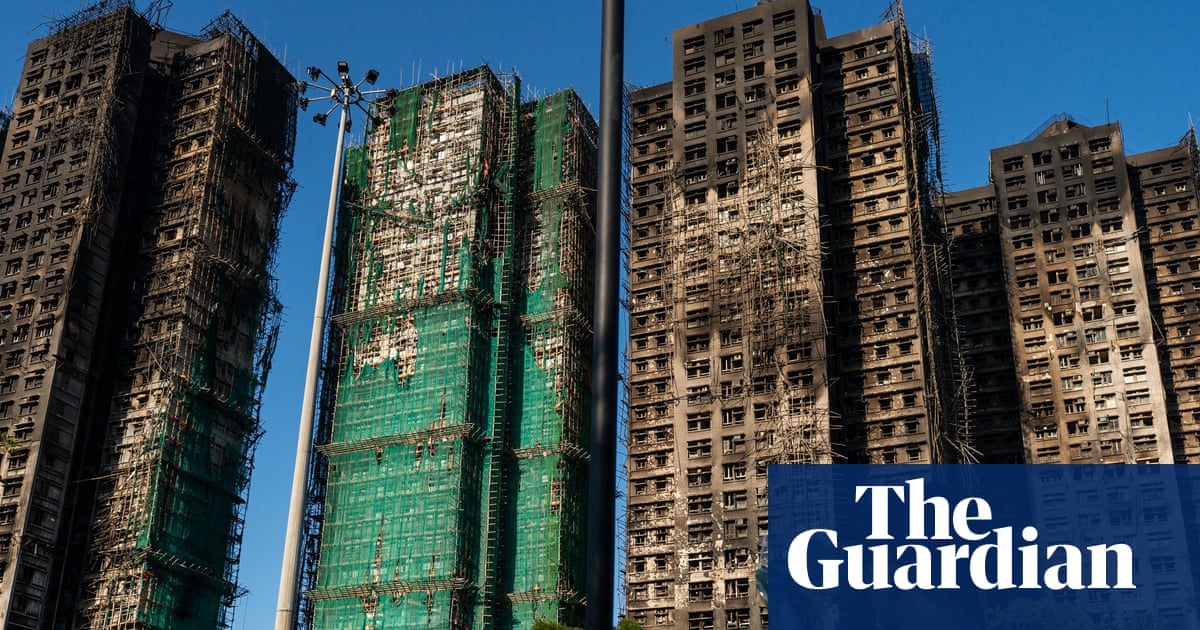
A catastrophic blaze at the Wang Fuk Court public-housing complex in Hong Kong ripped through seven 32-storey blocks, killing 128 people and leaving about 150 missing, amid renovations using bamboo scaffolding, green mesh and foam insulation; smoke alarms reportedly were not working in the estate of over 4,600 residents. Authorities have launched criminal and corruption probes, arrested 11 people and detained a student linked to a petition demanding accountability, while Beijing warned against leveraging the disaster for political disruption — raising regulatory, legal and reputational risks for contractors, developers and local governance that could pressure Hong Kong real-estate and related equities.
Market structure: The tragedy creates immediate winners (public rehousing contractors, fire-safety equipment suppliers, insurers on pricing resets) and losers (local renovation contractors, certain HK residential landlords/developers tied to Tai Po supply). Expect near-term negative sentiment to compress valuations in HK property names by 10–25% vs. broader HSI for 1–3 months if investigations/renovation freezes expand; credit spreads on non-investment-grade HK property bonds will likely widen 200–500bp. FX and rates: HKD peg limits FX moves but expect higher HIBOR/FX swap demand and USD liquidity bids intraday; risk-off will favor USD and JGB/US Treasuries.
Risk assessment: Tail risks include a broader political backlash triggering protests or tougher enforcement under the national security law, producing multi-week capital outflows and a 5–15% further drawdown in HSI; another tail is a systemic property credit event if multiple estates are found non-compliant. Time horizons: immediate (days) = sentiment shock and volatility spike; short-term (weeks–3 months) = regulatory probes, contractor order flow re-routing; long-term (6–24 months) = tighter building/renovation standards, higher compliance costs, and possible fiscal rehousing spending. Hidden dependencies: banks with concentrated loans to small landlords, insurers with misspecified property-liability assumptions, and contractors reliant on cheap insulation/scaffolding supply chains.
Trade implications: Near-term trade = buy 1-month HSI put spreads and/or short 3-month futures sized to 1–2% portfolio risk to capture 5–15% downside; selectively short high-beta HK developers (CK Asset 1113.HK, Henderson Land 0012.HK) using 3–6 month put spreads sized 2–4% combined. Medium-term trade = long exposure to large state-backed contractors likely to win rehousing work (China State Construction 3311.HK) for 6–12 months (1–2% position) and consider long-dated fire-safety-equipment names or suppliers (small-cap, thematic). Credit play = buy protection (CDS or CDS-equivalent funds) on high-yield HK property USD bonds if spreads breach +800bp.
Contrarian angles: Consensus may over-penalize large, investment-grade Hong Kong landlords with low LTVs (Sun Hung Kai 0016.HK, CK Asset 1113.HK) despite limited direct exposure; if the government steps in with a rehousing fund >HKD 5–10bn within 30–60 days, these names can recover 10–20% in 3–6 months. The market may underprice the operational winners (public contractors, certified fire-safety firms) and overprice systemic contagion absent evidence of widespread structural building-code failure. Historical parallel: 1990s urban-fire incidents led to short-term spreads and long-term regulatory upgrades that benefited certified suppliers for years.
AI-powered research, real-time alerts, and portfolio analytics for institutional investors.
Request DemoOverall Sentiment
strongly negative
Sentiment Score
-0.70
