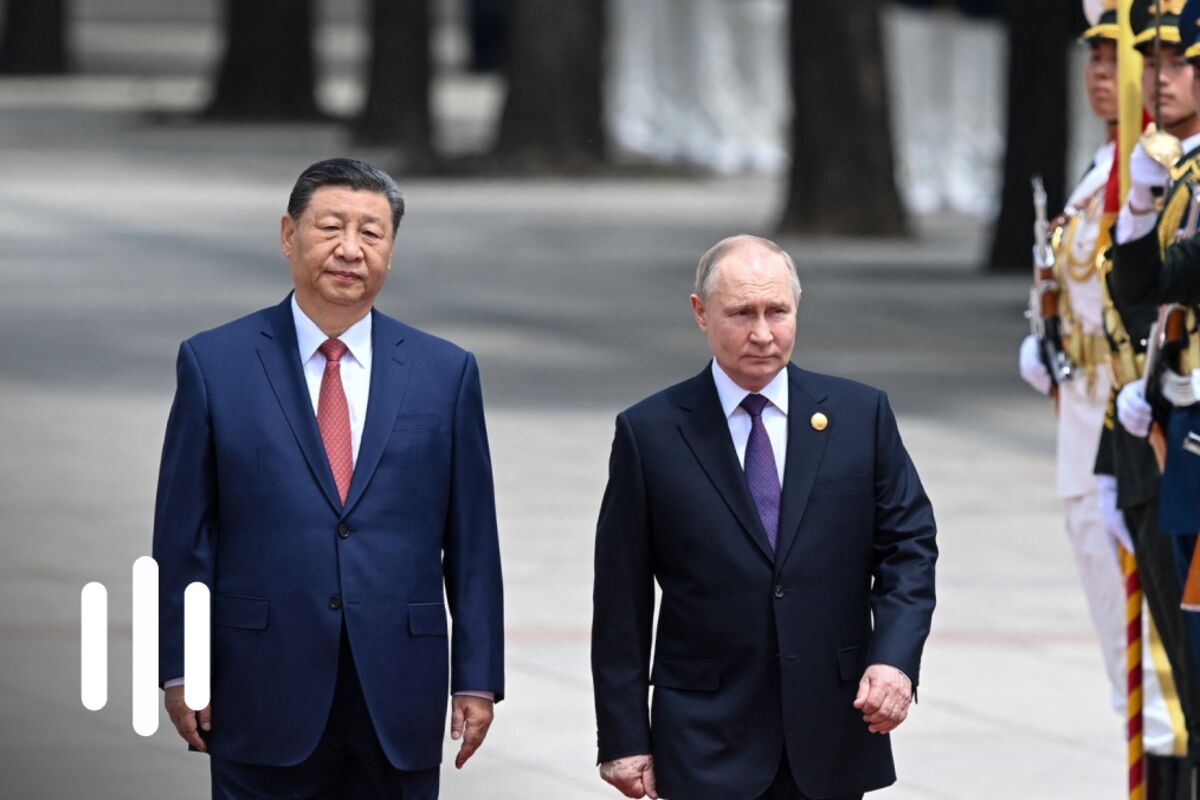
Russia and China are deepening ties with 20 new agreements across trade, technology and energy, plus a joint statement backing a multipolar world. The article highlights rising geopolitical risk around Middle East energy markets and the Strait of Hormuz, which could accelerate talks on the Power of Siberia 2 gas pipeline. The discussion is framed around implications for US-China relations, global energy flows and broader geopolitical stability.
The immediate market implication is not the headline diplomacy itself, but the optionality it creates around non-dollar energy routing. A deeper Russia-China energy axis raises the probability that marginal Asian demand gets satisfied through bilateral, state-backed channels rather than spot LNG, which can suppress volatility in regional gas benchmarks even when geopolitical risk is elevated. That tends to favor firms with captive, long-duration supply and hurt merchant LNG exporters that rely on tight spot pricing and rapid cargo arbitrage.
The key second-order effect is that any sustained disruption in Middle East shipping would not just lift prices; it would also accelerate infrastructure decisions that were previously uneconomic or politically delayed. If Moscow and Beijing perceive a durable risk premium in Hormuz-linked flows, they have incentive to lock in a 10-20 year supply architecture now, which would be bearish for flexible seaborne LNG over the medium term and bullish for pipeline-linked upstream and midstream assets. The risk window is asymmetric: days-to-weeks risk is headline-driven crude/gas spikes, while the months-to-years consequence is a structural reordering of Asian gas procurement.
The contrarian point is that markets may be overestimating how quickly geopolitical symbolism converts into physical volumes. Large cross-border pipelines are capital-intensive, require pricing concessions, and often stall on economics rather than politics; in a high-rate world, the financing hurdle matters as much as strategy. So the right way to express this is not a blanket energy bullish trade, but a dispersion trade between assets that benefit from persistent policy-backed flows and those exposed to spot dislocations that could fade once immediate risk premia compress.
From a portfolio standpoint, the most interesting setup is that a Middle East shock can temporarily lift all energy boats, but the durable winners are the ones with pricing power over infrastructure bottlenecks, not commodity beta. Watch for any official language on gas pricing formulas or timeline acceleration: that would be the tell that this is moving from rhetoric to investable capex, and it would matter more for 2026-2028 earnings than for the next quarter.
AI-powered research, real-time alerts, and portfolio analytics for institutional investors.
Request DemoOverall Sentiment
neutral
Sentiment Score
-0.05
