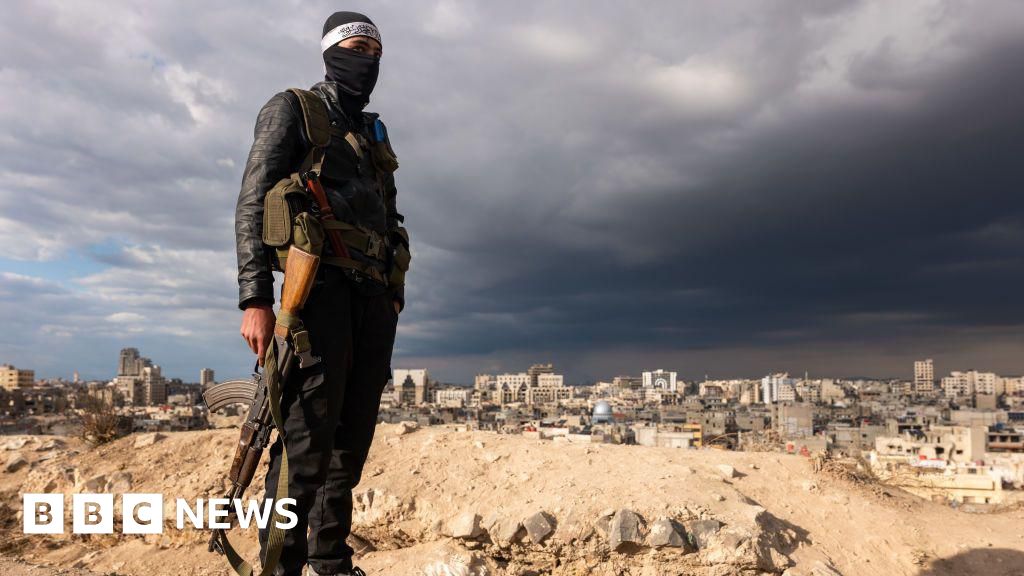
The US is set to remove Syria's Hayat Tahrir al-Sham (HTS) from its foreign terror list, a significant policy shift following HTS's role in toppling the Assad regime and its leader Ahmed al-Sharaa assuming interim presidency. This decision, alongside recent US sanctions removal and renewed UK diplomatic engagement, signals a broader Western push for Syrian normalization and economic recovery. While Syria anticipates improved economic prospects and regional cooperation, internal concerns about al-Sharaa's past and ongoing sectarian violence highlight persistent instability despite external efforts towards de-escalation.
A significant geopolitical shift is underway in Syria, marked by the US decision to remove the ruling Hayat Tahrir al-Sham (HTS) from its foreign terror list and formally end sanctions. This policy change, following the ousting of the Assad regime, is part of a coordinated Western effort to foster stability, evidenced by a recent UK diplomatic visit and a £94.5m support package. For Syria, where 90% of the population lived in poverty after 13 years of civil war, these moves are viewed by its new government as critical for unlocking economic recovery and international engagement. The country has already signaled willingness to cooperate on regional security by revisiting a 1974 disengagement agreement with Israel. However, this diplomatic opening is contrasted by severe internal risks. Despite promises of a new era, concerns persist regarding the radical past of interim president Ahmed al-Sharaa and his centralized control over government appointments. More critically, the security situation remains highly fragile, highlighted by multiple recent violent attacks against minority Alawite and Druze populations and a deadly suicide bombing at a Damascus church, indicating that deep-seated instability could undermine the path to recovery.
AI-powered research, real-time alerts, and portfolio analytics for institutional investors.
Overall Sentiment
moderately positive
Sentiment Score
0.40
