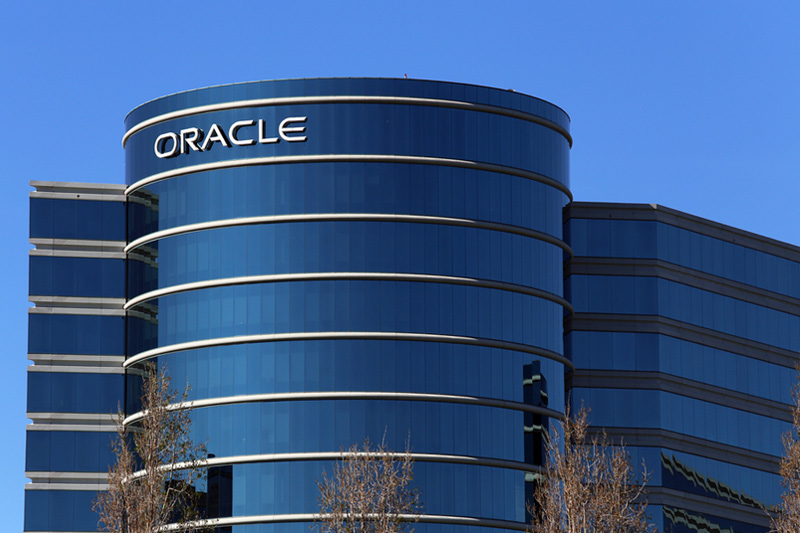
Oracle reiterated its commitment to its OpenAI partnership and said it remains focused on delivering cloud capacity, but the update comes amid a broader selloff in AI-related stocks after a Wall Street Journal report said OpenAI missed key user and revenue targets. The news reflects rising investor concern about the sustainability of AI spending rather than a direct deterioration in Oracle fundamentals. Market impact should be limited to AI sentiment and related names, with no explicit change to Oracle's financial outlook.
The market is treating this as an AI demand scare, but the second-order issue is more about capex pacing than end-demand collapse. If OpenAI is merely missing aggressive internal targets, hyperscalers and infrastructure suppliers can still see near-term bookings hold while the spend curve flattens, which is enough to compress multiples across the AI complex before fundamentals actually roll over. That’s why the immediate pressure likely shows up first in the highest-duration names with the most crowded “AI monetization tomorrow” narratives, not necessarily in vendors with contracted capacity and utility-like revenue visibility.
Oracle sits in a nuanced spot: it is more exposed to the “capacity buildout” trade than the “software adoption” trade, so the stock can derate if investors infer that incremental AI training demand is less elastic than expected. Still, any weakness in ORCL from this headline is likely to be a sentiment-driven overreaction unless there’s evidence that cloud backlog or customer concentration is deteriorating over the next 1-2 quarters. The cleaner read-through is to challenge semis and AI-infrastructure adjacent names whose valuations still assume a straight-line acceleration in compute demand through 2025.
The contrarian angle is that a softer OpenAI ramp could actually improve the economics of the AI ecosystem by forcing better capital discipline, which would be bullish for the quality names and bearish for the excesses. In that regime, the market stops paying for “infinite GPU absorption” and starts rewarding vendors with real pricing power, contract duration, and recurring software attach. If this becomes a 1-3 month narrative rather than a one-day headline, expect factor rotation out of speculative AI beta and into profitable, cash-generative tech.
AI-powered research, real-time alerts, and portfolio analytics for institutional investors.
Request DemoOverall Sentiment
mildly negative
Sentiment Score
-0.15
Ticker Sentiment
