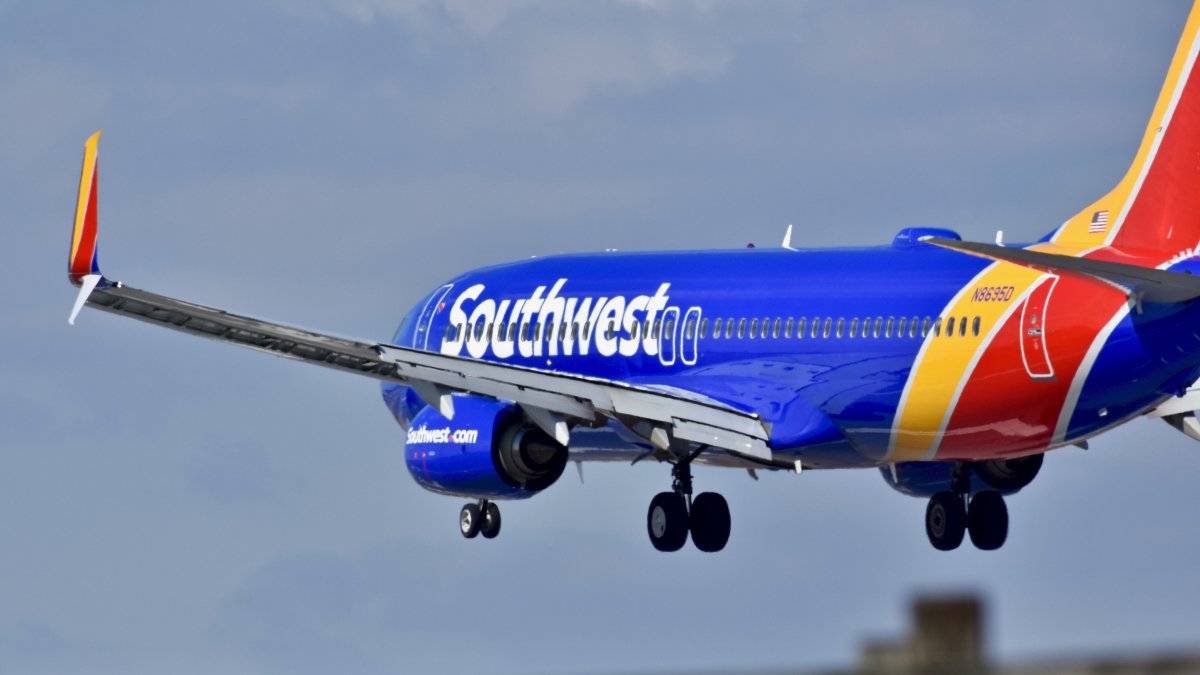
Southwest Airlines will discontinue service to Chicago O'Hare effective June 4 and redeploy operations to Chicago Midway, where it will run up to 244 daily departures and continue serving more than 80 destinations, including the 15 markets previously served from O'Hare. The move cites operational challenges at O'Hare amid a potential FAA cap on daily operations (possible 2,800/day) and occurs alongside a $6 billion O'Hare renovation; Southwest says affected employees can bid for positions across its network, framing this as a network redeployment rather than a market exit.
A network footprint shift by a major low-cost carrier in the Chicago market creates a temporary reallocation of scarce airport capacity that incumbents with slot control can monetize within weeks to months through higher yields on peak flows and reduced discounting on connecting itineraries. The most direct second-order beneficiary is the carrier able to pick up premium connecting feed at a congested hub; expect unit revenue tailwinds of mid-single-digit percent on affected domestic trunk flows if slot rebalances persist into summer travel. Ground-service vendors, regional feed carriers and corporate travel managers will see material routing churn that likely redistributes ancillary revenue and parking/rental car spend over the next 1–4 quarters, compressing LCC ancillary capture while increasing legacy carrier capture. Lastly, labor and operational frictions for the repositioning carrier — crew domicile changes, gate reassignments and higher turn time risk at a denser secondary airport — are a tangible incremental cost that could depress near-term margins by 50–150 bps absent offsetting unit revenue gains.
The key catalyst window is immediate (days–weeks) for sentiment and bookings, and near-term (1–3 months) for FAA/slot regulatory outcomes; a formal slot cap or other operational constraint would be a structural positive for legacy carriers’ yields and a structural negative for capacity-focused low-cost peers. Reversal scenarios include rapid redeployment by other LCCs into freed slots, a regulatory decision that preserves high flight counts, or soft summer leisure demand which would blunt any yield benefit — any of these could unwind incumbent upside within a single quarter. Monitor airline-specific indicators: week-over-week RASM trends on Chicago-origin traffic, sequential changes in ancillary revenue mix, and union/crew bid activity that signals cost pressure timing. From a valuation angle, the market may underprice the duration of yield improvement for slot-constrained carriers while over-penalizing the LCC for short-run network churn, creating asymmetric option-like opportunities.
AI-powered research, real-time alerts, and portfolio analytics for institutional investors.
Request DemoOverall Sentiment
neutral
Sentiment Score
0.00
Ticker Sentiment
