
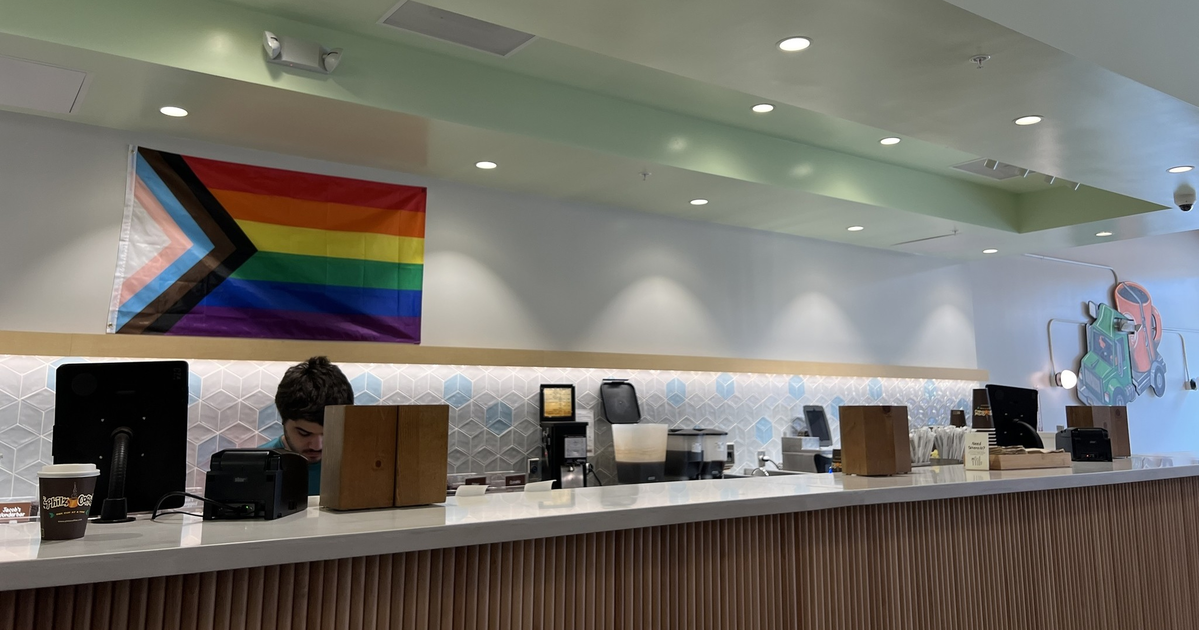
Philz Coffee reversed its decision and now اجازه flags can be displayed in stores after CEO Mahesh Sadarangani apologized for an earlier ban that triggered customer backlash and employee dissatisfaction. The issue appears to have pressured foot traffic at least at one San Francisco location, with a barista saying hours and tips were already being affected. The news is primarily a governance and brand-reputation issue rather than a major financial event.
This is not a coffee-specific story so much as a governance signal for any consumer brand that has tried to optimize for “neutrality” by de-risking visible identity cues. The immediate market impact is probably negligible for SBUX in fundamentals, but the second-order effect is material: employees in discretionary service businesses are now more likely to treat corporate culture decisions as turnover triggers, not just PR issues. That matters because labor stability, especially in urban flagship stores, feeds directly into throughput, service consistency, and localized sales momentum.
For Starbucks, the key risk is not boycott math in isolation; it is cumulative brand friction layered on top of already thin customer differentiation. If management is perceived as directionally similar—either by mishandling inclusion issues or by being slow to correct them—the downside shows up first in wage pressure and retention, then in traffic elasticity in core metro locations over the next 1-2 quarters. The fastest read-through is to city-store comps and employee engagement, not to systemwide demand.
The contrarian angle is that the backlash itself is a reminder that “political neutrality” is often a false savings opportunity. Attempts to smooth the brand can create a sharper bifurcation between loyal customers and core staff, which is worse than a one-time social-media storm because it compounds in hiring, scheduling, and local conversion rates. For names with premium pricing and high labor intensity, reputational missteps can have a margin effect that exceeds the initial revenue hit.
Catalyst-wise, watch for activist or employee-organizing spillover at SBUX over the next 30-90 days, especially if management issues any new store-policy guidance. A reversal or clarifying statement would likely cap near-term reputational damage, but a renewed governance controversy would matter more than the original issue because it would confirm management inconsistency rather than a one-off error.
AI-powered research, real-time alerts, and portfolio analytics for institutional investors.
Request TrialOverall Sentiment
mildly negative
Sentiment Score
-0.15
Ticker Sentiment
