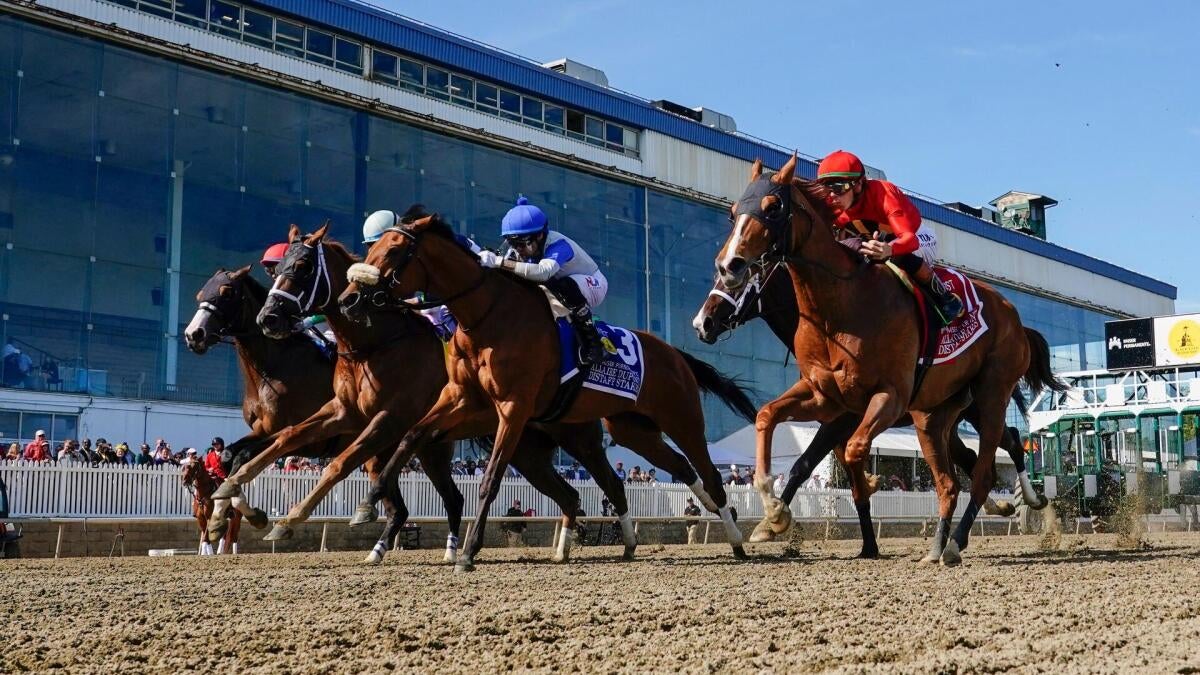
The article previews the 2026 Preakness Stakes on May 16 at 7:01 p.m. ET at Laurel Park in Maryland, with Kentucky Derby winner Golden Tempo and several other top Derby finishers skipping the race. Iron Honor is the 9-2 favorite, while The Hell We Did is highlighted as a 15-1 longshot and several other contenders sit in the 5-1 to 6-1 range. The piece is primarily betting-focused commentary and race preview content, with limited direct market relevance.
This is a short-duration consumer-leisure event with a surprisingly high amount of wagering flow sensitivity, not a fundamental sports story. The edge comes from the mismatch between public behavior and probabilistic pricing: a chalky top of board plus multiple mid-price contenders should concentrate handle into a few names, creating volatility in exacta/trifecta pools and a better setup for contrarian tickets than for outright win exposure. In practice, the market is likely to overpay for the favorite while underestimating how quickly pace, post position, and surface familiarity can flip outcomes in a one-turn dirt race.
The second-order winner is not the race itself but the operators around it: ADW platforms, sportsbook-adjacent horse racing apps, and regional travel/hospitality vendors near Maryland should see a transient lift in engagement and same-day spend. Because the event is at a temporary venue setup, localized on-site logistics matter more than national brand effects; that tends to favor bettors who can react late to track bias and scratches, while punishing pre-race consensus positioning. The base case is a one- to two-day spike in wagering volume, but the real opportunity is in the tail where an upset or pace collapse pushes exotic payouts sharply above implied probabilities.
The contrarian angle is that the market may be overemphasizing narrative handicapping and underweighting field compression. When several horses sit in a narrow odds band, the favorite often offers the worst risk/reward because the public anchors on a single perceived class edge, while the best value often lives in horses with improving form and distance upside that are still priced like outsiders. For portfolio purposes, this is less about directional conviction and more about exploiting dispersion: long the platforms capturing churn, short the complacent assumption that favorites in shallow fields are efficient bets, and be ready to fade any post-time drift if weather or track condition changes create a bias shift.
AI-powered research, real-time alerts, and portfolio analytics for institutional investors.
Request DemoOverall Sentiment
neutral
Sentiment Score
0.05
