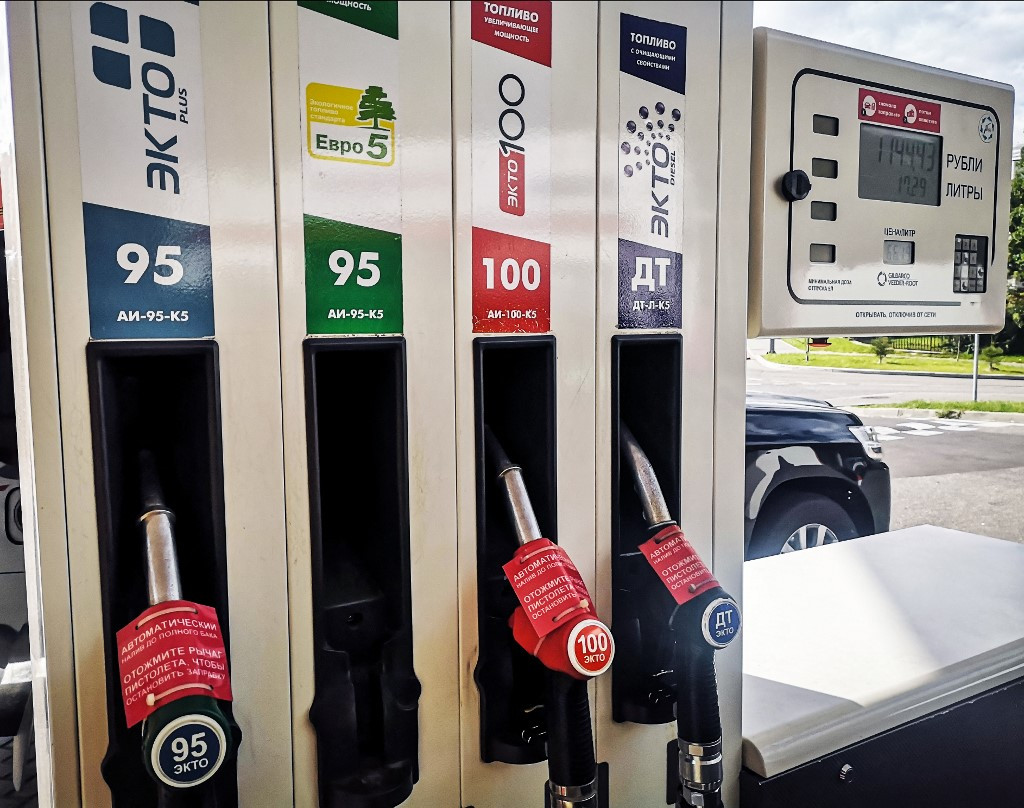
Russia is facing a worsening fuel crisis as Ukrainian strikes on oil infrastructure drive rationing and price increases in Moscow and occupied territories. In Moscow, diesel rose 56 kopecks per liter to 78.49 rubles, A-92 rose 24 kopecks to 64.67 rubles, and AI-95 rose 35 kopecks to 71.46 rubles; at NeftMagistral, A-92 jumped 3 rubles to 67.4 rubles, AI-95 rose 5 rubles to 76.29 rubles, and diesel climbed 5 rubles to 83.68 rubles per liter. Russia also banned jet fuel exports from June 1 to Nov. 30 amid domestic supply stress, signaling continued pressure on energy markets and refinery operations.
This is not just a localized consumer inconvenience; it is a widening domestic logistics shock that raises the effective cost of moving everything inside Russia. Fuel rationing in the capital region signals the problem has escaped the periphery and is now hitting the distribution node that matters most for price transmission, which means the inflation impulse can broaden faster than headline energy prices suggest. The second-order loser is the non-military industrial base: trucking, construction, agriculture, and last-mile retail all face margin compression before any formal macro data catches up.
The policy response is revealing. Export restrictions on refined products and jet fuel indicate Moscow is choosing to protect internal demand at the expense of external monetization, which should tighten regional distillate balances across the Black Sea and parts of Eastern Europe. That tends to support non-Russian refiners with spare capacity and advantaged product slates, especially those able to substitute diesel and jet barrels into nearby markets. It also raises the probability of knock-on outages in aviation and freight if rationing expands beyond passenger fuel.
The key catalyst over the next 2-8 weeks is whether strike cadence remains high enough to keep repair cycles shorter than recovery cycles. If refinery outages keep rotating, the market will start pricing a sustained shrinkage in Russian product exports rather than a temporary disruption, which is materially more bullish for refined-product cracks than for crude itself. The contrarian risk is that Moscow’s controls plus seasonal demand moderation blunt the near-term price spike, but that would likely only delay, not eliminate, the supply impairment if infrastructure remains a recurring target.
Consensus may be underestimating how asymmetric this is for aviation and diesel versus Brent. Crude can be redirected; clean products are harder to reroute quickly, so the larger beneficiaries are refiners and integrated downstream operators outside Russia rather than upstream producers. The market may be too focused on headline geopolitics and not enough on product scarcity, which is where the strongest margin impulse should show up first.
AI-powered research, real-time alerts, and portfolio analytics for institutional investors.
Request DemoOverall Sentiment
strongly negative
Sentiment Score
-0.68
